What Are the Effects of a Supernova Near Earth?
TL;DR
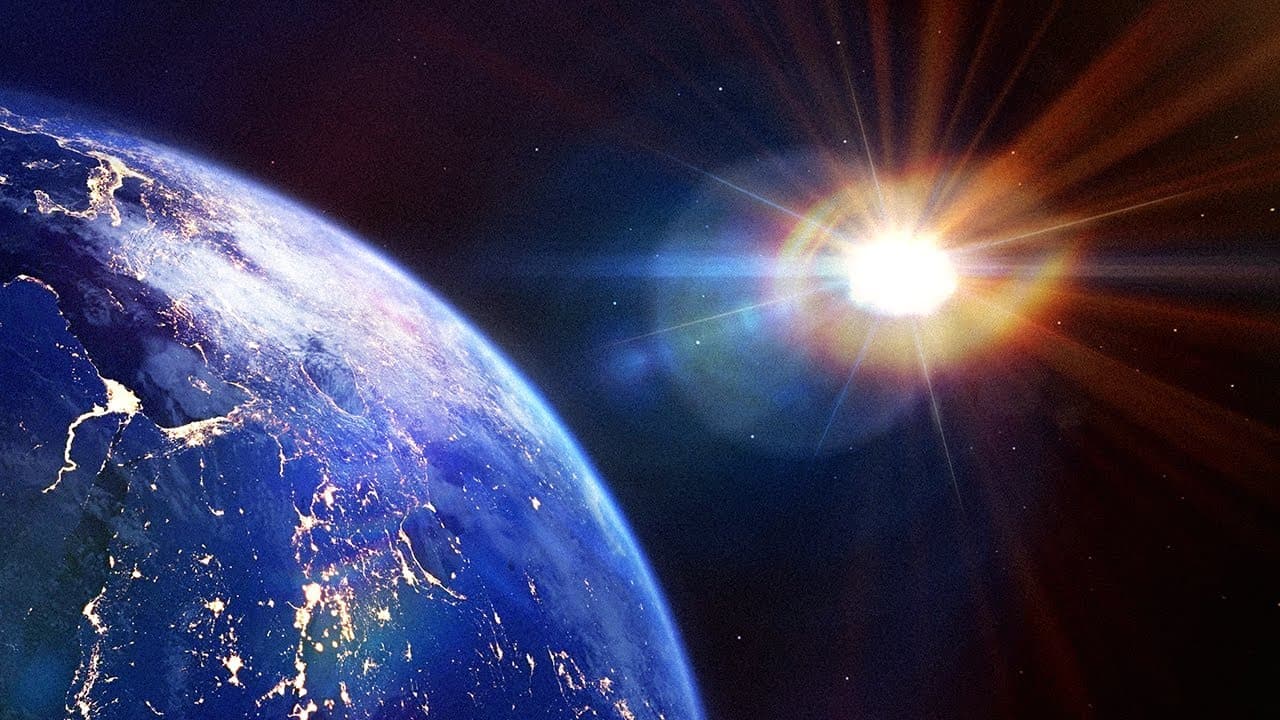
If a supernova were to explode near Earth, it could potentially blow off our atmosphere and cause significant ozone layer depletion. The explosion primarily releases energy in the form of neutrinos, but even the small fraction emitted as radiation could be deadly at close distances. Supernovae also create environments that can lead to mass extinctions, impacting life on Earth.
Transcript
- What would happen if a star exploded near the earth? Well, the nearest star to Earth, of course, is the sun, and it is not going to explode, but if it had eight times the mass, then it would go supernova at the end of its life. So what would that look like? Well, as noted by xkcd if you held up a hydrogen bomb right to your eyeball and detonated ... Read More
Key Insights
- ❓ Supernovae are the most powerful explosions in the universe, releasing an unimaginable amount of energy.
- 🤩 The collapse of a star's core leads to the creation of a neutron star and triggers a supernova explosion.
- 🛩️ The primary energy released during a supernova is in the form of neutrinos, with only a small fraction released as visible light.
- 😘 Supernovae can potentially have significant impacts on Earth, including blowing off the atmosphere and causing a decrease in ozone levels.
- 🙌 Gamma ray bursts, a type of supernova, could have catastrophic effects on Earth, potentially causing mass extinctions.
- ❓ Evidence suggests that recent nearby supernovae may have affected our ancestors and had an impact on the Earth's climate.
- 🤩 Our solar system may owe its existence to the explosions of nearby stars, as a supernova shockwave likely triggered the formation of our Sun and planets.
Install to Summarize YouTube Videos and Get Transcripts
Explore YouTube Video Summarizer or Get YouTube Transcript Extractor
Questions & Answers
Q: How do stars go through a supernova explosion?
Stars go through a supernova explosion when their cores collapse rapidly, creating a neutron star. The collapse is triggered when the star's fusion rate slows down and can no longer counteract gravitational collapse. The core collapse creates a shockwave that leads to an explosive release of energy.
Q: What is the primary form of energy released during a supernova?
The primary form of energy released during a supernova is in the form of neutrinos. Only a small fraction of the energy is released as electromagnetic radiation that we can see. Neutrinos play a crucial role in the explosion and can be detected on Earth before the visible light from the explosion reaches us.
Q: Can supernovae have an impact on Earth?
Supernovae can potentially have various impacts on Earth. A supernova occurring within a light year from Earth could blow off our atmosphere. Supernovae also create conditions that can decrease ozone levels and expose us to dangerous radiation from space. Additionally, gamma ray bursts, a type of supernova, could cause mass extinctions if they occur close enough to Earth.
Q: How have supernovae influenced the formation of our solar system?
The shockwave from a nearby supernova is believed to have triggered the collapse of a cloud of gas and dust that eventually formed our solar system. Without nearby supernovae, the conditions necessary for the formation of the Sun, the Earth, and all life on it may not have existed.
Key Insights:
- Supernovae are the most powerful explosions in the universe, releasing an unimaginable amount of energy.
- The collapse of a star's core leads to the creation of a neutron star and triggers a supernova explosion.
- The primary energy released during a supernova is in the form of neutrinos, with only a small fraction released as visible light.
- Supernovae can potentially have significant impacts on Earth, including blowing off the atmosphere and causing a decrease in ozone levels.
- Gamma ray bursts, a type of supernova, could have catastrophic effects on Earth, potentially causing mass extinctions.
- Evidence suggests that recent nearby supernovae may have affected our ancestors and had an impact on the Earth's climate.
- Our solar system may owe its existence to the explosions of nearby stars, as a supernova shockwave likely triggered the formation of our Sun and planets.
- Studying supernovae requires a combination of astrophysics, particle physics, computer science, and mathematics, highlighting the complexity of understanding these explosive events.
Summary & Key Takeaways
-
Supernovae are extremely powerful explosions that occur when a star goes through a violent death. They release vast amounts of energy, making them the brightest events in the universe.
-
Stars exist in a stable balance for most of their lives, with fusion of lighter elements counteracting gravitational collapse. However, as a star runs out of fuel, fusion slows down, leading to core compression and the rapid collapse of the star.
-
The collapse of the star's core creates a neutron star and triggers a supernova explosion. The explosion primarily releases energy in the form of neutrinos, with only a small fraction released as electromagnetic radiation that we can see.
-
Supernovae can have various impacts on Earth, including potentially blowing off the atmosphere and causing a decrease in ozone levels. Gamma ray bursts, a type of supernova, could have cataclysmic effects on Earth, such as mass extinctions.
Read in Other Languages (beta)
Share This Summary 📚
Summarize YouTube Videos and Get Video Transcripts with 1-Click
Try YouTube Summary with ChatGPT & Claude or YouTube Transcript Generator
Explore More Summaries from Veritasium 📚



Summarize YouTube Videos and Get Video Transcripts with 1-Click
Try YouTube Summary with ChatGPT & Claude or YouTube Transcript Generator