Why Cholesterol Isn't Simply 'Good' or 'Bad'
TL;DR
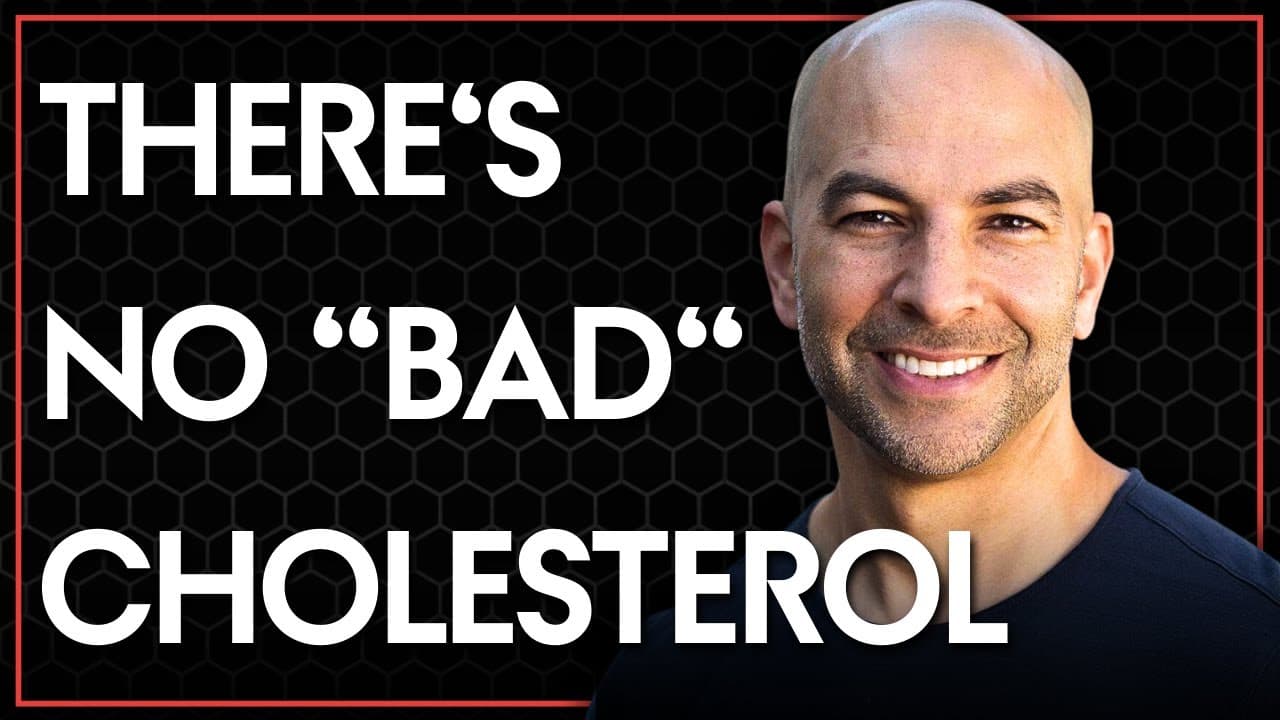
Cholesterol is an essential lipid synthesized by every cell in the body, crucial for cell membrane fluidity and hormone production. The terms 'good' and 'bad' cholesterol are misleading; instead, focus on the lipoproteins that transport cholesterol. LDLs can lead to atherosclerosis, while HDLs' functionality matters more than their quantity.
Transcript
so i recently posted something on social media about uh my frustration with the way that the press uh and frankly even sometimes the medical establishment writes about cholesterol referring to good cholesterol and bad cholesterol now if you've ever listened to me on podcasts you understand that i talk about this in in great detail but a number of t... Read More
Key Insights
- Cholesterol is a lipid essential for cell membrane fluidity and hormone production.
- Every cell in the body synthesizes cholesterol, highlighting its importance.
- Lipoproteins, such as LDL and HDL, transport cholesterol through the bloodstream.
- LDLs can deposit cholesterol in artery walls, leading to atherosclerosis.
- HDLs are complex and their functionality is more important than their quantity.
- ApoB concentration is a key metric for assessing cardiometabolic risk.
- The terms 'good' and 'bad' cholesterol are misleading and oversimplified.
- Understanding the basics of lipids and lipoproteins is crucial for accurate health information.
Install to Summarize YouTube Videos and Get Transcripts
Explore YouTube Video Summarizer or Get YouTube Transcript Extractor
Questions & Answers
Q: How is cholesterol transported in the body?
Cholesterol, a lipid, is transported in the body via lipoproteins because it is not water-soluble. Lipoproteins, such as LDL and HDL, have a hydrophilic protein exterior that allows them to move through the water-based circulatory system, while their lipid interior carries the hydrophobic cholesterol.
Q: Why are LDLs considered problematic?
LDLs are considered problematic because they can deposit cholesterol into artery walls, leading to the formation of plaques and atherosclerosis. This process occurs when LDL particles become oxidized and elicit an immune response, contributing to cardiovascular disease risk.
Q: What is the role of HDLs in cholesterol transport?
HDLs play a role in reverse cholesterol transport, where they help remove excess cholesterol from tissues and transport it back to the liver for excretion. However, the functionality of HDLs is more important than their quantity, as their efficiency in this process varies.
Q: What is ApoB and why is it important?
ApoB is a protein found on the surface of atherogenic lipoproteins like LDL. Measuring ApoB concentration provides a comprehensive assessment of cardiometabolic risk, as it captures the total number of particles capable of depositing cholesterol in arteries, offering a better risk prediction than LDL cholesterol alone.
Q: Is there a difference between cholesterol in LDL and HDL?
No, there is no difference between the cholesterol in LDL and HDL; it is chemically identical. The distinction lies in the lipoproteins that transport the cholesterol. LDLs are associated with cholesterol deposition in arteries, while HDLs are involved in reverse cholesterol transport.
Q: Why is the term 'good cholesterol' misleading?
The term 'good cholesterol' is misleading because it oversimplifies the complex role of HDLs in cholesterol transport. While higher HDL levels are generally associated with better metabolic health, the functionality of HDLs is more crucial than their quantity, and not all high HDL levels indicate good health.
Q: What is the significance of lipoprotein density?
Lipoprotein density is significant because it helps classify different types of lipoproteins, such as LDL (low-density) and HDL (high-density). These classifications are based on the mass-to-volume ratio and indicate their role and behavior in the body, with LDLs being more atherogenic.
Q: How should one assess cardiovascular risk related to cholesterol?
To assess cardiovascular risk related to cholesterol, focus on measuring ApoB concentration, which indicates the total number of atherogenic lipoproteins. This provides a more accurate risk assessment than simply measuring LDL or HDL cholesterol levels, as it accounts for all particles capable of contributing to atherosclerosis.
Summary & Key Takeaways
-
Cholesterol is an essential lipid that every cell synthesizes, crucial for cell membrane fluidity and hormone production. Misleading terms like 'good' and 'bad' cholesterol simplify a complex topic. Instead, focus on lipoproteins like LDL and HDL, which transport cholesterol and have distinct roles in cardiovascular health.
-
LDLs can deposit cholesterol in artery walls, leading to atherosclerosis, while HDLs' functionality is more significant than their quantity. Measuring ApoB concentration provides a comprehensive assessment of cardiometabolic risk by capturing the total atherogenic burden of lipoproteins.
-
Understanding the basics of lipids and lipoproteins is essential for accurate health information. Misuse of terms like 'good' and 'bad' cholesterol indicates a lack of understanding, as the cholesterol within LDL and HDL is identical, and their impact on health depends on their transport and functionality.
Read in Other Languages (beta)
Share This Summary 📚
Summarize YouTube Videos and Get Video Transcripts with 1-Click
Try YouTube Summary with ChatGPT & Claude or YouTube Transcript Generator
Explore More Summaries from Peter Attia MD 📚




Summarize YouTube Videos and Get Video Transcripts with 1-Click
Try YouTube Summary with ChatGPT & Claude or YouTube Transcript Generator