Joshua Browder on AI's Impact on Consumer Rights
TL;DR
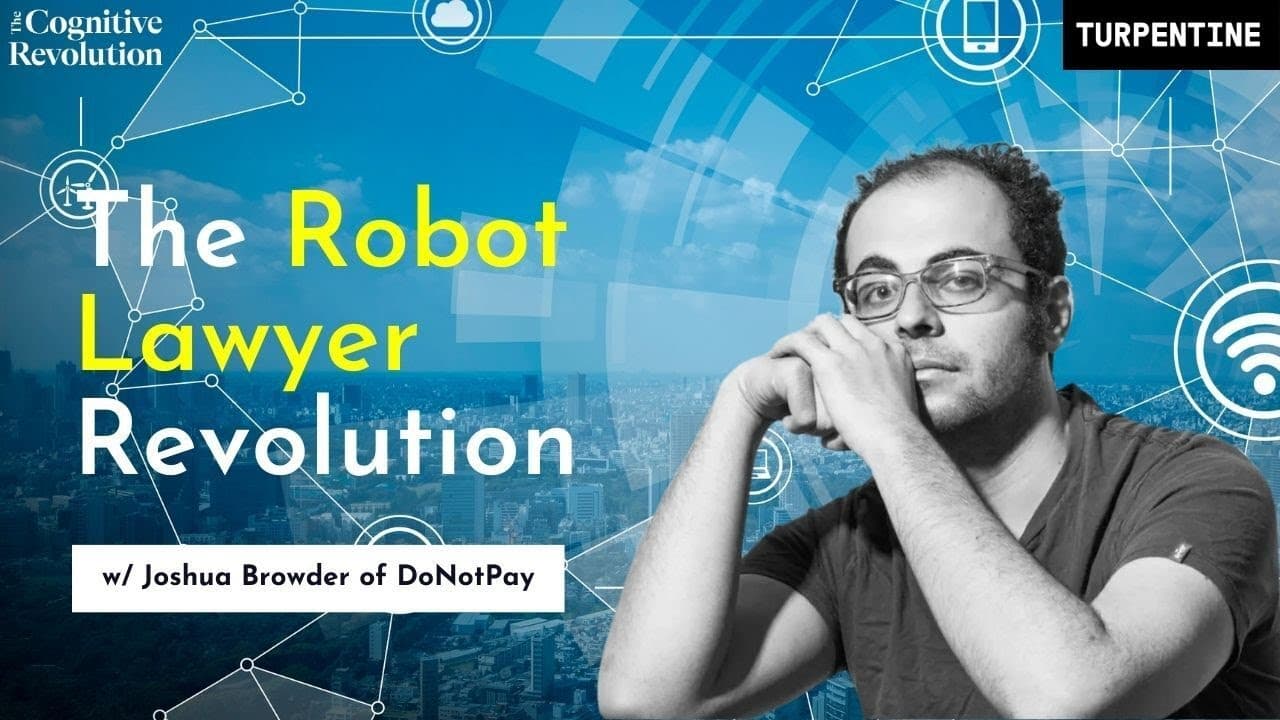
Joshua Browder, founder of DoNotPay, discusses how AI can empower consumers by automating legal processes and fighting against financial injustices. AI is used to negotiate bills and identify unfair charges, providing consumers with tools to reclaim their rights. The conversation also explores the ethical considerations and potential regulations needed as AI becomes more pervasive in legal and consumer interactions.
Transcript
my admission is if the big companies are using AI consumers should have access to it too I think the whole financial system is stacked against an average person where if you get a wire transfer it charges a fee unless you have a lot of money in your account to cash a check if they charge a fee all of this stuff and so what angers me the most is the... Read More
Key Insights
- DoNotPay is a platform that uses AI to help consumers fight for their rights, offering over 200 use cases including bill negotiation and refund claims.
- AI can proactively save consumers money by identifying overcharges and negotiating bills, as demonstrated with services like Comcast.
- The financial system often disadvantages average consumers with hidden fees, which AI can help uncover and contest.
- AI's role in consumer rights is likened to an arms race, with companies using AI to maximize profits while consumers use it to claim their rights.
- Ethical concerns arise when AI interacts with companies without disclosing its nature, raising questions about transparency and trust.
- Joshua Browder argues against heavy regulation of AI, suggesting it could stifle innovation, especially for startups.
- The future consumer experience might involve AI filtering and personalizing interactions, though this raises privacy and ethical concerns.
- There is potential for AI to deflate costs in many sectors by automating routine tasks, making services cheaper and more accessible.
Install to Summarize YouTube Videos and Get Transcripts
Explore YouTube Video Summarizer or Get YouTube Transcript Extractor
Questions & Answers
Q: How can AI help consumers fight financial injustices?
AI can assist consumers by automating the process of identifying and contesting unfair charges and fees. For example, DoNotPay uses AI to link with bank accounts, find areas where consumers are overcharged, and negotiate bills with companies like Comcast. This empowers consumers to reclaim their rights without spending excessive time and effort on disputes.
Q: What are the ethical concerns of AI in consumer interactions?
One major ethical concern is the lack of transparency when AI interacts with companies without disclosing its nature. This raises questions about trust and the potential for AI to misrepresent itself. There is also concern about the balance between innovation and regulation, as excessive regulation could stifle AI's potential benefits for consumers.
Q: How might AI change the consumer experience in the near future?
AI is expected to personalize and streamline consumer interactions, potentially offering proactive solutions like automatic bill negotiation and fraud detection. However, this raises privacy concerns and the possibility of AI-driven marketing becoming intrusive. Consumers may need AI tools to filter and manage these interactions effectively.
Q: What is Joshua Browder's stance on AI regulation?
Joshua Browder advocates for minimal regulation of AI, particularly for startups, to avoid hindering innovation. He suggests that regulation should focus on preventing harmful uses of AI, such as in debt collection or sentencing, while allowing beneficial applications to flourish. Browder emphasizes the need for a balanced approach that protects consumers without stifling technological progress.
Q: How does DoNotPay use AI to negotiate bills?
DoNotPay employs AI to interact with company chat systems, such as Comcast, to negotiate bill reductions. The AI analyzes the consumer's account and formulates arguments based on consumer rights and regulatory standards. This process is automated and aims to achieve favorable outcomes for consumers without requiring their direct involvement.
Q: What potential does AI have to deflate costs in various sectors?
AI has the potential to significantly reduce costs in sectors like customer service, legal services, and healthcare by automating routine tasks. This could lead to cheaper and more efficient services, benefiting consumers through lower prices. However, achieving this requires overcoming regulatory challenges and ensuring AI is used ethically and effectively.
Q: How is DoNotPay addressing the challenge of AI costs?
DoNotPay is focused on being cost-effective by using a mix of AI models for different tasks, ensuring that only complex tasks use more expensive models like GPT-4. They also explore open-source models to reduce costs further. This strategy allows them to maintain a lean operation while providing valuable services to consumers.
Q: What are the future prospects for AI in legal contexts?
AI's future in legal contexts includes potential roles in automating low-level legal tasks and assisting with consumer rights protection. However, significant challenges remain, such as regulatory hurdles and ethical considerations. The legal field may resist AI's integration due to concerns about job displacement and the need for human oversight in complex cases.
Summary & Key Takeaways
-
Joshua Browder's DoNotPay uses AI to automate consumer rights protection, addressing issues like bill negotiation and hidden fees. This empowers consumers against large corporations that use AI for profit maximization. The conversation discusses the ethical implications of AI in legal contexts and the need for balanced regulation to prevent misuse while fostering innovation.
-
AI's role in consumer rights is evolving into an arms race, with companies and consumers both leveraging technology to their advantage. Browder emphasizes the importance of transparency and ethical considerations in AI interactions, particularly in legal and consumer contexts. He advocates for minimal regulation to avoid stifling innovation.
-
The future of AI in consumer rights could lead to significant cost deflation in various sectors by automating routine tasks. However, Browder warns of the potential for regulatory capture by large corporations, which could hinder consumer empowerment. The discussion highlights the need for thoughtful regulation to balance innovation with consumer protection.
Read in Other Languages (beta)
Share This Summary 📚
Summarize YouTube Videos and Get Video Transcripts with 1-Click
Try YouTube Summary with ChatGPT & Claude or YouTube Transcript Generator
Explore More Summaries from Cognitive Revolution "How AI Changes Everything" 📚





Summarize YouTube Videos and Get Video Transcripts with 1-Click
Try YouTube Summary with ChatGPT & Claude or YouTube Transcript Generator