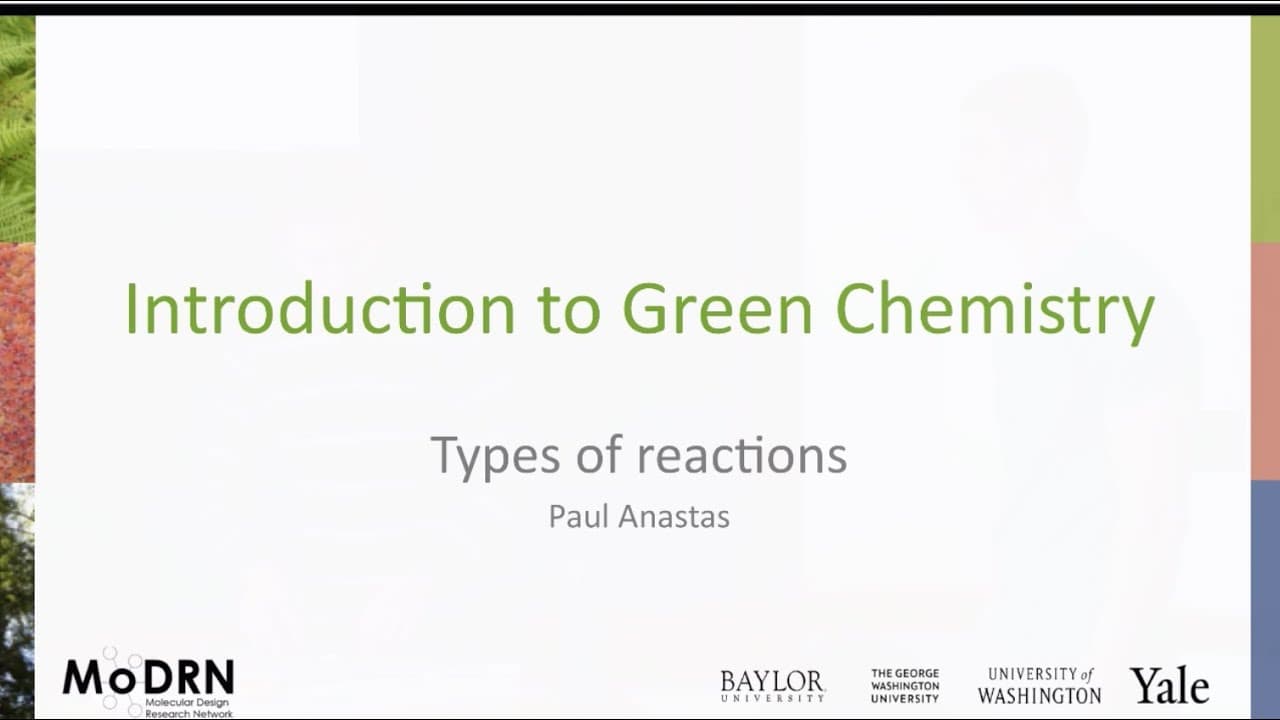
M2F Foundation Types of Reactions
TL;DR
This content provides a brief introduction to various types of chemical reactions, including combination reactions, double replacement reactions, and combustion reactions.
Transcript
want to give an introduction to types of reactions and reactivities just briefly talking very generally at this point we have a couple different types of reactions we have the combination or coupling reaction where we just take two separate molecules we bring them together and they form a new molecule no waste produced necessarily though often will... Read More
Key Insights
- 👶 Combination reactions involve the formation of a new molecule by combining two separate molecules.
- 👶 Double replacement reactions result in partners switching places and forming new compounds.
- 💁 Combustion reactions involve the reaction of a substance with oxygen to form oxide species.
- ❓ Styrene and bromine can undergo a combination reaction, resulting in the addition of bromine to the styrene molecule.
- 😵 Cross-coupling experiments using organotin compounds and iodine can lead to the formation of new compounds.
- 😆 Tri methyl tin iodide is an example of a toxic compound that can be formed in certain reactions.
- ❓ Tin is a commonly used coupling reagent in chemical reactions due to its effectiveness.
Install to Summarize YouTube Videos and Get Transcripts
Explore YouTube Video Summarizer or Get YouTube Transcript Extractor
Questions & Answers
Q: What are combination reactions?
Combination reactions involve the combination of two separate molecules to form a new molecule. This reaction does not produce any waste and can be seen in examples like burning aluminum in air to get aluminum oxide.
Q: What are double replacement reactions?
Double replacement reactions, also known as metathesis reactions, occur when partners in a reaction switch and form new compounds. This reaction can result in the formation of multiple products.
Q: What happens in a combustion reaction?
In a combustion reaction, a substance reacts with oxygen, leading to the formation of oxide species. This reaction is commonly observed in reactions involving elements other than noble gases.
Q: Why is tri methyl tin iodide considered toxic?
Tri methyl tin iodide is highly toxic and can be considered weapons-grade due to its toxicity. It falls under compounds known as organotin compounds, which belong to the heavy metals category on the periodic table.
Summary & Key Takeaways
-
There are different types of reactions, including combination reactions where two molecules combine to form a new molecule and double replacement reactions where partners switch to form new compounds.
-
Combustion reactions involve the reaction of a substance with oxygen, resulting in the formation of oxide species.
-
Examples of these reactions include the reaction of styrene with bromine as a combination reaction and a cross-coupling experiment involving organotin compounds and iodine.
Read in Other Languages (beta)
Share This Summary 📚
Summarize YouTube Videos and Get Video Transcripts with 1-Click
Try YouTube Summary with ChatGPT & Claude or YouTube Transcript Generator
Explore More Summaries from YaleCourses 📚

Summarize YouTube Videos and Get Video Transcripts with 1-Click
Try YouTube Summary with ChatGPT & Claude or YouTube Transcript Generator