How to Make a YouTube Intro That Keeps Viewers Watching
TL;DR
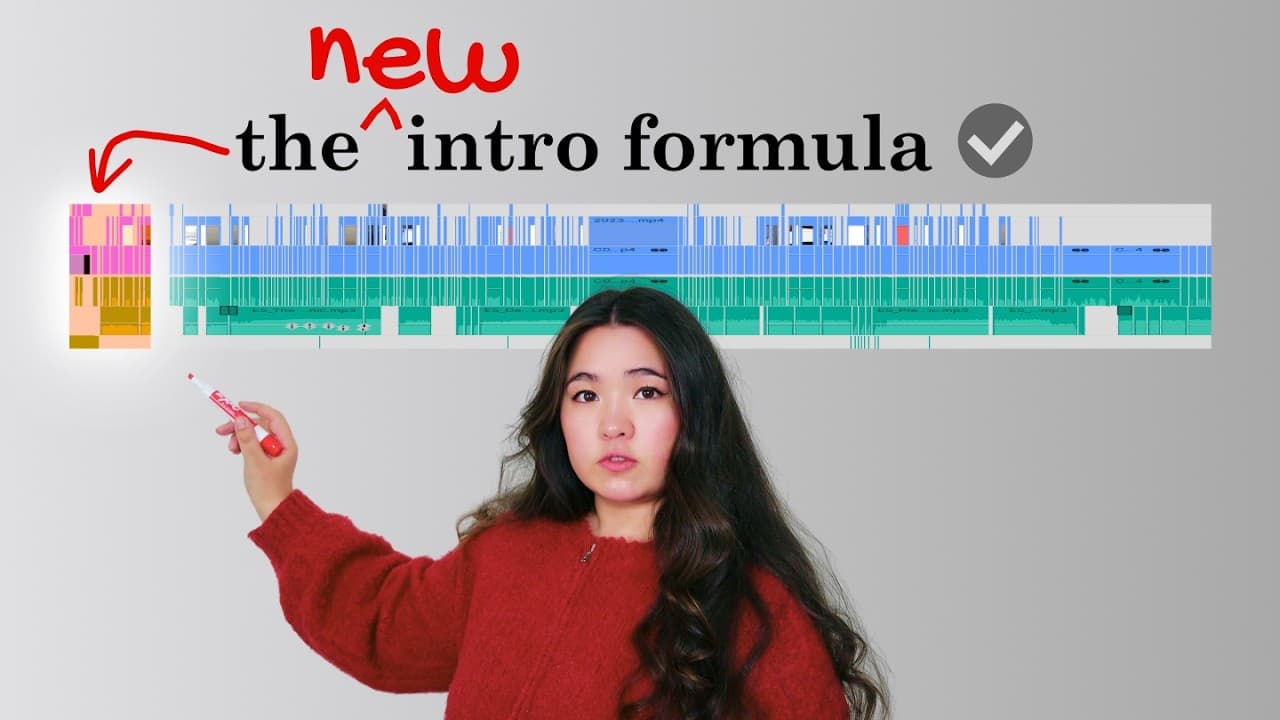
Keep viewers past the intro with a four-step formula: define your plot promise from the title and thumbnail, meet that promise in the first 5 seconds by saying and showing the subject, then add just enough context, at least one curiosity gap, and your unique service proposition. Most creators lose up to 50% of viewers in the intro, and the strongest intros run 45 seconds or less.
Transcript
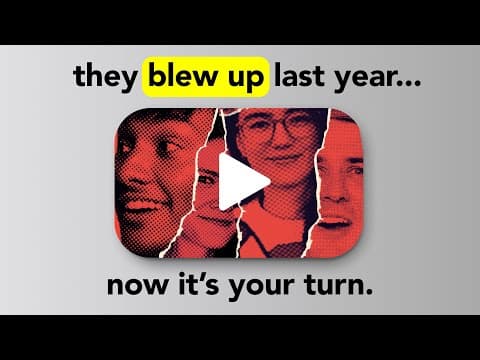
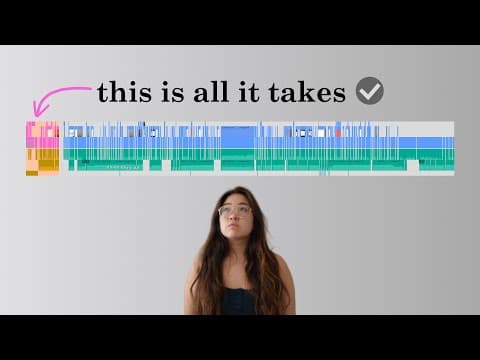
This is a video timeline, and this tiny section might be the reason your channel hasn't blown up yet. It's called the intro, and it's where most creators typically lose up to 50% of their viewers. So, how can you get people to stay? 2 years ago, I answered that question with a viral four-step system that helped thousands of creators actually get re... Read More
Key Insights
- The intro is where most creators lose up to 50% of their viewers, making it the single section most likely to be the reason a channel has not blown up yet.
- The plot promise is the promise of what a video will be about, set by the title and thumbnail (TNT), and the intro exists to keep that promise above all else.
- The most clickable title and thumbnail should come first, then the plot promise, then the intro built to match, so you never lock into a premise nobody clicks on.
- The first 5 seconds have one job: assure viewers they will get what they clicked for, most simply by saying the subject of the title and showing the subject of the thumbnail.
- Showing now matters more than saying because the autoplay feature lets viewers hover over videos and use the silent preview to decide whether to click, as shown by Ali Abdaal's book-filled newer intro.
- The rest of the intro needs three core ingredients in any order: necessary context and setup, at least one curiosity gap, and a unique service proposition.
- Time to value measures how long after clicking a viewer receives value, and the number one culprit behind a bloated time to value is too much frontloaded context.
- A curiosity gap is the gap between what viewers know and want to know, and because brains crave closure it is one of the most effective ways to raise retention; Mark Rober opened three in 36 seconds.
Install to Summarize YouTube Videos and Get Transcripts
Explore YouTube Video Summarizer or Get YouTube Transcript Extractor
Questions & Answers
Q: How much of your audience do you lose in a YouTube intro?
According to the video, the intro is where most creators typically lose up to 50% of their viewers. It is described as the tiny section of the video timeline that might be the reason a channel has not blown up yet. Because so many viewers drop off at this exact point, getting the intro right is presented as one of the highest-leverage things a creator can do, and the entire four-step formula in the video is built around getting those viewers to stay past it.
Q: What is a plot promise on YouTube?
A plot promise is the promise of what the video is going to be about, set by your title and thumbnail (TNT). The video explains that titles and thumbnails do not just make people click; they also set expectations for the kind of video the viewer is about to get. For example, Michelle Karee's plot promise was a video about attempting to race Formula 1 cars, and MKBHD's was a video about his opinions on the iPhone 16. You cannot meet a plot promise in your intro if you have not first clearly defined it.
Q: Should you make your intro or your title and thumbnail first?
You should make your title and thumbnail first. The video argues that because TNT and intro are closely linked, making your intro first risks locking you into a premise that people will not click on. Instead, start with the most clickable version of your title and thumbnail, use that to define your plot promise, and then build out your intro to match that promise. Mark Rober's example shows choosing a clickable stunt framing over a plain engineering-questions framing before building the intro.
Q: What should the first 5 seconds of a video do?
The first 5 seconds have one job only: to meet the plot promise set by the title and thumbnail and assure viewers they will get what they clicked for. If viewers see something unrelated to the TNT, they assume they were clickbaited and click away. One of the simplest and most effective ways to do this is by saying the subject of your title and showing the subject of your thumbnail within the first 5 seconds, as Mark Rober does by both stating and showing himself on top of a speeding train.
Q: Why does showing matter more than saying in a YouTube intro?
Showing matters more than saying because of the autoplay feature. More and more viewers hover over videos before clicking, using the silent preview to decide whether the video is worth watching. If you rely solely on the verbal script to fulfill your plot promise, a muted preview gives viewers no idea what the video is about, as with an older Ali Abdaal video. In a newer video, viewers can tell the topic without sound because books and categories appear on screen within 5 seconds.
Q: What three ingredients does the rest of a YouTube intro need?
After the first 5 seconds, the rest of the intro should contain three core ingredients regardless of niche: any necessary context and setup, at least one curiosity gap, and your unique service proposition. The video stresses that these three ingredients can show up in any order, but they all need to be there, and they all need to be there fast to avoid losing viewers before they get hooked.
Q: What is time to value and why does it matter for retention?
Time to value is a metric measuring how long it takes, after a viewer clicks a video, until they receive some of the value they clicked for. The longer the time to value, the more impatient the viewer becomes and the more likely they are to click off. The number one culprit behind a bloated time to value is too much context frontloaded all at once at the very beginning. The best creators establish just enough context to get viewers to care, filling in more later, and the most effective intros are 45 seconds or less.
Q: How do curiosity gaps increase video retention?
A curiosity gap is the gap between what we currently know and what we want to know, and it is one of the most powerful drivers of human behavior because our brains are biologically wired to crave closure. An unanswered question or unfinished story creates a mental itch that can only be scratched by staying to get the answer, making curiosity gaps one of the single most effective ways to increase retention. Mark Rober opens three gaps in 36 seconds, including how you steer a hot air balloon, built from a contradiction, verbalizing the question, then cutting off the pilot's answer.
Summary & Key Takeaways
-
Most creators lose up to 50% of viewers in the intro. Two years ago the creator shared a viral four-step system, and this is the updated version. Step one is defining your plot promise, the promise of what the video is about, which is set by your title and thumbnail (TNT).
-
Because TNT and intro are linked, start with the most clickable title and thumbnail, then build the intro to match, as Mark Rober did by framing engineering questions as jumping on a moving train. Step two is the first 5 seconds, whose only job is to meet the plot promise by saying the title subject and showing the thumbnail subject.
-
Showing outweighs saying now because autoplay lets viewers judge from a silent preview. The rest of the intro needs three ingredients: minimal context, at least one curiosity gap, and a unique service proposition, delivered fast. The best intros run 45 seconds or less, and curiosity gaps, the space between what viewers know and want to know, drive retention.
Read in Other Languages (beta)
Share This Summary 📚
Summarize YouTube Videos and Get Video Transcripts with 1-Click
Try YouTube Summary with ChatGPT & Claude or YouTube Transcript Generator
Explore More Summaries from Aprilynne Alter 📚
Summarize YouTube Videos and Get Video Transcripts with 1-Click
Try YouTube Summary with ChatGPT & Claude or YouTube Transcript Generator