How to replicate Mark Rober's YouTube success
TL;DR
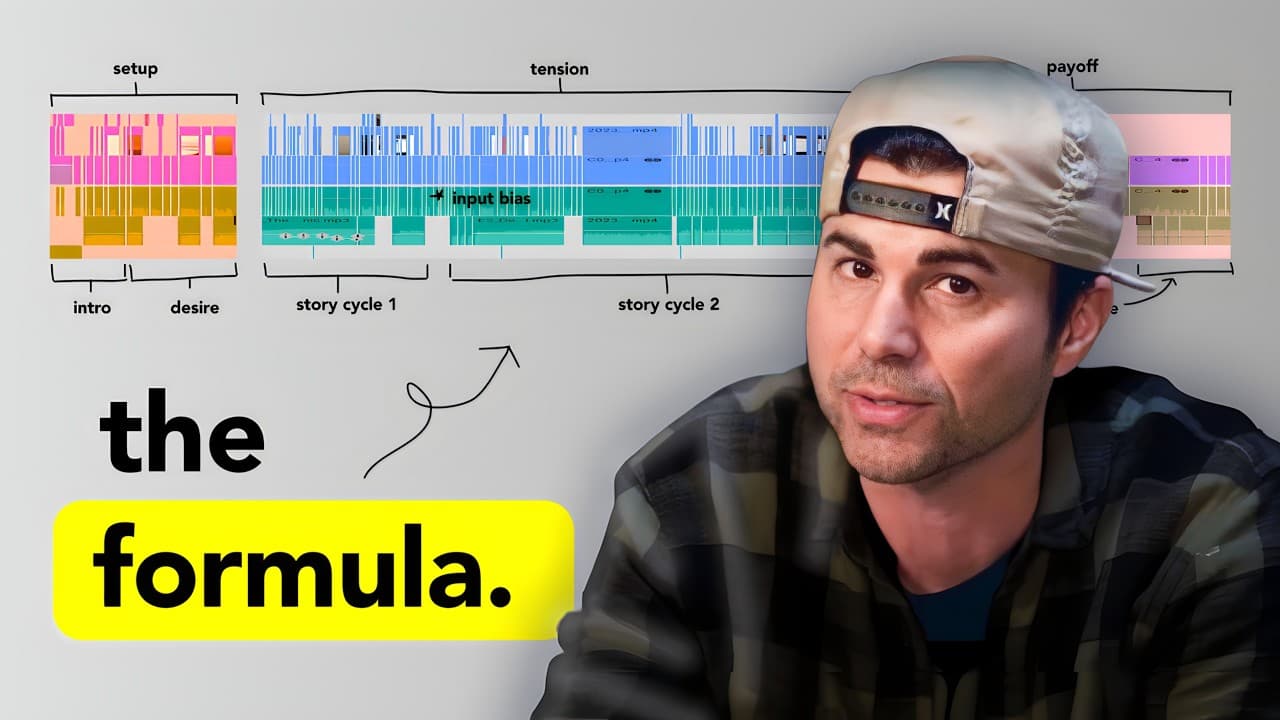
The key is to first pick ideas that trigger strong emotions and have a big payoff, then craft concise, curiosity driven titles and two types of thumbnails, novelty and moment, tested through AB experiments. Storytelling structure with setup, tension and payoff keeps viewers engaged. A reliable process turns ideas into high performing videos.
Transcript
Mark Rober has discovered the formula for YouTube success bringing in over 30 million subscribers and 4 billion views in the last year alone he just doesn't miss but what does he do differently why is every single video he releases an instant hit to find out I spent a full week closely studying as money Mark rber interviews and videos as I could po... Read More
Key Insights
- The core idea filter requires two criteria: emotional response and big payoff, which guides what becomes a video in Mark Rober's notebook.
- Titles are concise and designed to spark an unanswered question, creating a curiosity gap that compels clicks.
- Thumbnails fall into two categories, novelty and moment, each crafted to maximize curiosity and anticipation of the moment before a payoff.
- Mark tests multiple thumbnail options, sometimes up to seven concepts, to identify the best performing version.
- Effective packaging includes short titles, simple vocabulary, and title case to aid quick comprehension and skimmability.
- The emotional driver of awe or intense novelty often correlates with higher shareability and viewer engagement.
- The ending payoff is planned early and serves as a reward for viewer attention, reinforcing satisfaction and retention.
- A strong story cycle with setup, tension and payoff underpins all successful videos, providing a repeatable framework instead of relying on talent alone.
Install to Summarize YouTube Videos and Get Transcripts
Explore YouTube Video Summarizer or Get YouTube Transcript Extractor
Questions & Answers
Q: How does Mark Rober decide which video ideas to pursue?
Mark uses a notebook mechanism where ideas must meet two critical criteria to be considered: they must evoke an emotional response and have a big payoff. He also tests the idea by explaining it in one to three sentences to his friends, seeking quick feedback on whether the concept feels compelling or not. This process filters out weaker ideas before any production begins.
Q: What role do emotions play in making a video go viral according to the analysis?
Emotions drive sharability, with awe and anger performing best for sharing while sadness performs worst. Mark leverages this by choosing ideas that can generate a strong visceral reaction, ensuring the video is remarkable and shareable. The emotional payoff is designed to linger with viewers after the video ends, encouraging further discussion and sharing.
Q: How are titles crafted to maximize clicks, and what is their strategic purpose?
Titles are intentionally concise, around 40 characters, designed to be skimmed quickly. They spark an unanswered question, creating a curiosity gap that compels viewers to click to learn the answer. This approach helps overcome the brief window before viewers scroll away and improves click through rates.
Q: What are the two types of thumbnails Mark uses, and how do they differ?
The two types are novelty thumbnails and moment thumbnails. Novelty thumbnails showcase something new or extreme to attract attention, while moment thumbnails depict a tense moment to generate curiosity about what happens next. Both aim to elicit curiosity and drive clicks, but they do so through different psychological triggers.
Q: How does Mark approach thumbnail testing and optimization?
Mark tests multiple thumbnail variants, sometimes seven concepts, to observe which one yields the best performance. He conducts AB tests and iterates based on results, choosing the final thumbnail only after evaluating how each concept performs over time, ensuring the chosen thumbnail best represents the video while maximizing views.
Q: What is the storytelling structure that Mark consistently uses in his videos?
Mark follows a story cycle consisting of setup, tension, and payoff. He begins with a killer setup that promises two core elements, a plot promise and a payoff, to hook viewers. Throughout the video, tension builds as the concept unfolds, culminating in a satisfying payoff that resolves the built tension.
Q: What practical advice is given for creators who want to implement Spotter Studio insights?
Spotter Studio is recommended as a tool to generate distinct thumbnail concepts and brainstorm ideas. While the video notes its public access closed, it suggests using similar tools to create varied thumbnail variations and concept directions for pre production. Creators should leverage such tools to ideate, test, and refine their visuals and titles.
Q: Why is the production rhythm of Mark Rober described as selective and expensive, and how does this affect content strategy?
The analyst notes that Mark uploads roughly once a month and often spends six figures on shoots, making him ultra selective about ideas. This discipline ensures each video has a strong premise, clear payoff, and robust production quality, contributing to consistently high view counts and subscriber growth by focusing on high impact, well funded projects.
Summary & Key Takeaways
-
Master the idea selection by prioritizing emotional impact and a clear payoff, which makes content more shareable and watchable over time.
-
Use concise, curiosity driven titles and two thumbnail archetypes to maximize click through rate, testing variations to find the most effective combination.
-
Apply a consistent storytelling framework with setup, tension and payoff to maintain viewer engagement from premise to conclusion.
Read in Other Languages (beta)
Share This Summary 📚
Summarize YouTube Videos and Get Video Transcripts with 1-Click
Try YouTube Summary with ChatGPT & Claude or YouTube Transcript Generator
Explore More Summaries from Aprilynne Alter 📚
Summarize YouTube Videos and Get Video Transcripts with 1-Click
Try YouTube Summary with ChatGPT & Claude or YouTube Transcript Generator