How to price services to hit high gross margins
TL;DR
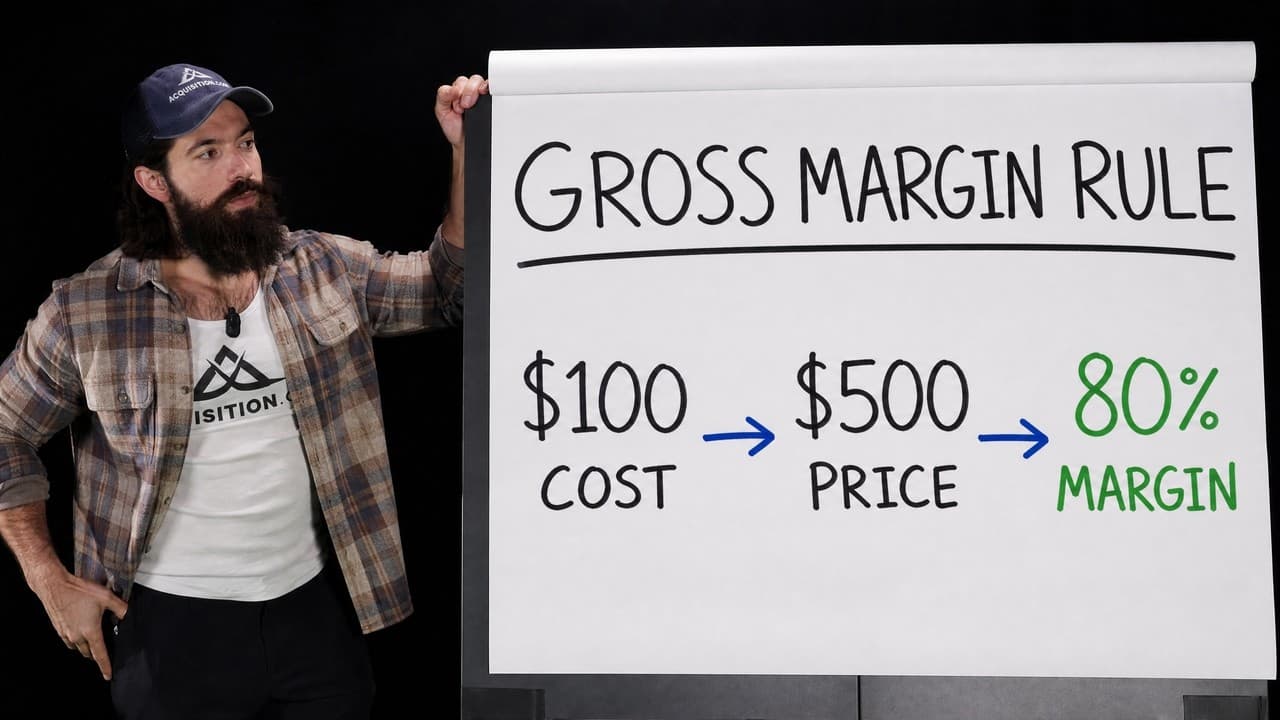
Gross margins are the driver of business profitability; to grow you must price for value and maintain high margins. A service business should target 80 percent or higher gross margins, because lower margins trap you with insufficient funds to cover growth costs. Decommoditized offers help sustain those margins.
Transcript
gross margins. So, gross margins are wildly misunderstood, which is interesting. Um, if you are if you are a business owner, you you have to learn the language of business. All right? It is it is for sure. There there are different languages, but there's there's not a huge amount of words that you have to know. You might need to know like a hundred... Read More
Key Insights
- Gross margin is the relationship between price and cost to deliver, and it drives every other metric in the business.
- 80 percent gross margins are presented as a rule of thumb for services, with higher margins enabling more growth capacity and less cost pressure.
- Net margins cannot exceed gross margins, so maximizing gross margin is essential for achieving desired profits.
- Many small businesses undercharge due to personal wallet considerations or undervaluing the service, which limits scaling.
- Decommodifying an offer, through branding and differentiated value, helps sustain higher margins over price competition.
- A higher gross margin reduces the burden of additional costs such as marketing, admin, and overhead, enabling reinvestment in growth.
- The math example shows how small differences in margin dramatically change profit per customer and overall scalability.
- The 30-day cash collect rule links margin to cash flow by focusing on recovering costs within the first month of engagement.
Install to Summarize YouTube Videos and Get Transcripts
Explore YouTube Video Summarizer or Get YouTube Transcript Extractor
Questions & Answers
Q: How to achieve high gross margins in a service business
High gross margins are achieved by ensuring your price reflects the value you deliver and by controlling delivery costs. In practice, that means targeting 80 percent or higher gross margins and avoiding price competition that degrades value. Focus on monetizing life-changing outcomes for customers, not just the service delivered.
Q: Why do small business owners undercharge and what happens next
Small business owners undercharge often because they empathize with customers or underestimate the value of their own skills. This reduces cash flow and limits growth, making it harder to cover marketing, admin, and overhead. Over time, profits shrink, and opportunities to scale diminish as margins stay low.
Q: What is the difference between gross margin and net margin
Gross margin compares price to the direct cost of delivering the product or service, while net margin accounts for all other expenses such as marketing, rent, and admin. Net margin cannot exceed gross margin, because the latter represents the money available to cover all other costs and still profit.
Q: How can branding help avoid commoditization
Branding creates perceived value that distinguishes your service from similar offerings. By emphasizing unique benefits, outcomes, or experience, you shift from competing on price to competing on value. This reduces price sensitivity, supports higher pricing, and helps maintain higher gross margins over time.
Q: What is the importance of the 30-day cash collect rule
The 30-day cash collect rule emphasizes recovering costs quickly so cash flow supports ongoing operations. It requires the first 30 days of cash collections to cover the combined cost of delivering the service and acquiring the customer. This enables reinvestment in growth without delaying expansion.
Q: What happens when gross margins are too low for a business
Low gross margins leave little room for all other costs, forcing compromises on growth initiatives, marketing, or staffing. This can trap a business in a cycle of limited revenue and insufficient funds to scale, making it difficult to reach sustainable profitability and long-term success.
Q: How does one price to be non-commoditized
To price non-commoditized services, highlight unique outcomes, packaging, and guarantees that create distinct value in the customer’s life. Price should reflect this differentiated value, not just the cost to deliver. This approach preserves margins and makes price comparisons less relevant for potential buyers.
Q: What is the relationship between margin and customer value
Margin works by aligning the price with the value delivered to customers. When customers perceive substantial life improvement or problem resolution, they are willing to pay a premium. Conversely, underpricing erodes margin and undermines the ability to invest in quality, branding, and growth initiatives.
Summary & Key Takeaways
-
Gross margins define how much you charge versus cost to deliver, and directly influence net profitability and expansion capacity.
-
A common pitfall for small businesses is undercharging, often due to empathy for customers or underestimating value, which shrinks growth potential.
-
Pricing should reflect life-changing value to customers, not just the cost of service, to avoid commodity pricing and preserve margins.
Read in Other Languages (beta)
Share This Summary 📚
Summarize YouTube Videos and Get Video Transcripts with 1-Click
Try YouTube Summary with ChatGPT & Claude or YouTube Transcript Generator
Explore More Summaries from MoreMozi 📚





Summarize YouTube Videos and Get Video Transcripts with 1-Click
Try YouTube Summary with ChatGPT & Claude or YouTube Transcript Generator