What Is Multi-Layer Reactive Foil and How Does It Work?
TL;DR
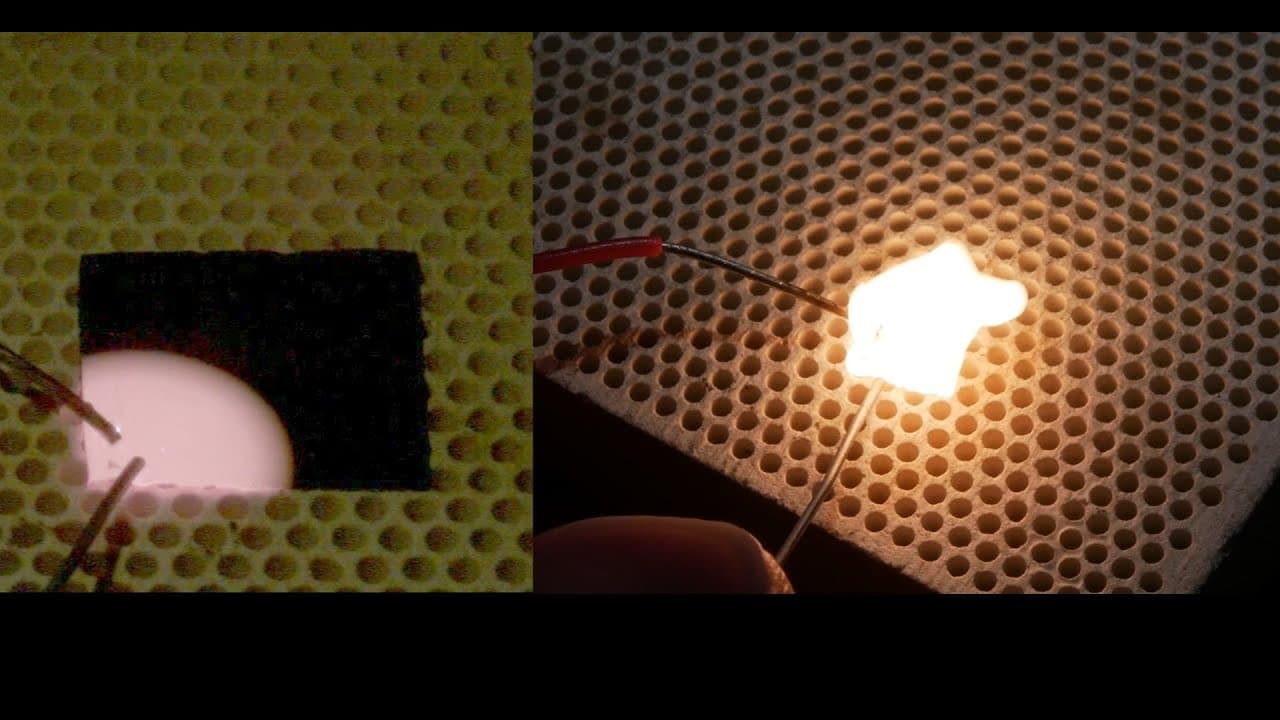
Multi-layer reactive foil, made of alternating layers of aluminum and nickel, releases significant heat when sparked, transforming into a brittle nickel aluminide compound. This reaction occurs quickly without gas release, making it ideal for soldering applications, especially on heat-sensitive materials. Its rapid heat generation allows for effective solder joints without extensive heating of the base materials.
Transcript
today on applied science I'd like to show you an unusual material this is a tiny little piece of sheet metal it's very thin about 60 microns thick and if we take this and just use a couple batteries connected to some wires and strike them to make a little Spark you can see it releases a ton of heat nearly melting itself in the process and what we'r... Read More
Key Insights
- 🥵 The sheet metal is made of alternating layers of aluminum and nickel, which react with each other when heat is applied.
- 🎭 The compound formed, nickel aluminide, has lower energy and releases a significant amount of heat during the reaction.
- 🫢 The reaction does not release any gas, making it useful for soldering applications as the materials being soldered stay intact.
- 😅 The thin sheet metal can be ignited with electricity, a hot soldering iron, or a laser pulse.
- 😚 It is essential for the sheet metal and other materials to be planar and in close contact for successful soldering.
- 🤘 The sheet metal is used by the Indium Corporation for soldering difficult-to-solder materials quickly and effectively.
- 🥵 The fast heat release and absence of gas in the reaction make the sheet metal suitable for various applications, including soldering in heat-sensitive materials.
Install to Summarize YouTube Videos and Get Transcripts
Explore YouTube Video Summarizer or Get YouTube Transcript Extractor
Questions & Answers
Q: How does the thin sheet metal release heat when a spark or laser pulse is applied?
The thin sheet metal is made up of alternating layers of aluminum and nickel. When a spark or laser pulse is initiated, the metals react with each other, releasing heat in the process.
Q: Can the thin sheet metal be ignited without electricity?
Absolutely! The electricity used to ignite the metal does not play a role in the reaction. Heat from a hot soldering iron or a laser pulse can also initiate the reaction.
Q: What makes the thin sheet metal suitable for soldering applications?
The thin sheet metal releases heat rapidly and does not release any gas during the reaction. This property makes it ideal for soldering applications as it melts solder quickly without disrupting the materials being soldered.
Q: How is the thin sheet metal used in soldering applications?
The thin sheet metal is used to assemble two thin sheets of solder. When the energetic compound is initiated, it quickly melts the solder, creating a solder joint within milliseconds.
Summary & Key Takeaways
-
The provided content showcases the properties and characteristics of a thin sheet metal made of aluminum and nickel.
-
When a spark or laser pulse is applied, the metal releases a significant amount of heat, transforming into a brittle compound.
-
The compound formed, nickel aluminide, has lower energy and can be used in various soldering applications due to its ability to melt solder quickly.
Read in Other Languages (beta)
Share This Summary 📚
Summarize YouTube Videos and Get Video Transcripts with 1-Click
Try YouTube Summary with ChatGPT & Claude or YouTube Transcript Generator
Explore More Summaries from Applied Science 📚


Summarize YouTube Videos and Get Video Transcripts with 1-Click
Try YouTube Summary with ChatGPT & Claude or YouTube Transcript Generator