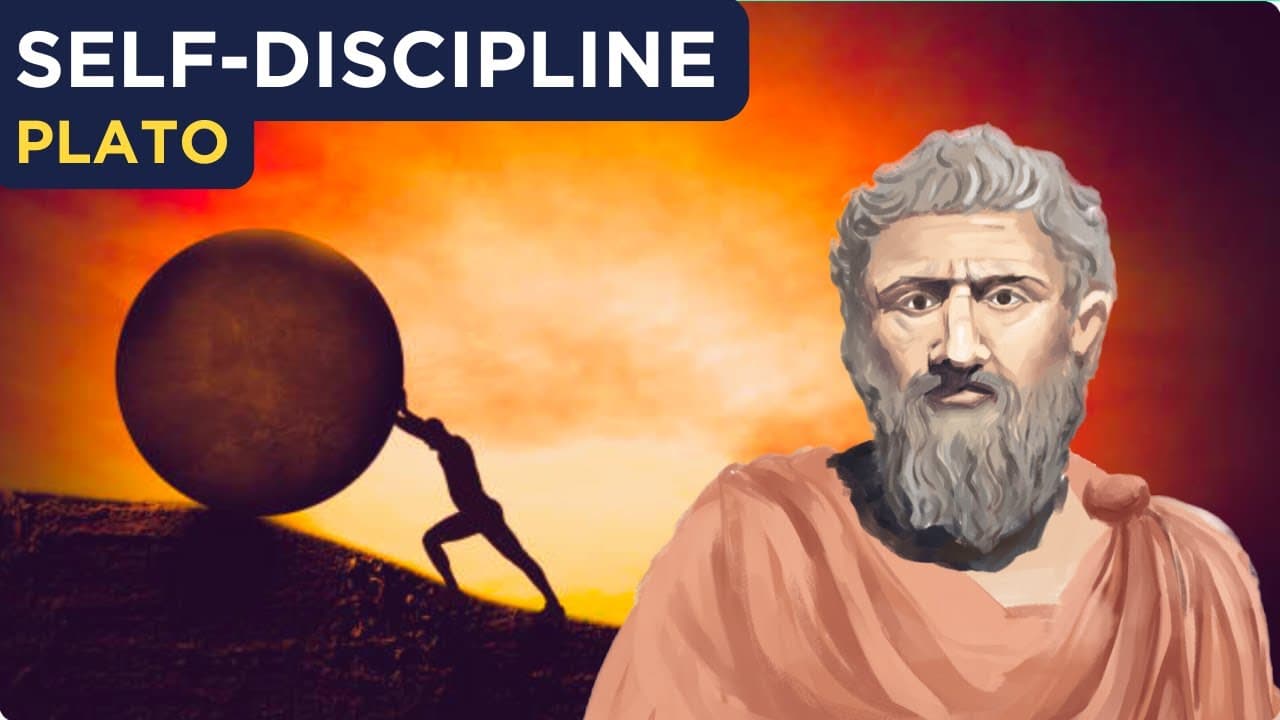
How to Master Self-Discipline According to Plato
TL;DR
To master self-discipline, Plato underscores the importance of balancing the three components of the soul: Reason, Spirit, and Appetite. He advocates for the 'Art of Measurement,' which encourages thoughtful decision-making and prioritizing long-term goals over immediate pleasures. Actively seeking knowledge and virtues further enhances moral character and effective self-discipline.
Transcript
According to ancient Greek philosopher Plato, self-discipline is about using your reasoning capacities, thinking things through, and relying on your inner strength, your willpower. He once shared a story in a talk called Phaedrus. In this story, Plato creates an allegory to explain what he saw as the three core components of the human s... Read More
Key Insights
- 🤳 Plato's philosophy outlines the importance of reason, spirit, and appetite in shaping moral character and self-discipline.
- 🌗 The "Art of Measurement" by Plato emphasizes thoughtful decision-making for self-discipline and lasting happiness.
- 🤳 Self-discipline involves taking control of one's actions, overcoming limitations, and striving for personal growth guided by inner willpower.
Install to Summarize YouTube Videos and Get Transcripts
Explore YouTube Video Summarizer or Get YouTube Transcript Extractor
Questions & Answers
Q: What are the three components of the human soul according to Plato?
Plato identifies Reason (Logos), Spirit (Thumos), and Appetite (Epithumia) as the core components, each playing a crucial role in shaping an individual's moral character and self-discipline.
Q: How does Plato's "Art of Measurement" guide decision-making for self-discipline?
The "Art of Measurement" encourages individuals to weigh their desires against long-term well-being, prioritizing reason over immediate pleasures for lasting happiness and self-discipline.
Q: How can individuals avoid being victims and take control of their lives according to Plato?
Plato urges individuals to recognize their potential, overcome limitations, and actively transform their lives by embracing challenges, improving themselves daily, and steering their actions towards self-discipline.
Summary & Key Takeaways
-
Plato discusses the three components of the soul: Reason, Spirit, and Appetite.
-
Self-discipline involves prioritizing reason over desires for lasting happiness.
-
Actively seeking knowledge and virtues enhances one's moral character and self-discipline.
Read in Other Languages (beta)
Share This Summary 📚
Summarize YouTube Videos and Get Video Transcripts with 1-Click
Try YouTube Summary with ChatGPT & Claude or YouTube Transcript Generator
Explore More Summaries from Philosophies for Life 📚





Summarize YouTube Videos and Get Video Transcripts with 1-Click
Try YouTube Summary with ChatGPT & Claude or YouTube Transcript Generator