How to Flatten Stomach Without Sit-Ups
TL;DR
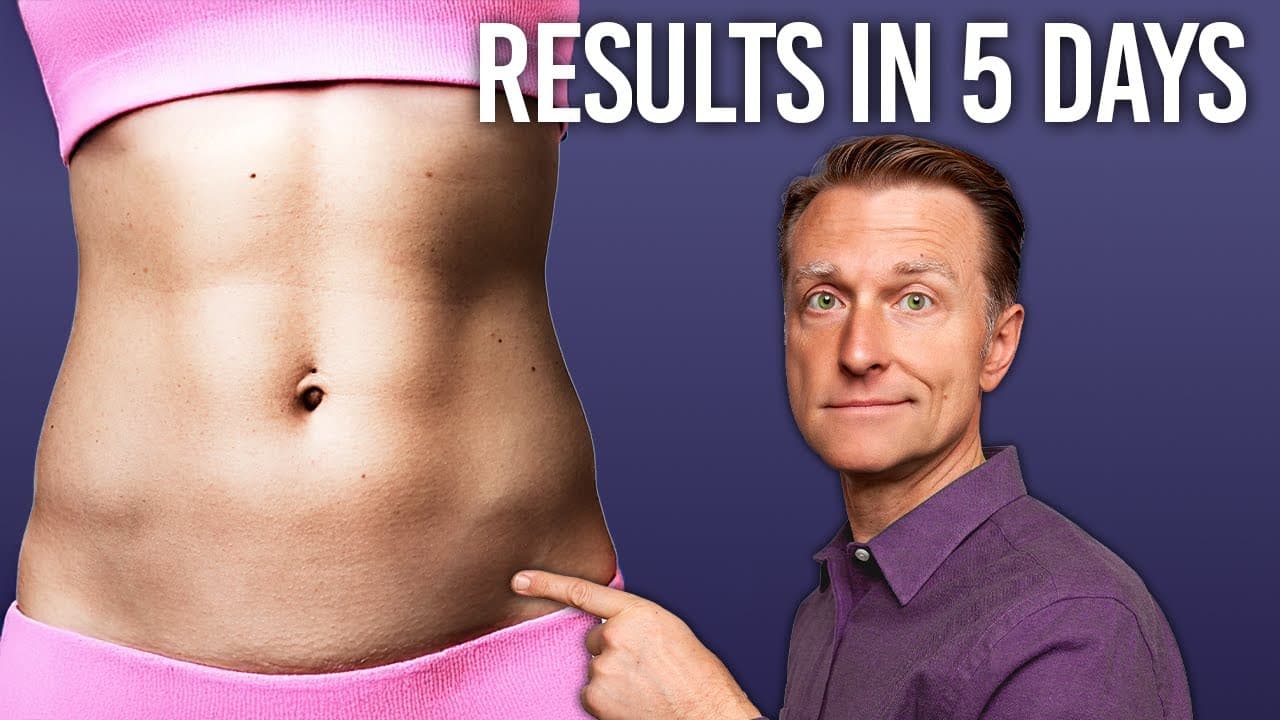
To effectively tighten and flatten your stomach, focus on reducing insulin levels by lowering carbohydrate intake, rather than relying solely on a calorie deficit. The 'dead bug' exercise helps tone abdominal muscles without engaging the hip flexors, unlike traditional sit-ups. By entering ketosis and achieving fat adaptation, your body can efficiently use stored fat for energy, reducing hunger and cravings.
Transcript
how to tighten and flatten your stomach with just one move and we're not talking about sit-ups everyone knows this as a fact you must absolutely make sure that the calories you're putting in your body do not exceed what you're expending or using and that way if we create a deficit then this is naturally going to ride right into a loss of weight let... Read More
Key Insights
- Calorie deficit alone is not a sustainable weight loss strategy due to increased hunger and cravings.
- Insulin is the key hormone influencing fat storage or burning; reducing insulin allows fat to be used for energy.
- Carbohydrates significantly impact insulin levels, while fats are neutral and proteins have moderate effects.
- To lose weight effectively, lower carbohydrate intake to reduce insulin and allow the body to use fat as fuel.
- Ketosis occurs in 2-3 days, while fat adaptation takes 2-3 weeks, enabling maximum fat burning.
- A low-carb diet enables the body to tap into both dietary and stored fat, minimizing hunger between meals.
- The 'dead bug' exercise targets abdominal muscles without stressing the hip flexors, aiding in a flatter stomach.
- Fat provides more than double the energy compared to glucose, making it a more efficient fuel source.
Install to Summarize YouTube Videos and Get Transcripts
Explore YouTube Video Summarizer or Get YouTube Transcript Extractor
Questions & Answers
Q: How does reducing insulin help with weight loss?
Reducing insulin helps with weight loss by allowing the body to tap into stored fat for energy. Insulin is a hormone that controls whether the body stores or burns fat. By lowering insulin levels, typically through reducing carbohydrate intake, the body can use fat as a fuel source, reducing hunger and cravings and enabling more sustainable weight loss.
Q: What is the role of carbohydrates in insulin production?
Carbohydrates play a significant role in insulin production as they are the macronutrient that most significantly stimulates insulin release. When carbohydrates are consumed, they raise blood glucose levels, prompting the pancreas to release insulin to help cells absorb glucose for energy. Reducing carbohydrate intake can thus lower insulin levels, facilitating fat burning.
Q: Why is a calorie deficit not sustainable for weight loss?
A calorie deficit is often not sustainable for weight loss because it can lead to increased hunger and cravings, requiring significant willpower to maintain. Over time, the body's metabolism may slow down in response to reduced calorie intake, making it harder to lose weight and maintain energy levels. This approach can also lead to nutrient deficiencies if not carefully managed.
Q: What is ketosis and how long does it take to achieve?
Ketosis is a metabolic state where the body uses ketones, derived from fat, as its primary energy source instead of glucose. It typically takes 2-3 days to enter ketosis after significantly reducing carbohydrate intake. Achieving full fat adaptation, where the body maximizes fat burning efficiency, can take 2-3 weeks. This state supports sustained energy levels and reduced hunger.
Q: How does the 'dead bug' exercise help flatten the stomach?
The 'dead bug' exercise helps flatten the stomach by targeting and toning the abdominal muscles and fascia without engaging the hip flexors, unlike sit-ups. This exercise enhances core stability, controls pelvic tilting, and improves coordination, which collectively contribute to a tighter, more toned midsection. Consistent practice can yield noticeable results in a short period.
Q: What is fat adaptation and why is it important?
Fat adaptation is the process where the body becomes highly efficient at burning fat as its primary fuel source. This metabolic state is important because it allows individuals to utilize stored body fat for energy, reducing reliance on dietary carbohydrates and minimizing hunger and cravings. Fat adaptation supports sustained energy levels and is crucial for effective weight management.
Q: How does the ketogenic diet support weight loss?
The ketogenic diet supports weight loss by significantly reducing carbohydrate intake, which lowers insulin levels and allows the body to enter ketosis. In ketosis, the body efficiently burns fat for energy, both from dietary sources and stored body fat. This diet minimizes hunger and cravings, making it easier to maintain a calorie deficit without feeling deprived, leading to sustainable weight loss.
Q: What are the benefits of using fat as an energy source?
Using fat as an energy source provides several benefits, including more than double the energy yield compared to glucose. This efficiency supports sustained energy levels and reduces the need for frequent meals or snacks. Fat metabolism also minimizes insulin spikes, reducing hunger and cravings, and supports better weight management by allowing the body to utilize stored fat effectively.
Summary & Key Takeaways
-
To achieve a flat stomach, focus on lowering insulin by reducing carbohydrate intake, rather than just cutting calories. This approach allows the body to use stored fat for energy, minimizing hunger and cravings. The 'dead bug' exercise effectively tones the abdomen without engaging the hip flexors, unlike traditional sit-ups.
-
Insulin plays a crucial role in determining whether the body stores or burns fat. By reducing insulin through a low-carb diet, the body enters ketosis and achieves fat adaptation, enabling efficient fat burning. This process reduces the need for willpower to resist hunger and cravings.
-
The 'dead bug' exercise strengthens the abdominal muscles and fascia, acting like a girdle to flatten the stomach. Performing this exercise daily, along with a low-carb diet, can produce noticeable results in 1-2 weeks. This method emphasizes the importance of fat as a sustainable energy source.
Read in Other Languages (beta)
Share This Summary 📚
Summarize YouTube Videos and Get Video Transcripts with 1-Click
Try YouTube Summary with ChatGPT & Claude or YouTube Transcript Generator
Explore More Summaries from Dr. Eric Berg DC 📚




Summarize YouTube Videos and Get Video Transcripts with 1-Click
Try YouTube Summary with ChatGPT & Claude or YouTube Transcript Generator