How to Utilize the Leaked Claude Code Effectively
TL;DR
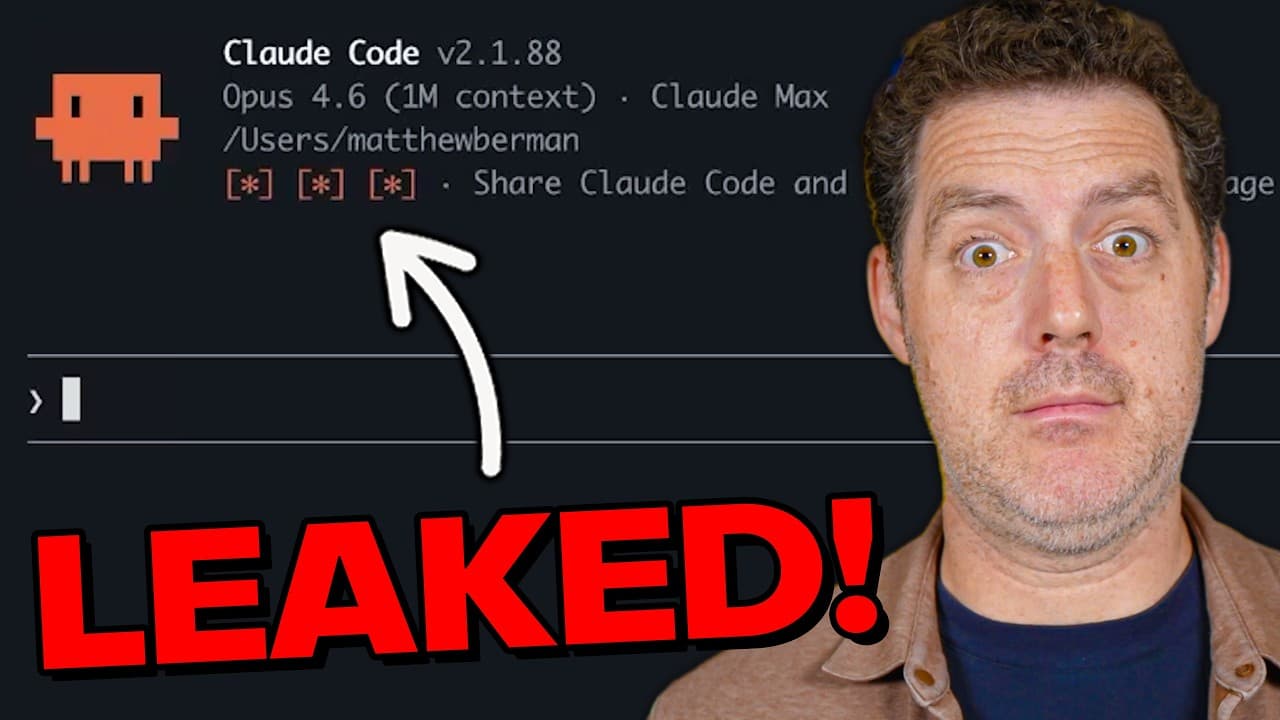
The leaked Claude Code, now open-source, offers a unique opportunity to study and improve coding harnesses for large language models. Despite potential legal actions from Anthropic, the Python-converted code can be legally used, providing insights into Claude's efficient harness system. This leak allows developers to enhance their own projects and spot potential weaknesses in Claude Code.
Transcript
Claude Code was accidentally leaked. It's right here by Twitter user Fried Rice. Here is a zip file to the entire source code of Claude Code. Now we all get to look into one of the best Aentic coding harnesses on the planet. And boy did we learn a lot from it. Claude Code source code has been leaked via a map file in their npm registry. So you can ... Read More
Key Insights
- Claude Code's source code was leaked via npm registry, allowing public access.
- The code has been converted to Python, making it legal to use despite the original leak.
- Claude Code enhances large language models by providing an efficient harness.
- The leak has garnered significant attention, with millions of views on social media.
- The open-source nature allows developers to study and improve their own harnesses.
- Anthropic's Claude Code is now more open-source than OpenAI's offerings.
- The leak does not reveal customer data or sensitive company secrets.
- The open-source community can use these insights to build better AI systems.
Install to Summarize YouTube Videos and Get Transcripts
Explore YouTube Video Summarizer or Get YouTube Transcript Extractor
Questions & Answers
Q: How was Claude Code leaked?
Claude Code was leaked via a map file in the npm registry, allowing the entire source code to be downloaded. This leak made the code publicly accessible, enabling developers to explore and utilize it for their own projects. The leak has attracted significant attention on social media, with millions of views.
Q: What makes Claude Code special?
Claude Code is special due to its efficient harness system that enhances the performance of large language models. It combines the Claude Code harness with the Claude family of models, offering unique insights into prompt handling, parallelism, and permission configurations. These features make it a valuable resource for developers.
Q: Can Claude Code be run locally?
Yes, Claude Code can be run locally. The leaked source code, particularly the Python-converted version, allows users to legally download and run it on their systems. This enables developers to experiment with Claude Code, integrate it with other models, and explore its capabilities in a local environment.
Q: What are the implications of the Claude Code leak for competitors?
The Claude Code leak allows competitors to study its harness system, providing insights into building better or cheaper coding agents. Developers can learn from its prompt handling, permission configurations, and parallelism features, potentially integrating these findings into their open-source projects to enhance performance.
Q: What are some key features of Claude Code?
Key features of Claude Code include its efficient harness system, parallelism capabilities, permission configurations, and compaction methods. These features enable it to enhance large language models' performance, making it a valuable resource for developers looking to improve their own coding harnesses and AI systems.
Q: How does Claude Code handle permissions?
Claude Code is designed to be configured for permissions, allowing users to predefine allowed and disallowed tasks. It includes a smarter permissioning system that predicts user preferences, automatically allowing or denying actions. This reduces the need for constant permission prompts, streamlining the coding process.
Q: What is the role of compaction in Claude Code?
Compaction in Claude Code involves managing memory and context by summarizing conversation spans and clearing old tool results. This ensures that important information is retained while less relevant data is forgotten, optimizing the model's performance and enhancing its ability to focus on critical tasks and inputs.
Q: How does the open-source community benefit from the Claude Code leak?
The open-source community benefits from the Claude Code leak by gaining access to its efficient harness system and insights into prompt handling, parallelism, and permission configurations. Developers can integrate these findings into their projects, enhancing performance and fostering innovation within the AI community.
Summary & Key Takeaways
-
Claude Code's accidental leak provides an opportunity to explore one of the best coding harnesses for large language models. The Python version is legally usable, offering insights into its efficient system. This leak allows developers to enhance their own projects and spot potential weaknesses in Claude Code.
-
Anthropic's Claude Code is now more open-source than OpenAI's offerings, with the leak attracting millions of views. The open-source nature allows developers to study and improve their own harnesses, benefiting the AI community with new insights and innovations.
-
The leak of Claude Code does not reveal customer data or sensitive company secrets. Instead, it provides valuable insights into the harness system, enabling developers to build better AI systems and understand the strengths and weaknesses of Claude Code.
Read in Other Languages (beta)
Share This Summary 📚
Summarize YouTube Videos and Get Video Transcripts with 1-Click
Try YouTube Summary with ChatGPT & Claude or YouTube Transcript Generator
Explore More Summaries from Matthew Berman 📚






Summarize YouTube Videos and Get Video Transcripts with 1-Click
Try YouTube Summary with ChatGPT & Claude or YouTube Transcript Generator