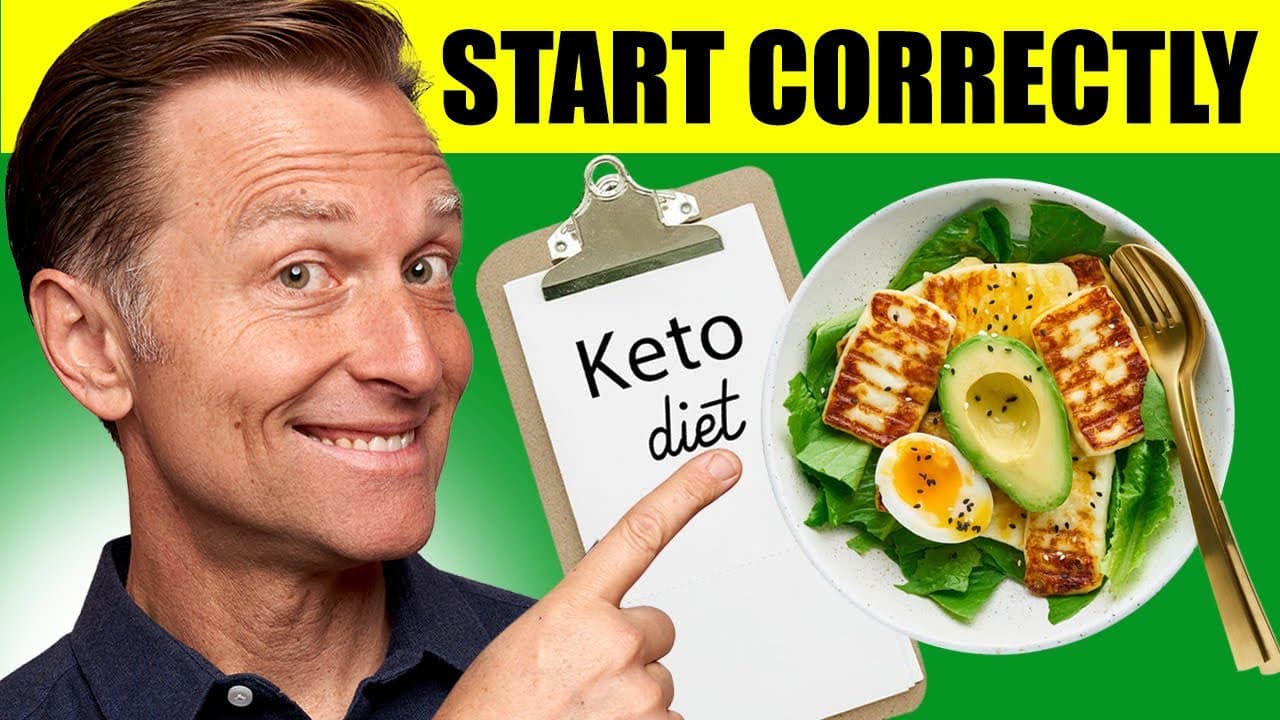
How to Start a Healthy Ketogenic Diet Correctly
TL;DR
Start a healthy ketogenic diet by lowering carbohydrates and eating fewer, larger meals to reduce insulin triggers and shift from sugar fuel to fat fuel. Build each meal around at least seven cups of vegetables, a palm-sized portion of moderate protein, and enough selected fat to feel satisfied. Remove added sugars, most fruit, grains, starches, and snacks; read on for specific foods, portions, substitutions, and fasting guidance.
Transcript
welcome today we're going to show you how to start keto correctly and this is for beginners what are we trying to do we're trying to switch what your body is running on as far as fuel-wise so we want to switch from burning sugar fuel to fat fuel there's this one hormone called insulin which is the key to determine whether you're going to burn f... Read More
Key Insights
- Insulin is presented as the main hormone determining whether the body burns sugar or fat. The recommended strategy is to lower carbohydrate intake and reduce meal frequency because both carbohydrates and eating events are said to trigger insulin.
- Low-carbohydrate eating requires removing all forms of sugar, including honey, agave nectar, brown sugar, white sugar, and date sugar. Food labels should be checked carefully, with sugar content kept as close to zero as possible and sugar alcohols used as recipe alternatives.
- Most fruit, grains, and starches are excluded from the plan. Small amounts of raspberries, strawberries, and blackberries are allowed, while almond flour can replace grain-based flour and cauliflower can serve as an alternative for mashed potatoes or pizza crust.
- Vegetables are an explicit exception to broad carbohydrate restriction. The plan recommends at least seven cups of salads or vegetables, including bell peppers, cabbage, broccoli, kale, Brussels sprouts, carrots, tomatoes, and beets, preferably eaten first to make the target easier to reach.
- Protein intake is moderate rather than massive, generally described as three to eight ounces depending on size, metabolism, age, and activity. A palm-sized portion offers a simpler guide, with fattier meat, fish, eggs, cheese, nuts, and nut butters among the suggested options.
- Dietary fat is used to increase satisfaction and support longer intervals between meals. The guidance recommends fats such as avocado, butter, olive oil, coconut oil, olives, nuts, and cheese, while cautioning against soy, corn, canola, cottonseed, safflower, and sunflower oils.
- Intermittent fasting is introduced through genuine hunger rather than constant fullness or habitual eating. Breakfast can be delayed gradually or skipped, while coffee with butter, MCT oil, or both is suggested to provide satisfaction and make the transition toward ketosis more comfortable.
- Snacking is discouraged because every eating event is said to stimulate insulin and potentially increase hunger. If hunger appears between meals, the proposed adjustment is to add more fat to the previous or next full meal so the interval becomes easier to sustain.
Install to Summarize YouTube Videos and Get Transcripts
Explore YouTube Video Summarizer or Get YouTube Transcript Extractor
Questions & Answers
Q: How do beginners start a ketogenic diet correctly?
Lower carbohydrates and eat fewer meals to reduce insulin triggers and help the body shift from burning sugar to burning fat. Each meal should include at least seven cups of vegetables, a moderate palm-sized protein portion, and enough selected fat for satisfaction. Remove added sugars, most fruit, grains, starches, and snacks.
Q: What foods should beginners avoid on a ketogenic diet?
Avoid sugar in forms such as honey, agave nectar, brown sugar, white sugar, and date sugar. The plan also removes most fruit, wheat flour, bread, pasta, cereal, crackers, biscuits, potatoes, and other starches. Check packaged foods such as peanut butter, deli meat, bacon, dressings, and mayonnaise for added sugar.
Q: Which fruits and vegetables can beginners eat on keto?
Small amounts of raspberries, strawberries, and blackberries are allowed, while other fruits, especially apples, are excluded. Eat at least seven cups of salad or vegetables, with options including bell peppers, cabbage, broccoli, kale, Brussels sprouts, carrots, tomatoes, and beets. Eating vegetables first can make that quantity easier to finish.
Q: How much protein should a beginner eat on keto?
Protein should be moderate rather than massive, generally between three and eight ounces depending on size, metabolism, age, and activity. A simple alternative to weighing it is to use a portion about the size of your palm. Suggested choices include meat, fish, chicken, seafood, eggs, cheese, nuts, and nut butters.
Q: What fats are recommended for a ketogenic diet?
Recommended options include avocado, butter, olive oil, coconut oil, olives, nuts, cheese, and the natural fat in meat, fish, and eggs. Butter can be added to vegetables, while olive oil can be used on salads. The guidance cautions against soy, corn, canola, cottonseed, safflower, and sunflower oils.
Q: Why should vegetables be eaten before protein and fat?
Eating vegetables first is a practical way to reach the target of at least seven cups because protein and fat can quickly create fullness. Vegetables also provide food for microbes and nutrients including potassium, magnesium, and vitamin C. They may also be eaten with the rest of the meal if preferred.
Q: How should intermittent fasting be combined with keto?
Eat only when genuinely hungry, eliminate snacks, and gradually delay or skip breakfast. One example uses meals at noon and six, creating a six-hour eating window and an 18-hour fast. Water, unsweetened tea, coffee, and vitamins are included in the basic routine.
Q: What should someone do if they feel hungry between keto meals?
Distinguish mild, temporary appetite from stronger hunger accompanied by weakness, shakiness, or irritability. Mild habitual hunger can be allowed to pass when strength and mood remain good, but genuine hunger is a reason to eat. Recurring snack cravings may mean the previous meal needed more fat for satisfaction.
Summary & Key Takeaways
-
The beginner strategy combines carbohydrate restriction with fewer meals to lower insulin triggers and encourage the body to switch from sugar fuel to fat fuel. The guidance distinguishes reduced meal frequency from deliberate calorie restriction, allowing larger, satisfying meals while removing sugar, most fruit, grains, starches, and snacks from the daily routine.
-
Meals begin with at least seven cups of vegetables, followed by a moderate palm-sized protein portion and sufficient fat for satisfaction. Suggested proteins include meat, fish, chicken, seafood, eggs, cheese, nuts, and nut butters. Added fats may include avocado, butter, olive oil, coconut oil, olives, nuts, or cheese.
-
Intermittent fasting is introduced by delaying or skipping breakfast, avoiding snacks, and eating only when genuinely hungry. An example schedule places meals at noon and six, creating a six-hour eating window and an 18-hour fast. Water, unsweetened tea, coffee, and vitamins are presented as compatible with this basic routine.
Read in Other Languages (beta)
Share This Summary 📚
Summarize YouTube Videos and Get Video Transcripts with 1-Click
Try YouTube Summary with ChatGPT & Claude or YouTube Transcript Generator
Explore More Summaries from Dr. Eric Berg DC 📚





Summarize YouTube Videos and Get Video Transcripts with 1-Click
Try YouTube Summary with ChatGPT & Claude or YouTube Transcript Generator