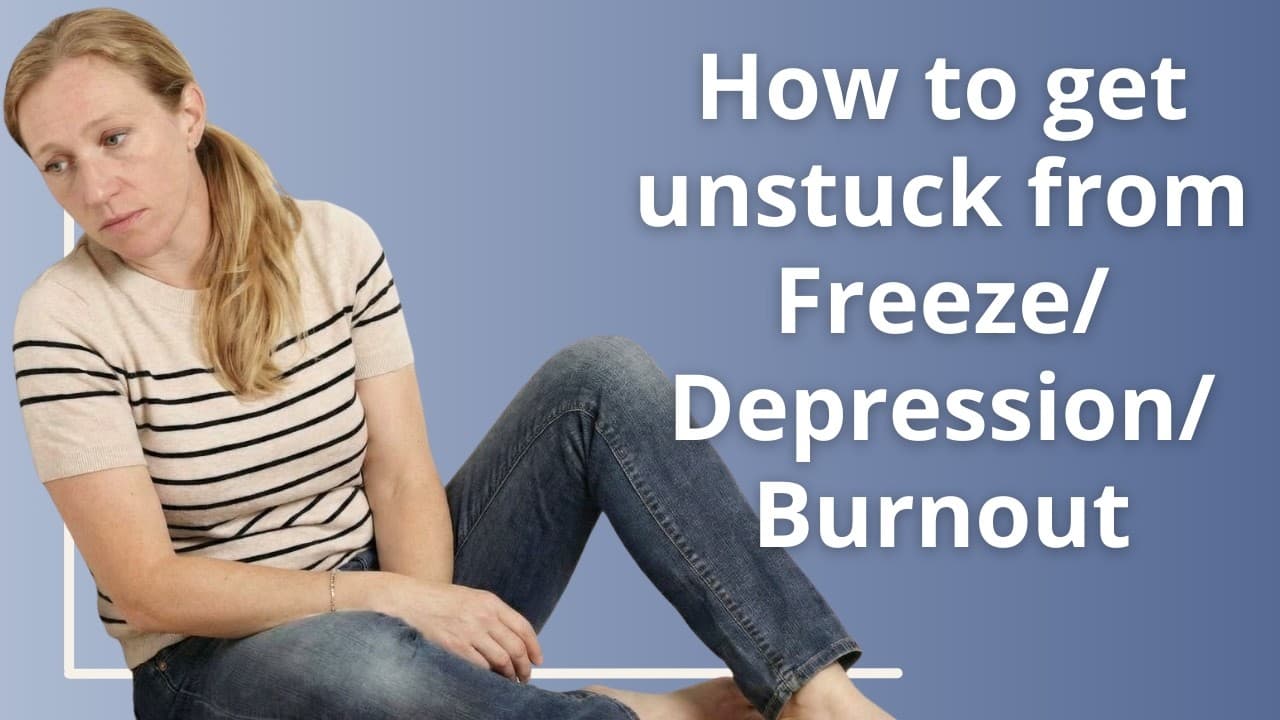
How to Escape the Freeze Response: 7 Polyvagal Habits
TL;DR
You cannot hate yourself into feeling better, and mood follows action rather than the other way around. To climb the polyvagal ladder out of dorsal vagal shutdown, use tiny habits that restore safety while increasing activation: fix your posture, get morning light, use heat and cold, and stimulate the vagus nerve.
Transcript
What if you're stuck in the freeze response or the shutdown state? This is pretty common after going through trauma. Or what if you feel sluggish or exhausted or burnt out or depressed? Maybe your limbs just feel heavy or you can't get yourself motivated. How can you regulate your emotions and get yourself moving? In this video, we're g... Read More
Key Insights
- The nervous system has three states: ventral vagal (safe and connected), sympathetic (anxious, activated, stressed), and dorsal vagal (shutdown, where you feel depressed, burnt out, frozen, and unmotivated).
- Dorsal vagal shutdown is usually triggered by intense trauma, chronic stress, or overwhelming situations, and even years of repetitive negative thoughts can trigger it. Heart rate slows, blood pressure drops, and motivation is lost.
- Berating yourself backfires because stress and overwhelm are what push you down the ladder, so you cannot climb back up by stressing yourself out more. You need to restore a sense of safety instead.
- Dopamine, the motivation chemical, follows action rather than preceding it. Waiting until you feel motivated keeps you stuck, so you take tiny action first and motivation follows.
- Improving posture activates the nervous system. Sitting taller, rolling shoulders back, getting upright, and raising your eyes sends a message from body to brain that you are capable and safe.
- Morning light regulates energy and mood. Getting 10 to 20 minutes of natural sunlight within the first hour of waking, outside without sunglasses, releases energizing neurotransmitters and supports metabolic health.
- Heat and cold can unstick the freeze response. A warm drink cues comfort, while cold water on the face, cold plunges with supervision, or shifting shower temperatures create alertness and expand your window of tolerance.
- The vagus nerve, which links mind and body, responds to vibration and touch. Humming, sighing, or gently massaging and tapping the face stimulates it and signals safety without needing much energy.
Install to Summarize YouTube Videos and Get Transcripts
Explore YouTube Video Summarizer or Get YouTube Transcript Extractor
Questions & Answers
Q: What is the freeze or shutdown response in the nervous system?
The freeze or shutdown response is linked to the dorsal vagal state, the third nervous system state where the brain and body are so overwhelmed they shut down mentally and physically. In this state you may feel depressed, burnt out, exhausted, hopeless, frozen, or unmotivated. Technically the freeze response sits in the sympathetic state where you feel stressed and paralyzed, while dorsal vagal feels tired and unmotivated, but many people use the terms interchangeably.
Q: What triggers the dorsal vagal shutdown state?
The dorsal vagal shutdown state is usually triggered by intense trauma, chronic stress, or overwhelming situations. Even without an identifiable big trauma, something like your mind cranking out negative thoughts over and over for years can trigger it. It is like the nervous system deciding it cannot overcome the situation, so it stops trying to conserve energy, producing physiological changes such as a slower heart rate, dropped blood pressure, and appetite shifts.
Q: Why does berating yourself not help you get unstuck?
Berating yourself does not help because it fails to create safety, and it is stress and overwhelm that push you down the polyvagal ladder in the first place. You cannot climb back up by stressing yourself out more and more. Instead you need to restore your sense of safety and remind yourself that you are capable and loved, which is what lets the nervous system naturally re-energize. As the video puts it, you cannot hate yourself into being happier.
Q: Why should you take action before you feel motivated?
You should act first because dopamine, the motivation chemical, follows action rather than preceding it, and mood also follows action. Waiting until you feel motivated or feel better keeps you stuck in inaction, because that is not how the brain works. When you take tiny action, such as spending time with friends or getting moving, motivation and improved mood follow afterward. This is why the micro habits focus on doing small things that increase both safety and movement.
Q: How does fixing your posture help regulate the nervous system?
Fixing your posture helps because getting more upright sends a message from your body to your brain that you are capable and safe. Sitting a little taller, bringing your head up, rolling your shoulders back, raising your eyes, and putting your feet on the floor can make you feel slightly more confident and energized. A tiny shift in posture creates a ripple effect in how you feel overall, activating the nervous system even if only for that moment.
Q: How much morning light should you get and why does it matter?
The best approach is 10 to 20 minutes of natural sunlight within the first hour of waking, ideally outside without sunglasses, staying longer if it is cloudy since diffuse daylight still counts. Light entering the eyes tells the brain how much energy to have and releases energizing neurotransmitters. Research shows light exposure can improve mood, energy, focus, sleep, metabolic health, blood pressure, and immune function. In dark climates or winter, a 10,000 lux light therapy lamp can be considered.
Q: How can heat and cold help break the freeze response?
Temperature changes can wake up your system and get you unstuck from freeze, partly because moving from dorsal vagal shutdown to safety often requires passing through activation. Sipping a warm drink and noticing the sensation cues comfort and presence. For activation, you can wash your face in cold water, or with doctor supervision try cold plunges, which slow heart rate and expand your window of tolerance. Adjusting shower temperature up and down also makes the body more alert and activated.
Q: How do you stimulate the vagus nerve to calm your nervous system?
The vagus nerve connects mind and body, and when activated it helps the nervous system calm down. Two easy methods are given. First, use vibration by humming, singing a little tune, or letting out a long sigh or a fog horn breath, since the vagus nerve loves vibration and this regulates you without much energy. Second, gently massage your face, tapping under the eyes, stroking the cheeks, or the forehead, since the vagus nerve runs through the face and this signals safety.
Summary & Key Takeaways
-
Feeling sluggish, numb, exhausted, or depressed may mean your nervous system is stuck in the dorsal vagal shutdown state at the bottom of the polyvagal ladder. This state, triggered by trauma or chronic stress, causes real physiological changes like slowed heart rate and lost motivation. It is not your fault, but you can act on it.
-
Two common approaches backfire. Yelling at yourself creates more stress instead of the safety needed to climb the ladder, so you cannot hate yourself into being happier. Waiting until you feel like it also fails because dopamine and mood follow action, not the reverse. The fix is a two-pronged approach: restore safety while increasing activation.
-
The habits shown start tiny. Sit taller to activate the nervous system, get 10 to 20 minutes of morning sunlight to prime energy and mood, use warm drinks or cold water and showers to break freeze, and hum, sigh, or massage your face to stimulate the vagus nerve and signal safety.
Read in Other Languages (beta)
Share This Summary 📚
Summarize YouTube Videos and Get Video Transcripts with 1-Click
Try YouTube Summary with ChatGPT & Claude or YouTube Transcript Generator
Explore More Summaries from Therapy in a Nutshell 📚




Summarize YouTube Videos and Get Video Transcripts with 1-Click
Try YouTube Summary with ChatGPT & Claude or YouTube Transcript Generator