How to Build the Testimonial Landing Page Behind $1M/Month in Sales

TL;DR
Build a testimonial landing page by using raw customer reviews, photos, and visible outcomes to prove product claims and answer objections in authentic customer language. The featured strategy helped support more than $1 million in sales over 30 days while maintaining over 3x return on ad spend. Read on to see how to structure the proof, address skepticism, and place calls to action.
Transcript
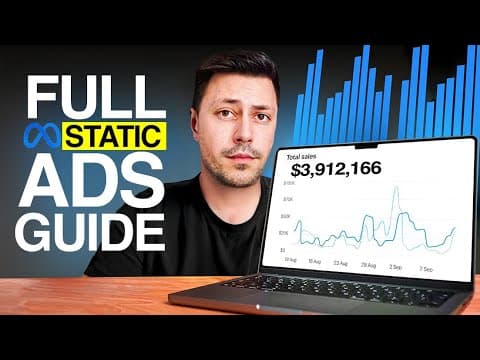
What you're looking at on screen is a brand that over the last 30 days has generated over a million dollars in total sales while maintaining over a 3x return on ad spend and spent over $255,000 on Facebook ads. And in this week's video, I'm actually going to break down one of the top performing landing pages that we are leveraging for them to actua... Read More
Key Insights
- Website conversion rate is described as the primary bottleneck preventing many brands from reaching $1 million in monthly sales. When conversion is weak, increasing sessions or spending more on Meta or Google can cause performance to deteriorate instead of producing efficient growth.
- A testimonial-style landing page is built around customer reviews that communicate product benefits and address selling points. The format can remain visually simple because the substance of the page, particularly credible evidence and relatable experiences, matters more than elaborate design features.
- Authentic customer language is more credible and relatable than a company's unsupported marketing claims. Prospective buyers can recognize their own circumstances in raw reviews, while customers have little apparent incentive to exaggerate on behalf of the brand.
- Customer evidence can make fast-result claims feel believable. Norse Organics pairs statements about results within days or two weeks with reviews and comparison images, allowing visitors to see reported outcomes instead of relying only on a brand-written promise.
- Objection handling is the organizing principle of the page. Separate groups of testimonials address speed, age and gender, severe acne, review authenticity, and buyer skepticism, so each section answers a specific reason a visitor might hesitate to purchase.
- Calls to action are placed after testimonials resolve particular concerns. One highlighted offer says, "Stop acne now," includes a 45% saving, and promises acne-free results in 60 days or the customer's money back, connecting proof with a clear next step.
- Market skepticism is especially important for brands advertising heavily on Facebook because buyers may have been disappointed by previous purchases. Reviews from identifiable customers can reassure visitors more effectively than a company simply declaring that its brand and claims are legitimate.
- A genuinely effective product is a prerequisite for the testimonial strategy. The page relies on customers reporting strong experiences and visible results, so the format cannot compensate for a product that fails to deliver the experience its advertising promises.
Install to Summarize YouTube Videos and Get Transcripts
Explore YouTube Video Summarizer or Get YouTube Transcript Extractor
Questions & Answers
Q: How do you build a testimonial landing page?
Start with a headline, strong supporting copy, a call to action, a product photo, and an initial review. Build the rest of the page around raw customer reviews, comments, photographs, and visible outcomes, grouping them by the claims and objections they address. Place relevant calls to action after the evidence resolves important concerns.
Q: What results were associated with this testimonial landing-page strategy?
The featured brand generated over $1 million in total sales during the previous 30 days while maintaining over a 3x return on ad spend. It also spent over $255,000 on Facebook ads. The Norse Organics page shown was not that brand’s exact page, but it inspired the same format used for the featured brand.
Q: Why can conversion rate prevent a brand from reaching $1 million per month?
A poor conversion rate makes additional traffic and advertising spend less effective. The transcript says conversion can decline when brands increase sessions or budgets on Meta or Google, so strong landing pages are needed to handle traffic from Meta, Google, and TikTok.
Q: Why do customer testimonials make a landing page more credible?
Testimonials let customers describe product benefits in raw, authentic language instead of relying only on company claims. Prospective buyers can recognize experiences like their own, and visible outcomes can make the advertised result feel possible. The transcript also notes that customers have nothing apparent to gain from making these statements for the company.
Q: How should testimonials be organized on a landing page?
Group testimonials according to the product claims and buyer objections they answer. The example addresses speed, suitability across ages and genders, severe acne, review authenticity, and general buyer skepticism. This makes each section a focused response to a reason someone might hesitate to purchase.
Q: How can testimonials prove that a product works quickly?
Use reviews that state specific timelines and pair them with visible results. The Norse Organics example includes customer reports of improvement within four days, eight days, one week, and two weeks, along with comparison images. That evidence makes a fast-result claim more believable than a headline alone.
Q: Does a high-converting testimonial landing page need elaborate design?
The featured format does not rely on sophisticated visual effects or an “us versus them” chart. It uses straightforward headlines, reviews, comments, product photos, outcome comparisons, and calls to action. Its central principle is that what appears on the page and how it makes visitors feel matter more than decorative polish.
Q: When is a testimonial-style landing page most suitable?
It is best suited to a genuinely strong product that already gives customers positive experiences and earns useful reviews. The transcript specifically identifies skeptical or sophisticated markets and gives supplements and technology as examples. The format cannot compensate for a product that fails to deliver the experience promised in its advertising.
Summary & Key Takeaways
-
Website conversion rate is presented as a major constraint on revenue growth because sending more traffic or increasing advertising budgets can reduce performance when the destination page converts poorly. Brands need landing pages capable of handling traffic from Meta, Google, and TikTok before they can scale advertising efficiently.
-
The testimonial-style format uses raw customer reviews, comments, product photographs, and visible outcomes instead of elaborate design elements. Its purpose is to let customers communicate the product's benefits in authentic language, making claims feel more credible and helping prospective buyers recognize experiences and concerns similar to their own.
-
Testimonials are grouped by the objections they answer, including how quickly the product works, whether it suits different ages or genders, whether it helps severe cases, and whether the reviews are genuine. Strong calls to action appear after these concerns are addressed, connecting social proof directly to the purchase decision.
Read in Other Languages (beta)
Share This Summary 📚
Summarize YouTube Videos and Get Video Transcripts with 1-Click
Try YouTube Summary with ChatGPT & Claude or YouTube Transcript Generator
Explore More Summaries from Spencer Pawliw 📚

Summarize YouTube Videos and Get Video Transcripts with 1-Click
Try YouTube Summary with ChatGPT & Claude or YouTube Transcript Generator