Building a liquid crystal display (LCD)
TL;DR
Exploring the science behind liquid crystals and how they are used in LCD displays.
Transcript
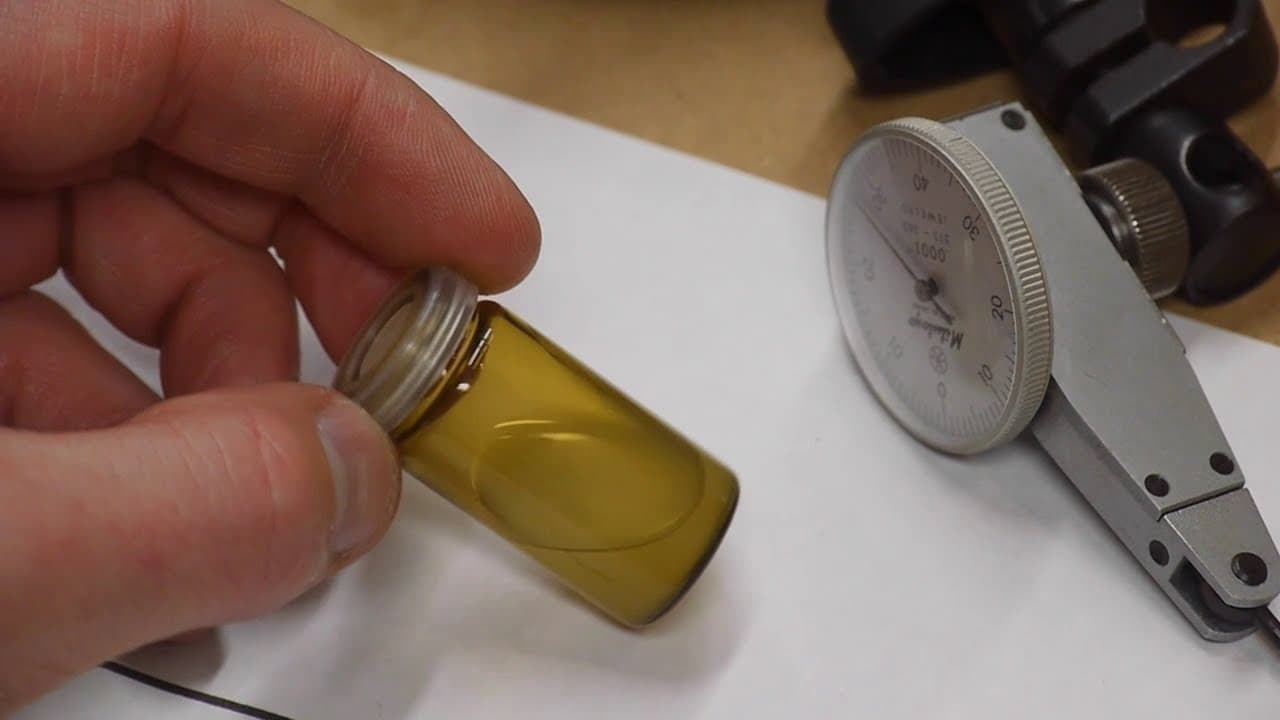
hey everyone I finished building my first LCD test cell so check it out I built this with two microscope slides that I coded with I tio and then filled with a pneumatic liquid crystal that someone donated to my purpose so as you can see the quality isn't exactly great but it is modulating light for comparison here's a commercial test cell that I've... Read More
Key Insights
- 🫗 Liquid crystals have a crystalline structure but can flow like a liquid, making them ideal for use in LCD displays.
- 🙂 Proper alignment of polarizers allows for the modulation of light in LCD displays.
- 🙂 By combining chiral and pneumatic liquid crystals, a 90-degree twist can be achieved, optimizing light transmission in LCD displays.
- 😆 Clear electrodes made of indium tin oxide are used to generate electric fields for controlling the orientation of liquid crystals.
- 😎 Scratches created by rubbing the glass with a cloth or using a polymer coating can help align the liquid crystals with the polarizers.
- 😒 LCD display technology has undergone extensive research and development, resulting in significant technological improvements and widespread use.
- 😎 The construction of LCD displays involves precise techniques for keeping glass plates separated and creating patterned electrodes.
Install to Summarize YouTube Videos and Get Transcripts
Explore YouTube Video Summarizer or Get YouTube Transcript Extractor
Questions & Answers
Q: What are liquid crystals and how do they work in LCD displays?
Liquid crystals are crystalline substances that can flow like a liquid. In LCD displays, they are used to modulate light by reorienting the polarization of light using polarizers.
Q: What is the role of polarizers in LCD displays?
Polarizers in LCD displays allow light to pass through when aligned, and block it when crossed. By placing a polarizer at a 45-degree angle between two crossed polarizers, light can pass through again due to the scrambling effect.
Q: How do chiral and pneumatic liquid crystals contribute to LCD display technology?
By mixing chiral and pneumatic liquid crystals, a 90-degree twist can be achieved in the liquid crystal layer, allowing for efficient light transmission in LCD displays.
Q: How are clear electrodes created for LCD displays?
Clear electrodes, which generate an electric field to control the orientation of liquid crystals, are typically made using indium tin oxide. This allows for selective application of the electric field under specific patterns on the display.
Summary & Key Takeaways
-
The content explores the concept of liquid crystals and their properties, which are a crystalline substance that can flow like a liquid.
-
Liquid crystals can be used to modulate light in LCD displays by reorienting the polarization of light using polarizers.
-
Two types of liquid crystals, chiral and pneumatic, are mixed together to create a 90-degree twist that allows for efficient light transmission in LCD displays.
Read in Other Languages (beta)
Share This Summary 📚
Summarize YouTube Videos and Get Video Transcripts with 1-Click
Try YouTube Summary with ChatGPT & Claude or YouTube Transcript Generator
Explore More Summaries from Applied Science 📚




Summarize YouTube Videos and Get Video Transcripts with 1-Click
Try YouTube Summary with ChatGPT & Claude or YouTube Transcript Generator