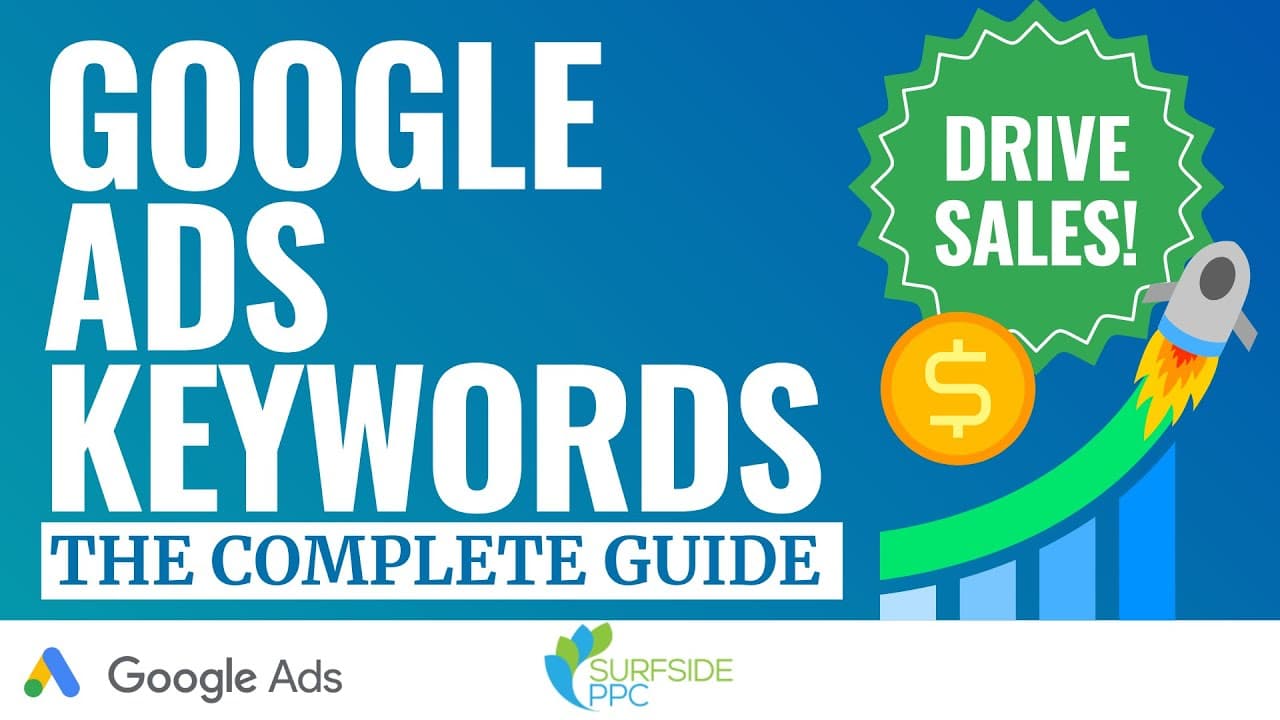
How to Conduct Effective Keyword Research for Google Ads
TL;DR
To conduct effective keyword research for Google Ads, start by understanding keyword match types: broad, phrase, and exact match. Create a list of your landing pages, then use the Google Keyword Planner to generate new keyword and landing page ideas. Finally, leverage the Search Terms Report to identify additional keyword opportunities and optimize your campaigns.
Transcript
what's up everyone welcome to the Surfside PPC YouTube channel today I'm going to be going over Google ads keyword research so I'm going to give you a five set process that you can follow no matter what business you have this process should work for you so let's get started and we're here in Google ads now the five step process I'm going to be goin... Read More
Key Insights
- 🎯 Understanding keyword match types is crucial for effectively targeting keywords in Google Ads campaigns.
- 📟 Creating a list of landing pages and page titles helps in organizing ad groups and targeting relevant keywords.
- 👶 The Google Keyword Planner is a valuable tool for generating new keyword and landing page ideas.
- ❎ The Search Terms Report provides insights into additional keyword opportunities and negative keywords for optimization.
- 👨🔬 Consider using paid keyword research tools like SEMrush, Ahrefs, or SpyFu for more in-depth competitor analysis and keyword ideas.
- ❓ Regularly review and analyze campaign data to make informed decisions and optimize your campaigns for better performance.
- ☠️ Continuously expand your keyword list and refine your targeting to reach a wider audience and improve conversion rates.
Install to Summarize YouTube Videos and Get Transcripts
Explore YouTube Video Summarizer or Get YouTube Transcript Extractor
Questions & Answers
Q: What are the different keyword match types in Google Ads?
Google Ads offers three keyword match types, including broad match, phrase match, and exact match. Broad match includes all types of relevant and potentially irrelevant keywords, phrase match narrows down the search to include keywords with the same meaning or intent, and exact match targets the exact keyword or close variants.
Q: How can I organize my Google Ads campaign based on landing pages?
Creating a list of landing pages and their corresponding page titles helps in organizing your ad groups. Each landing page and page title will represent a different ad group, and the keywords you target should be relevant to the page's content.
Q: How can I find new keyword and landing page ideas for my Google Ads campaign?
You can use the Google Keyword Planner to discover new keywords and landing pages. By entering relevant keywords or your website URL, the tool provides keyword suggestions and search volume data. You can use this information to expand your keyword list and create targeted landing pages.
Q: How can I optimize my Google Ads campaign using the Search Terms Report?
The Search Terms Report allows you to identify new keyword ideas and negative keywords. By reviewing the search terms that triggered your ads, you can uncover additional keyword opportunities for optimization or add negative keywords to ensure more relevant targeting.
Summary & Key Takeaways
-
Understand keyword match types in Google Ads, including broad match, phrase match, and exact match.
-
Create a list of landing pages and page titles to have a clear idea of where to send traffic and target keywords effectively.
-
Utilize the Google Keyword Planner to generate new keyword and landing page ideas for your campaigns.
-
Use the Search Terms Report to identify relevant keyword ideas and negative keywords for optimization.
Read in Other Languages (beta)
Share This Summary 📚
Summarize YouTube Videos and Get Video Transcripts with 1-Click
Try YouTube Summary with ChatGPT & Claude or YouTube Transcript Generator
Explore More Summaries from Surfside PPC 📚

Summarize YouTube Videos and Get Video Transcripts with 1-Click
Try YouTube Summary with ChatGPT & Claude or YouTube Transcript Generator