What Were the Causes and Consequences of the Bosnian War?
TL;DR
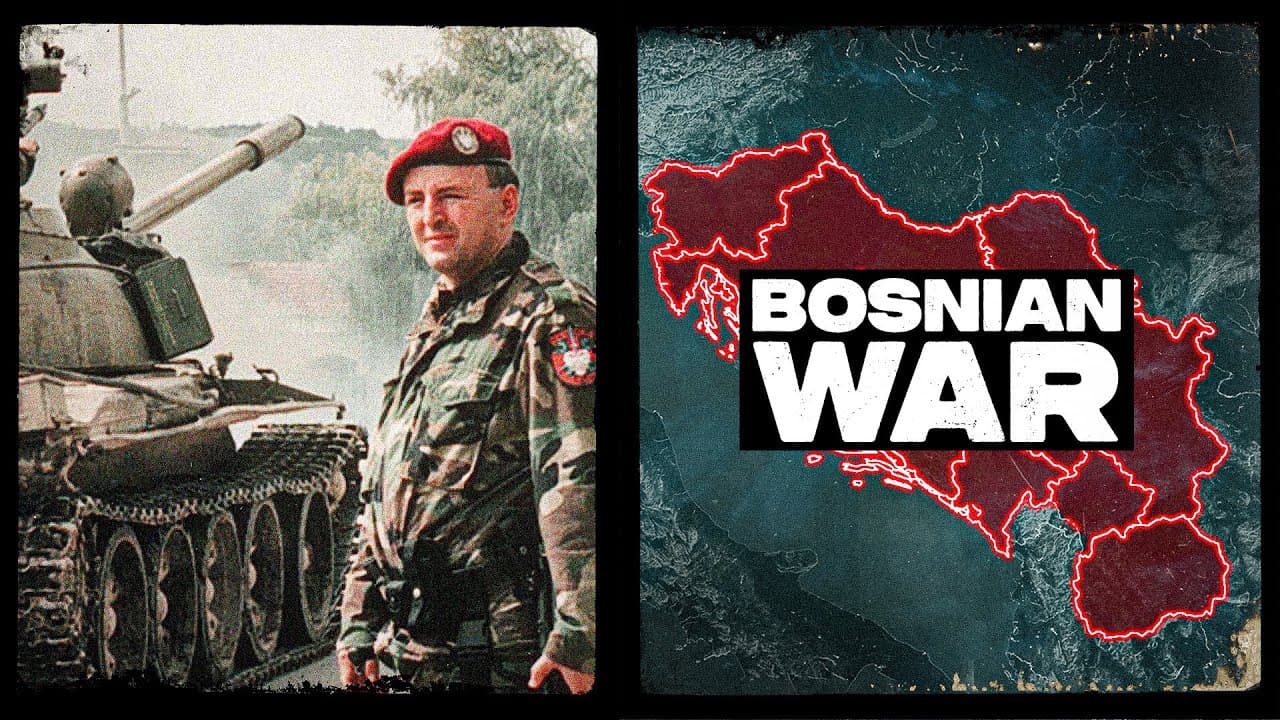
The Bosnian War was caused by rising nationalism and ethnic tensions following the breakup of Yugoslavia, leading to conflict among Bosniaks, Serbs, and Croats. It resulted in widespread atrocities, including ethnic cleansing, and highlighted the failure of international intervention, ultimately reshaping the region's political landscape.
Transcript
- It's 1991 and the Soviet Union is fracturing. And down here, another communist party is failing. Yugoslavia, a federation of six countries is ripping itself apart. Their economy is in ruin and they're replacing communism with nationalism, the kind that thrives on focusing on ethnic and religious differences. By the end of 1991, Croatia, Slovenia ... Read More
Key Insights
- 😮 The Bosnian War emerged from the breakup of Yugoslavia and the rise of nationalism.
- 🇧🇦 Ethnic tensions, fueled by leaders like Slobodan Milosevic, led to the division of Bosnia and Herzegovina.
- 🖤 The war was characterized by ethnic cleansing, atrocities, and a lack of intervention by the international community.
Install to Summarize YouTube Videos and Get Transcripts
Explore YouTube Video Summarizer or Get YouTube Transcript Extractor
Questions & Answers
Q: What were the main reasons for the breakup of Yugoslavia?
The breakup of Yugoslavia was primarily driven by a shift from communism to nationalism, as different regions sought independence and focused on ethnic and religious differences.
Q: How did Slobodan Milosevic contribute to the Bosnian War?
Slobodan Milosevic, the leader of Serbia, fueled ethnic tensions and saw the war as an opportunity to create a greater Serbian nation. He used the Yugoslav army to support the Serbian forces in Bosnia.
Q: What were the key events that led to the Bosnian War?
The war started with the declaration of independence by Croatia, Slovenia, and Macedonia. Bosnia had its independence vote, which led to the formation of Republika Srpska by the Bosnian Serbs. The war escalated with atrocities committed by all sides.
Q: How did the international community respond to the Bosnian War?
The international community initially hesitated to get involved, imposing economic sanctions on Yugoslavia and sending humanitarian aid and peacekeeping soldiers. However, they did not intervene to stop the ethnic cleansing and only enforced a no-fly zone.
Key Insights:
- The Bosnian War emerged from the breakup of Yugoslavia and the rise of nationalism.
- Ethnic tensions, fueled by leaders like Slobodan Milosevic, led to the division of Bosnia and Herzegovina.
- The war was characterized by ethnic cleansing, atrocities, and a lack of intervention by the international community.
- The Dayton Accords in 1995 ended the war and established the current borders and political entities in Bosnia and Herzegovina.
Summary & Key Takeaways
-
In 1991, Yugoslavia began to fall apart, leading to the declaration of independence by Croatia, Slovenia, and Macedonia.
-
Bosnia and Herzegovina, home to Bosniaks, Croats, and Serbs, experienced a war within a war as different factions fought for control.
-
The war was marked by ethnic cleansing, atrocities committed by all sides, and the intervention of the international community.
Read in Other Languages (beta)
Share This Summary 📚
Summarize YouTube Videos and Get Video Transcripts with 1-Click
Try YouTube Summary with ChatGPT & Claude or YouTube Transcript Generator
Explore More Summaries from Johnny Harris 📚



Summarize YouTube Videos and Get Video Transcripts with 1-Click
Try YouTube Summary with ChatGPT & Claude or YouTube Transcript Generator