How Does Toothpaste Abrasion Affect Your Toothbrush?
TL;DR
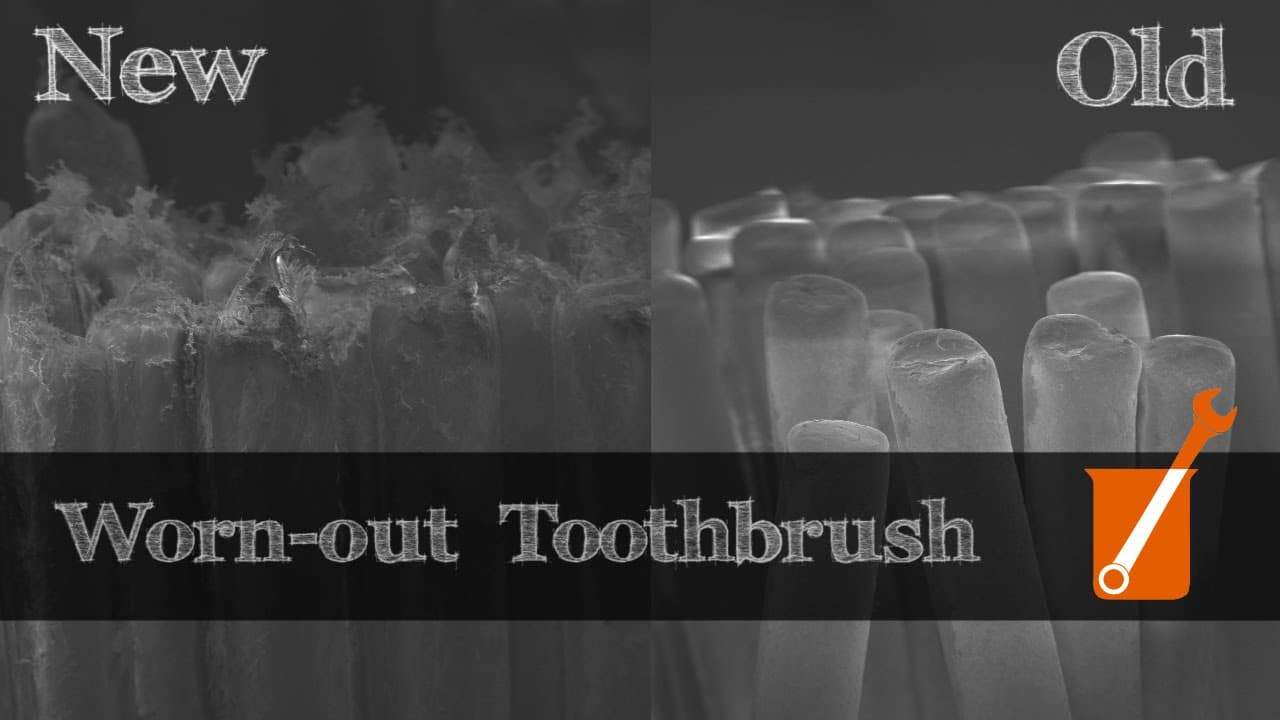
Toothpaste is highly abrasive, which significantly wears down toothbrush bristles over a few months of usage. Ingredients like dicalcium phosphate dihydrate contribute to this abrasiveness, reducing the effectiveness of the bristles in plaque removal as they become worn. Regularly replacing your toothbrush is essential to maintain optimal dental hygiene.
Transcript
today on Applied Science I'd like to show you a technique where i zoom in from white microscope images to scanning electron microscope images so let's pick a everyday household object that you might find surprising just your average cheap house brand toothbrush here we're looking at a section of the toothbrush with a standard photographic macro len... Read More
Key Insights
- 🎲 Toothpaste contains abrasive ingredients like die calcium phosphate dehydrate, baking soda, or titanium oxide, which contribute to its plaque removal effectiveness.
- 🥺 Over time, toothpaste's abrasiveness can wear down toothbrush bristles, leading to reduced plaque removal efficiency.
- 🥈 Conductive coating, such as silver, is necessary for obtaining clear electron microscope images of non-conductive samples.
- 💅 Toothpaste's abrasive particles can serve purposes beyond dental hygiene, such as cleaning and polishing tasks.
- 🎨 Toothbrush bristles are intentionally designed to have a rough surface, as it enhances plaque removal efficacy.
- ❓ Proper toothpaste selection and gentle brushing techniques are crucial to minimize enamel erosion caused by excessive abrasiveness.
- 🔬 The content creator is working on improving the process of transitioning from light microscope images to scanning electron microscope images.
Install to Summarize YouTube Videos and Get Transcripts
Explore YouTube Video Summarizer or Get YouTube Transcript Extractor
Questions & Answers
Q: How does toothpaste wear down toothbrush bristles?
Toothpaste contains abrasive ingredients like die calcium phosphate dehydrate or baking soda, which remove plaque and tartar. Over time, these abrasive particles wear down the bristles of a toothbrush, reducing its effectiveness in cleaning teeth.
Q: Why is it necessary to make a sample conductive for electron microscope imaging?
Scanning electron microscopes require conductive samples to prevent the electrons from getting buried or diffused in non-conductive materials. Coating the toothbrush or toothpaste sample with silver allows the microscope to obtain clear images by ensuring the electrons hit something conductive.
Q: What are the implications of toothpaste abrasiveness on dental health?
Toothpaste abrasiveness, although helpful in removing plaque, can cause enamel erosion and tooth sensitivity when used excessively or with excessive pressure. It is important to choose toothpaste with appropriate levels of abrasiveness and brush gently.
Q: Can toothpaste abrasive particles be used for other purposes?
Toothpaste abrasive particles, similar to sandpaper in terms of their grit size, can be utilized for various cleaning tasks. For example, toothpaste can be employed to clear fogged plastic headlight lenses by acting as a polishing agent.
Summary & Key Takeaways
-
The content showcases a technique to zoom in from white microscope images to scanning electron microscope images by examining a household toothbrush.
-
The toothbrush, when used for a few months with toothpaste, reveals highly abrasive qualities, completely wearing down the bristles.
-
The creator prepares samples of toothpaste in different ways to observe its abrasive nature under a microscope, using techniques like vacuum desiccation and silver coating.
Read in Other Languages (beta)
Share This Summary 📚
Summarize YouTube Videos and Get Video Transcripts with 1-Click
Try YouTube Summary with ChatGPT & Claude or YouTube Transcript Generator
Explore More Summaries from Applied Science 📚




Summarize YouTube Videos and Get Video Transcripts with 1-Click
Try YouTube Summary with ChatGPT & Claude or YouTube Transcript Generator