2010 Nobel Peace Prize Announcement
Transcript
Read and summarize the transcript of this video on Glasp Reader (beta).
Install to Summarize YouTube Videos and Get Transcripts
Explore YouTube Video Summarizer or Get YouTube Transcript Extractor
Summary
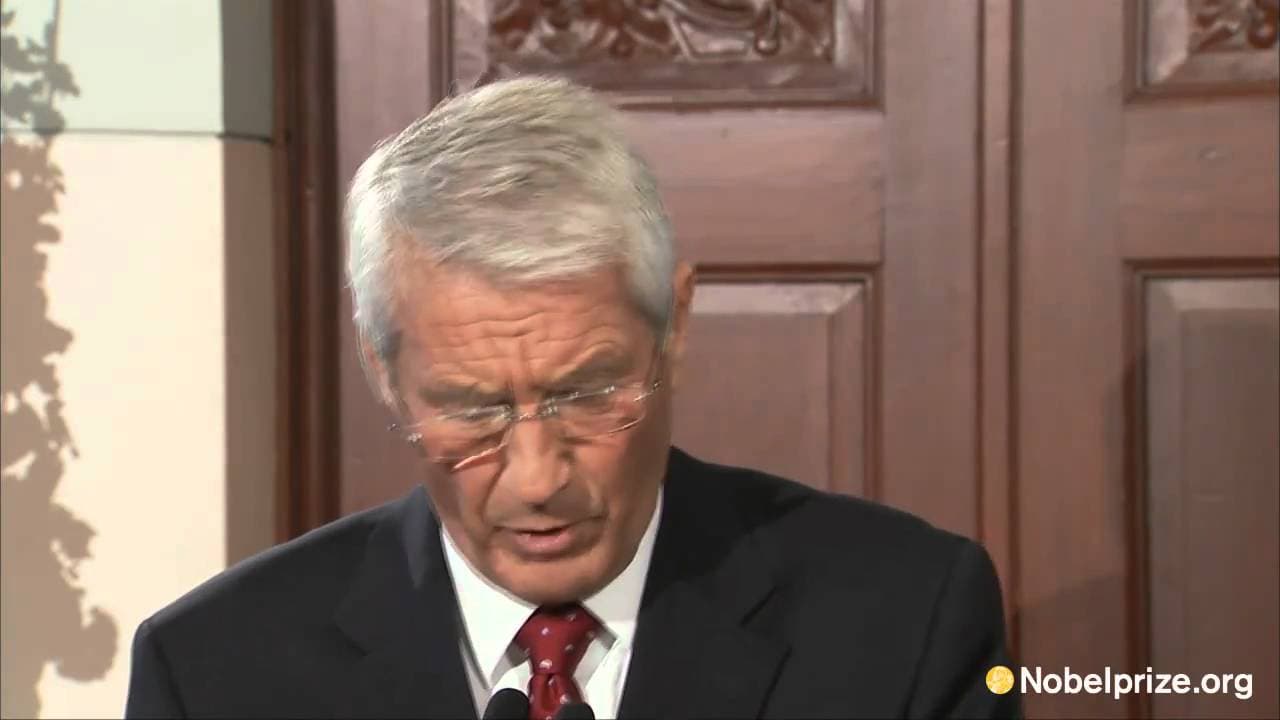
The Nobel Peace Prize for 2010 was awarded to Liu Xiaobo for his non-violent efforts in advocating for fundamental human rights in China. The committee recognized the connection between human rights and peace, and believed that Liu's activism played a crucial role in addressing these issues in China.
Questions & Answers
Q: Why did the Norwegian Nobel Committee award Liu Xiaobo the Nobel Peace Prize in 2010?
The Norwegian Nobel Committee awarded Liu Xiaobo the Nobel Peace Prize in 2010 for his long and non-violent struggle for fundamental human rights in China.
Q: Are there any particular reasons why the committee considered human rights and peace to be closely connected?
Yes, the committee believed that human rights and peace are closely connected. They saw human rights as a prerequisite for the fraternity between nations, which Alfred Nobel emphasized in his will.
Q: How has China achieved economic advances in the past decades?
China has achieved significant economic advances over the past decades, making it the world's second largest economy. These advances have lifted hundreds of millions of people out of poverty.
Q: Has the scope for political participation in China also expanded?
Yes, with China's economic progress, the scope for political participation has also broadened in the country.
Q: Is China fulfilling its obligations as a signatory to international agreements and its own provisions regarding political rights?
No, China is in breach of several international agreements it has signed, as well as its own provisions in the constitution concerning political rights.
Q: According to China's constitution, what freedoms do Chinese citizens enjoy?
China's constitution guarantees freedoms of speech, press, assembly, association, procession, and demonstration to its citizens.
Q: Are these freedoms implemented effectively in practice?
No, in practice, these freedoms have been distinctly curtailed for Chinese citizens.
Q: What role did Liu Xiaobo play in advocating for human rights in China?
For over two decades, Liu Xiaobo has been a strong advocate for the application of fundamental human rights in China. He participated in the Tiananmen protests in 1989 and was a leading author behind Charter 08, a manifesto calling for human rights in China.
Q: What happened to Liu Xiaobo as a result of his activism?
As a result of his activism, Liu Xiaobo was sentenced to eleven years in prison and had his political rights deprived for two years for allegedly inciting subversion of state power.
Q: Who else is involved in the campaign for universal human rights in China?
Many Chinese individuals, both within China and abroad, are engaged in the campaign to establish universal human rights in China.
Takeaways
The awarding of the Nobel Peace Prize to Liu Xiaobo in 2010 highlights the close connection between human rights and peace. China's economic progress has allowed it to become a major global player, but it must also take on increased responsibility. However, China falls short in fulfilling its obligations regarding political rights, violating both international agreements and its own constitution. Liu Xiaobo's activism and subsequent punishment have made him a symbol of the wide-ranging struggle for human rights in China. This recognition serves as a reminder that the fight for fundamental human rights should be a global concern and priority.
Read in Other Languages (beta)
Share This Summary 📚
Summarize YouTube Videos and Get Video Transcripts with 1-Click
Try YouTube Summary with ChatGPT & Claude or YouTube Transcript Generator
Explore More Summaries from Nobel Prize 📚
Summarize YouTube Videos and Get Video Transcripts with 1-Click
Try YouTube Summary with ChatGPT & Claude or YouTube Transcript Generator