How Does AI Speed Up Game Decompiling and Mashups
TL;DR
AI accelerates decompiling by iterating guesses against known outputs, then verifying against source material to converge on identical gameplay. It enables cross game mashups by swapping assets, passing information between games, or rebuilding mechanics from scratch, dramatically reducing time compared with manual decompilation.
Transcript
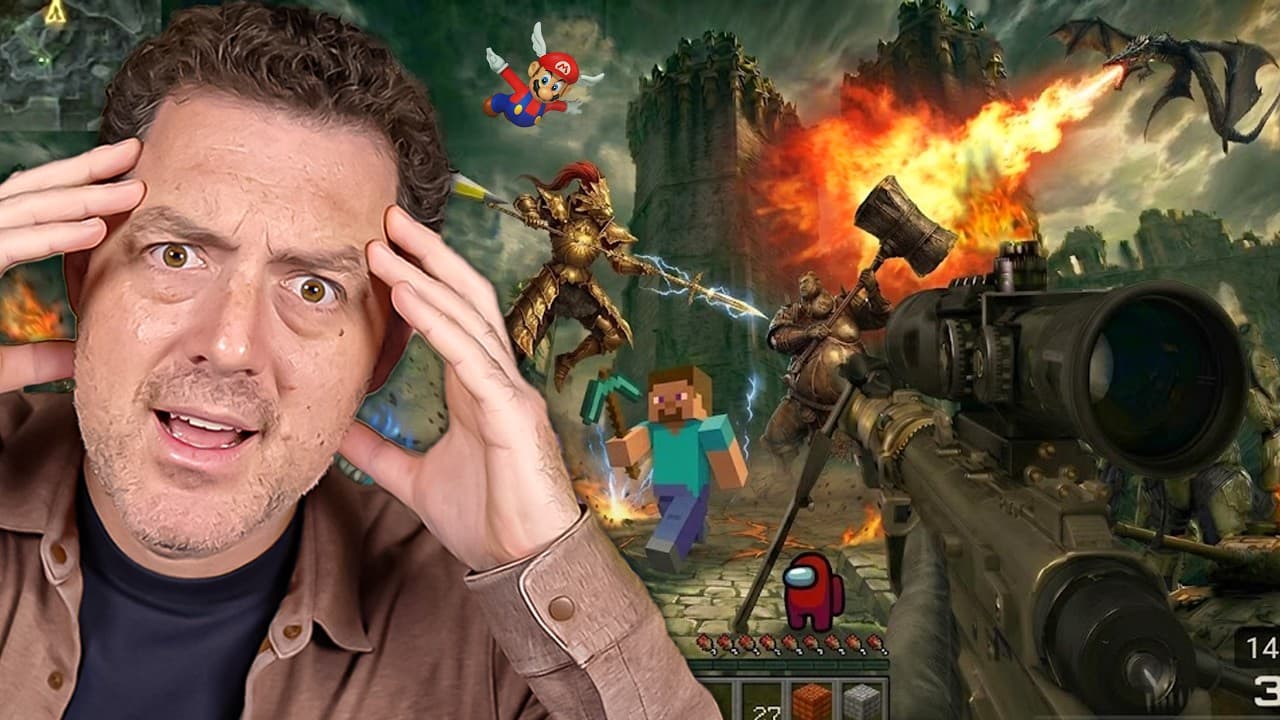
AI is getting so good at writing code and people are just starting to realize how disruptive this is going to be. Just look at this. People are taking characters from one game and mashing them up with worlds from another. Here's Super Mario in Elden Ring. And here's one with skate mechanics in Call of Duty. You can even put Spider-Man in a Batman g... Read More
Key Insights
- AI driving decompilation relies on looping verification to ensure the end product matches expected behavior.
- Decompiling changes input into a human readable form while preserving output, enabling identical gameplay without exact original code.
- Asset swapping creates skins that change visuals while preserving overall game logic.
- Pass through mods align multiple games by syncing cameras, physics, and events to produce coherent mashups.
- Mechanics transfer involves copying or recreating movement, jump, and collision rules across engines.
- AI enables rebuilding software from scratch, offering more control but requiring more effort and resources.
- Photoshop like software can be recreated by AI observing outputs and interactions rather than source code.
- The broader claim is that AI can reduce the cost of recreating software across domains, not just games.
Install to Summarize YouTube Videos and Get Transcripts
Explore YouTube Video Summarizer or Get YouTube Transcript Extractor
Questions & Answers
Q: How can AI accelerate decompiling a game compared to manual methods?
AI accelerates decompiling by iterating guesses about the code that would produce a given output and then verifying those guesses against the actual source material. This verifiable loop keeps refining the reconstruction until the end result behaves identically, even though the underlying code may differ.
Q: What is the difference between asset swap and pass through mods in game mashups?
Asset swap mods change the appearance of a character or object without altering its behavior, effectively Skinning a character. Pass through mods keep two games running and connect them so actions in one game influence outcomes in the other, requiring alignment of visuals, physics, and events.
Q: How do AI created mechanics transfer work between games?
AI can study the mechanics of one game, such as how fast you accelerate or how you jump, and implement those rules in another game. This can involve copying code directly when possible or recreating the mechanics in the target engine based on observed behavior.
Q: Why is rebuilding a game from scratch the most intensive method, yet most capable?
Rebuilding from scratch gives the most control over the new version of the game, allowing accurate mashups and deeper integration of cross game mechanics. It is time intensive and data hungry, but it yields the most realistic and flexible results.
Q: What example does the video cite for rapid AI decompilation progress?
The video cites a coder who decompiled Snowboard Kids in 84 days compared to nearly 2 years previously, highlighting how AI can dramatically shorten the decompilation timeline and enable more rapid replication and analysis of games.
Q: What does the video suggest about AI and general software recreation like Photoshop?
The video suggests that if AI can recreate Photoshop or Excel by observing outputs rather than source code, then similar approaches could recreate other software. This raises questions about the sustainability of traditional software moats and the need for services beyond the core product.
Q: What is the role of loop and verification in AI code generation according to the video?
The loop provides a verifiable goal; AI writes, checks, and iterates until the target behavior is achieved. This principle, paired with fast computation and parallel agents, explains why AI can close the gap between idea and functioning software across domains.
Q: What broader claim does the speaker make about the future of software with AI?
The speaker argues that software could be recreated with AI, reducing the need to buy or license traditional tools, and that companies should offer services beyond software to stay valuable, such as training, enterprise features, and ongoing maintenance and updates.
Summary & Key Takeaways
-
AI accelerates decompiling by iterating guesses and verifying results until the game behaves identically, even if code is not identical.
-
Mashups are achieved through asset swaps, cross game data passing, and importing mechanics from one game to another, all powered by AI.
-
Rebuilding a game from scratch using AI is the most intensive approach but offers the most control for realistic mashups and future software recreation.
Read in Other Languages (beta)
Share This Summary 📚
Summarize YouTube Videos and Get Video Transcripts with 1-Click
Try YouTube Summary with ChatGPT & Claude or YouTube Transcript Generator
Explore More Summaries from Matthew Berman 📚






Summarize YouTube Videos and Get Video Transcripts with 1-Click
Try YouTube Summary with ChatGPT & Claude or YouTube Transcript Generator