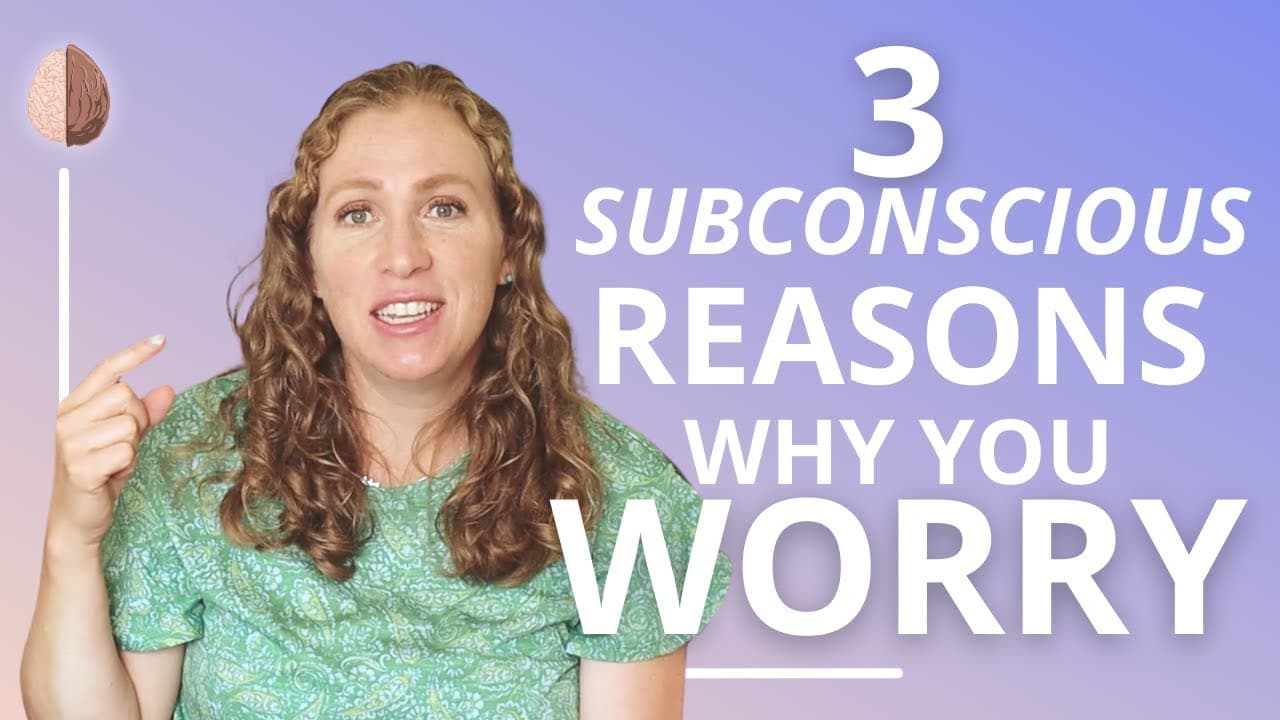
How to stop worrying by retraining your brain’s three subconscious triggers
TL;DR
Worry is a controllable habit rather than an inevitable fate. The brain uses worry for problem solving, magical thinking, and avoidance, which can become a loop. You can break the pattern by scheduled worry time, challenging magical thinking, and increasing willingness to feel emotions, then replacing worry with constructive imagination.
Transcript
worry isn't something that happens to you it's actually something that you do that you subconsciously choose to do because it serves a function your brain rewards you for it and then it becomes a habit if you want to learn how to worry less you need to understand why your brain likes to worry because that will free you to find a replacement for... Read More
Key Insights
- Worry is a cognitive function that anticipates problems and plans solutions, historically aiding survival.
- Magical thinking makes worry seem causally responsible for preventing bad events, reinforcing the habit.
- Worry can serve as avoidance, delaying emotional processing and increasing long term distress.
- Intentional problem solving converts unconscious worry into a scheduled, productive activity.
- Challenging magical thinking through experiments helps rewire the brain to rely on real outcomes, not worries.
- Increased willingness to feel emotions reduces the appeal of worry as an avoidance tactic.
- Scheduled worry time provides a controlled environment to address concerns without harming sleep or focus.
- Guided imagery and mindfulness are suggested as tools to replace habitual worry with constructive thinking.
Install to Summarize YouTube Videos and Get Transcripts
Explore YouTube Video Summarizer or Get YouTube Transcript Extractor
Questions & Answers
Q: What are the three subconscious reasons you worry according to the video?
The video explains that worry serves three subconscious functions: problem solving and imagining future problems to prevent them, magical thinking that wrongly credits worry with preventing bad outcomes, and using worry as a way to avoid feeling unpleasant emotions. Each function reinforces the habit of worrying by rewarding the brain when outcomes align with expectations or when worry provides temporary relief. Understanding these helps in retraining the brain to use imagination for constructive ends rather than for avoidance or unfounded control.
Q: How does worry relate to problem solving in the brain?
Worry relates to problem solving because it engages imagination to anticipate future threats and plan responses. The brain uses these imagined scenarios to prepare for potential challenges, a survival mechanism that, when overused, becomes a habitual pattern. The video suggests turning this into intentional problem solving by scheduling time to think through problems and solutions, ensuring focus and reducing interference with sleep or daily activities.
Q: What is magical thinking as described, and why is it a problem?
Magical thinking, as described, is the brain’s mistaken belief that worrying can prevent bad events or that avoiding worry will cause harm to occur. This creates a feedback loop where worry is rewarded whenever outcomes are favorable after worry, reinforcing the habit. The problem is that this belief is unfounded and distracts from real, evidence based actions that could actually reduce risk.
Q: Why can worry feel rewarding despite being unhealthy long term?
Worry can feel rewarding because it provides short term relief by giving the brain a sense of control or preparation. It also activates avoidance of discomfort, which feels soothing temporarily. However, this relief is temporary and leads to increased long term anxiety and sadness as the underlying emotions are not processed, creating a negative reinforcement loop that strengthens the habit.
Q: What are practical steps to stop worrying that the video recommends?
Practical steps include scheduling a daily worry time to convert worry into intentional problem solving, challenging magical thinking by running experiments to see if worry actually prevents bad outcomes, and increasing willingness to feel emotions through practices like emotion journaling and talking about feelings. The video also mentions guided imagery and related courses as resources to replace worry with healthier cognitive strategies.
Q: How does scheduled worry time help according to the video?
Scheduled worry time helps by assigning a specific window to engage with concerns, which prevents worry from intruding at inopportune moments like during sleep or family time. This creates a controlled environment to surface problems, consider solutions, and reduce unintentional rumination throughout the day. It trains the brain to separate worry from daily activities and improve focus.
Q: What role does willingness to feel emotions play in reducing worry?
Willingness to feel emotions plays a central role by reducing avoidance tactics that rely on worry. By increasing emotional processing through journaling, conversations, and structured practice, individuals learn to tolerate and handle uncomfortable feelings. This lowers the brain’s reliance on cognitive worry as a coping mechanism and supports healthier emotional regulation over time.
Q: What resources are suggested for learning to stop worrying?
The video mentions the book The Worry Solution by Dr. Martin Rossman as a reference and notes a longer YouTube video on turning anxiety into calmness. It also promotes a course titled Worry Free by Nick Wignall and mentions a course collection on Therapy in a Nutshell’s membership that includes courses on managing anxiety and processing emotions.
Summary & Key Takeaways
-
Worry serves as problem solving by imagining future threats and planning responses, a skill that once helped humans survive. This cognitive function can become a habit that triggers chronic stress if not managed. You can redirect this power into intentional problem solving and guided imagery to reduce worry.
-
Magical thinking makes the brain credit worry for avoiding bad outcomes, reinforcing the habit. By testing this belief through experiments and observing real outcomes, you can weaken the link between worry and prevention of harm, and rebuild trust in evidence and action.
-
Using worry to avoid unpleasant emotions can provide short term relief but long term misery. Increasing willingness to feel emotions and addressing them directly reduces reliance on worry and builds resilience, with practices like journaling, talking about feelings, and structured emotional processing courses allowed by the video description.
Read in Other Languages (beta)
Share This Summary 📚
Summarize YouTube Videos and Get Video Transcripts with 1-Click
Try YouTube Summary with ChatGPT & Claude or YouTube Transcript Generator
Explore More Summaries from Therapy in a Nutshell 📚




Summarize YouTube Videos and Get Video Transcripts with 1-Click
Try YouTube Summary with ChatGPT & Claude or YouTube Transcript Generator