How Did Somali Piracy Evolve from Fishermen to Criminals?
TL;DR
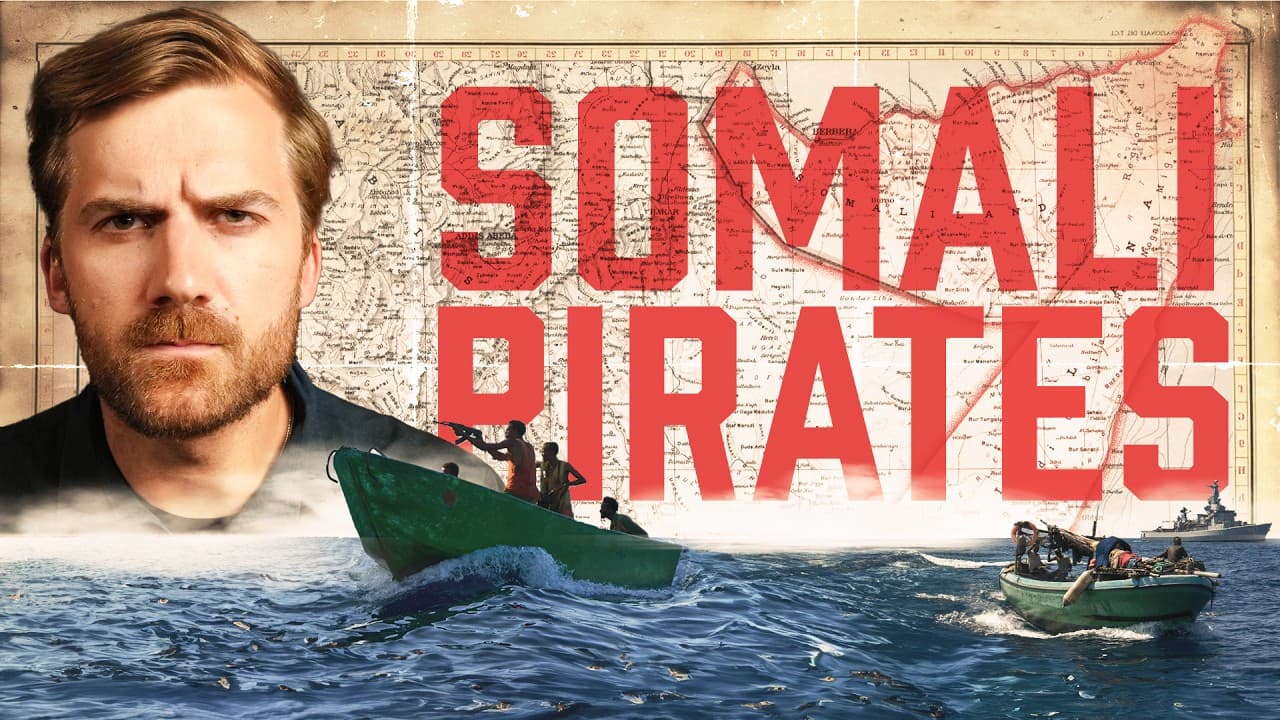
Somali piracy started as local fishermen defending their waters against illegal fishing and toxic waste dumping but evolved into an organized criminal network demanding large ransoms. The collapse of the Somali government allowed piracy to flourish, leading to innovative tactics and significant profits for involved warlords. International interventions eventually decreased piracy incidents in the region.
Transcript
- [Johnny] If a person robs you on land, they're a thief. But if they rob you at sea, they're a pirate. Let's say it's 2007 and you're the captain of a cargo ship traveling off the coast of the Horn of Africa. You're transporting wheat from Kenya to Saudi Arabia. When you look out at the ocean and you see these guys. They come at you quickly, just ... Read More
Key Insights
- ☠️ Pirate attacks off the coast of Somalia increased significantly in the 2000s, driven by the collapse of the government, illegal fishing, and toxic waste dumping.
- ☠️ Piracy in Somalia evolved from basic subsistence piracy to a sophisticated, organized criminal network, with warlords investing in pirate businesses.
- 🥺 International interventions, such as armed guards on ships and naval patrols, led to a decline in Somali piracy incidents.
Install to Summarize YouTube Videos and Get Transcripts
Explore YouTube Video Summarizer or Get YouTube Transcript Extractor
Questions & Answers
Q: How did Somali piracy initially start?
Somali piracy began as local fishermen forming an ocean militia to defend their waters from illegal foreign fishing vessels and toxic waste dumping.
Q: Why did piracy in Somalia become more sophisticated?
As piracy became more profitable, warlords and clan leaders started investing in pirate businesses, leading to the use of motherships, radar systems, and GPS technology to target and hijack ships.
Q: What were some of the international interventions that helped combat Somali piracy?
Interventions included the creation of an internationally-recognized shipping corridor, the use of armed guards on vessels, and the implementation of security measures like high-pressure hoses and barbed wire around ships.
Q: Why has piracy shifted to the Gulf of Guinea?
The Gulf of Guinea has become a piracy hotspot due to Nigerian pirates boarding oil tankers as a response to perceived resource exploitation in their region.
Key Insights:
- Pirate attacks off the coast of Somalia increased significantly in the 2000s, driven by the collapse of the government, illegal fishing, and toxic waste dumping.
- Piracy in Somalia evolved from basic subsistence piracy to a sophisticated, organized criminal network, with warlords investing in pirate businesses.
- International interventions, such as armed guards on ships and naval patrols, led to a decline in Somali piracy incidents.
- Piracy has now shifted to the Gulf of Guinea, where Nigerian pirates hijack oil tankers, reflecting different motivations and dynamics.
Summary & Key Takeaways
-
Somali piracy began as fishermen forming an ocean militia to protect their waters from illegal foreign fishing vessels and toxic waste dumping.
-
The collapse of the Somali government and lack of regulation allowed piracy to flourish, with pirates using innovative tactics like motherships and demanding large ransoms.
-
International interventions, including security measures on ships and naval escorts, led to a decline in piracy incidents off the Horn of Africa, but piracy has now shifted to the Gulf of Guinea.
Read in Other Languages (beta)
Share This Summary 📚
Summarize YouTube Videos and Get Video Transcripts with 1-Click
Try YouTube Summary with ChatGPT & Claude or YouTube Transcript Generator
Explore More Summaries from Johnny Harris 📚






Summarize YouTube Videos and Get Video Transcripts with 1-Click
Try YouTube Summary with ChatGPT & Claude or YouTube Transcript Generator