What Are the Most Fascinating Exotic Stars?

TL;DR
Exotic stars like quasi stars and quark stars challenge our understanding of stellar formation and evolution. Quasi stars likely existed in the early universe, while quark stars are theorized to exist between neutron stars and black holes. Other fascinating possibilities include frozen stars with icy surfaces and boson stars made of mysterious boson particles that could bend light.
Transcript
stars are usually but not always straightforward objects of nuclear fusion that can be predicted as to their general behavior type how long they will live how they will end and so on but as with a great many things in this universe there are gray areas where types of stars very different from the stars we normally see can exist or may have once exi... Read More
Key Insights
- ✴️ Quasi stars are hypothetical objects that may have existed in the early universe, formed when protostars collapsed into black holes instead of undergoing supernovas.
- ✴️ Quark stars, if they exist, would be intermediate states between neutron stars and black holes, composed partially or entirely of exotic quark matter.
- ✴️ Q stars, similar to quark stars, would emit some light but not all, making them difficult to differentiate from black holes.
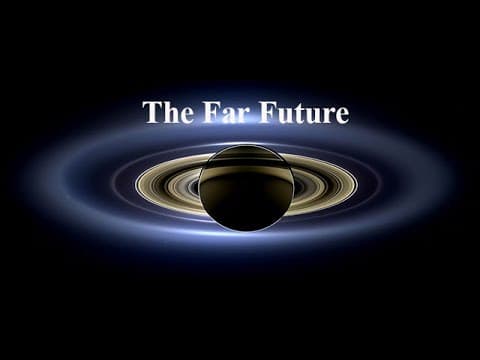
- ❤️🩹 Blue and black dwarfs represent the far future of the universe, with blue dwarfs occurring at the end of red dwarfs' lifetimes and black dwarfs being the end stage of cooled-down white dwarfs.
- 🤩 Iron stars would form when stars convert entirely into iron over immense periods of time.
- 🌟 Dark stars, if they ever existed, would consist of mostly normal matter with a large presence of dark matter, and they would have been massive and low-luminosity.
- 🖤 Primordial black holes could have formed in the early universe, with some suggesting that one of them might be responsible for the effects attributed to the elusive Planet Nine.
- 🤩 Frozen stars could potentially form in a far future universe rich in metallicity, resulting in extremely cool stars with surface temperatures of 0 degrees Celsius and the potential for ice clouds in their upper atmospheres.
- 🤩 Electroweak stars could exist immediately after a supernova, being denser than quark stars and maintained by electroweak burning.
- 🙂 Blitzards, hypothetical pulsars rotating close to the speed of light, may emit fast radio bursts and collapse into black holes once they slow down.
- ✴️ Boson stars, composed of unknown boson matter, would be transparent but could bend light like black holes, potentially making them detectable if they absorbed ordinary matter.
Install to Summarize YouTube Videos and Get Transcripts
Explore YouTube Video Summarizer or Get YouTube Transcript Extractor
Questions & Answers
Q: What are quasi stars?
Quasi stars are rare objects that may have existed in the early universe, formed when protostars collapsed into black holes instead of undergoing supernovas. They would be extremely luminous, outshining even a small galaxy.
Q: What are quark stars?
Quark stars are hypothetical stars that may exist as an intermediate state between neutron stars and black holes. They are made up partially or entirely of exotic quark matter, but their existence is still debated.
Q: What are q stars?
Q stars are similar to quark stars in that they contain some form of exotic matter. Unlike black holes, some light would escape from q stars, making them difficult to distinguish from stellar mass black holes.
Q: What are blue and black dwarfs and iron stars?
Blue dwarfs are future stars that will occur at the end of a red dwarf's lifetime, while black dwarfs represent the end stage of white dwarfs that have cooled down and gone dark. Iron stars are formed when stars entirely convert into iron over immense periods of time.
Summary & Key Takeaways
-
Quasi stars: In the early universe, protostars collapsing into black holes instead of supernovas could have formed luminous giant stars with black holes at their centers.
-
Quark stars: These stars may exist as an intermediate state between neutron stars and black holes, made up partially or entirely of exotic quark matter.
-
Q stars: Concept of heavy neutron stars that emit some light, but not all, making them difficult to differentiate from black holes.
-
Blue and black dwarfs and iron stars: These stars represent the far future of the universe, including blue dwarf stars at the end of red dwarfs' lifetimes and black dwarfs as the end stage of cooled-down white dwarfs. Iron stars would form as stars convert completely into iron over time.
Read in Other Languages (beta)
Share This Summary 📚
Summarize YouTube Videos and Get Video Transcripts with 1-Click
Try YouTube Summary with ChatGPT & Claude or YouTube Transcript Generator
Explore More Summaries from John Michael Godier 📚

Summarize YouTube Videos and Get Video Transcripts with 1-Click
Try YouTube Summary with ChatGPT & Claude or YouTube Transcript Generator