How Do Duck Stamps Fund Wetland Conservation?
TL;DR
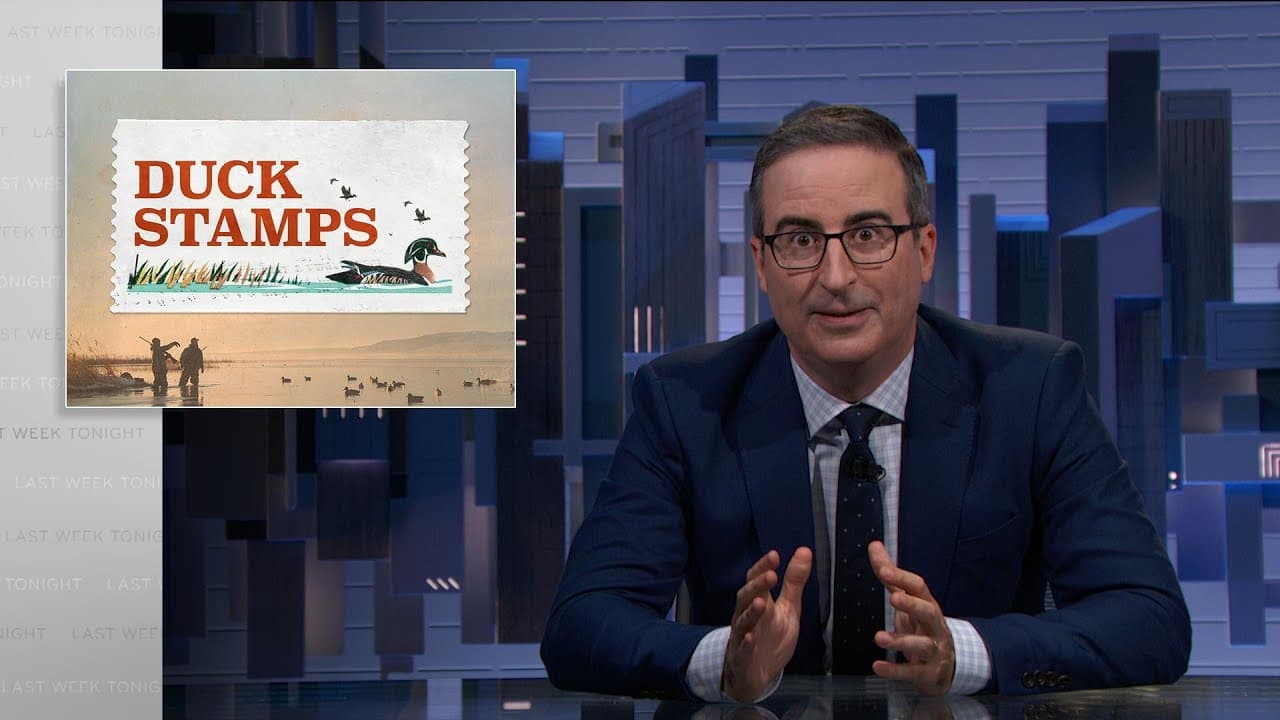
Federal duck stamps fund wetland protection while serving as required permits for waterfowl hunters and collectible artwork for other buyers. Most proceeds support habitat conservation, but declining sales threaten that funding, so John Oliver used humorous contest entries and an art auction to attract attention and direct more money toward the program.
Transcript
a quick word about the outdoors it's home to lakes trees and the candy witch who lures children to their doom it's great specifically though i want to talk about one way to conserve the precious nature that the outdoors contains and that is duck stamps if you've never heard of them i'll let this charmingly stilted 1990s video explain it to you the ... Read More
Key Insights
- Federal duck stamps are required permits for waterfowl hunters, although people who do not hunt can also purchase them as collectibles or as a direct way to support wildlife conservation and the protection of wetland habitats.
- Duck stamp revenue is primarily directed toward conservation, with ninety-eight cents of every dollar supporting wetland protection. The program has raised more than a billion dollars and helped protect over six million acres of habitat since 1934.
- The federal duck stamp design is selected through an annual nationwide art competition. Judges independently assess entries based on their visual impact, their likely appearance in stamp form, and whether the birds are depicted with sufficient anatomical accuracy.
- The duck stamp competition attracts established wildlife artists and repeated winners, including the Hautman brothers, who had collectively won thirteen times before the featured contest. Their record illustrates how specialized and competitive this seemingly obscure artistic field has become.
- Rob McBroom's unconventional entries are designed to challenge the contest's traditional aesthetic, while artist Tim Taylor regards them as rule-breaking mockery. McBroom intensified their rivalry by creating parodies that incorporated imagery intended to provoke Taylor personally.
- A hunting-imagery requirement was introduced under the Trump administration and was scheduled to disappear the following year. The requirement was criticized because restrictions that discourage artists or buyers could further reduce stamp sales and consequently diminish conservation funding.
- John Oliver's Duck Hunt painting and a scene showing ducks judging the contest were disqualified because they contained prohibited numbers or lettering. Three other commissioned paintings qualified, but the judges eliminated all of them during the opening round without awarding a vote.
- The show's art auction redirected a failed contest campaign toward its original conservation goal. Every commissioned painting was offered through bestduckingstamps.com, with all proceeds promised to the federal duck stamp program rather than retained by the show.
Install to Summarize YouTube Videos and Get Transcripts
Explore YouTube Video Summarizer or Get YouTube Transcript Extractor
Questions & Answers
Q: How do federal duck stamps support wetland conservation?
Federal duck stamps generate money for wetland protection through purchases by hunters, collectors, and other conservation supporters. Waterfowl hunters are legally required to possess a stamp, while everyone else may buy one voluntarily. Ninety-eight cents of every dollar raised goes toward protecting wetlands, connecting stamp sales directly with habitat conservation for waterfowl and other wildlife.
Q: Who is required to buy a federal duck stamp?
Waterfowl hunters are required by law to possess a federal duck stamp while hunting. The stamp functions as a permit rather than as ordinary postage. Non-hunters are not described as being subject to that requirement, but many voluntarily purchase the stamps because they appreciate the artwork, collect annual designs, or want to contribute directly to wetland and wildlife conservation.
Q: How is the federal duck stamp design selected?
The federal government chooses the design through an annual nationwide art competition. Judges vote independently on submitted paintings and examine their visual impact, how effectively the artwork could function in the small stamp format, and whether the depicted birds are anatomically accurate. These standards make the selection process a serious wildlife-art competition rather than a casual popularity contest.
Q: Why is the federal duck stamp art contest so competitive?
The contest attracts skilled specialists, established repeat champions, and artists with sharply different ideas about acceptable duck art. The Hautman brothers had collectively won thirteen times before the featured competition, while Tim Taylor and Rob McBroom developed a public rivalry over traditional and unconventional entries. Strict rules and independent judging add further pressure because even carefully produced works can be rejected early.
Q: Why were John Oliver's first duck stamp entries disqualified?
The Duck Hunt painting and the painting of ducks judging the art contest were disqualified under a rule prohibiting numbers or lettering within an entry. The Duck Hunt composition included imagery from the Nintendo game, while the judging scene also violated the same restriction. The show criticized the rule as needlessly limiting, despite acknowledging that the submissions did not comply.
Q: What happened to John Oliver's eligible duck stamp paintings?
The three eligible paintings reached the contest but received no votes and were eliminated during the first round. They portrayed a redhead duck hunting a hunter, a duck version of Girl with a Pearl Earring, and a giant duck bringing Tim Taylor and Rob McBroom together. Online viewers praised at least one entry, but the official judges remained unmoved.
Q: Who won the featured federal duck stamp contest?
Jim Hautman of Chaska, Minnesota, won the 2022-23 contest with a painting of a redhead duck. The result marked his sixth victory. Although John Oliver jokingly objected after his commissioned entries failed, he acknowledged that the winning work was a beautiful duck painting and understood why the Hautman brothers repeatedly succeeded in the competition.
Q: How did John Oliver turn the rejected paintings into conservation funding?
After the commissioned paintings failed to advance, the show offered the original works at auction through bestduckingstamps.com. The audience could bid on whichever piece appealed to them, and one hundred percent of the proceeds was designated for the federal duck stamp program. The auction therefore gave the rejected artwork another route to support wetland conservation.
Summary & Key Takeaways
-
Federal duck stamps are permits that waterfowl hunters must possess, but collectors and conservation supporters also buy them voluntarily. Most revenue goes toward protecting wetlands, making the program a direct conservation funding mechanism. The stamps have generated substantial support for millions of acres of habitat since the program began.
-
Each annual stamp is selected through a national art competition whose judges consider visual impact, suitability for the stamp format, and anatomical accuracy. The contest features accomplished repeat winners, strict submission requirements, serious artistic rivalries, and unconventional entrants who challenge its traditional wildlife-art aesthetic through parody and experimentation.
-
John Oliver commissioned several humorous paintings for the contest, including a Duck Hunt scene, a duck parody of a famous portrait, and an imagined reconciliation between rival artists. After every eligible entry was eliminated immediately, the show announced an auction benefiting the federal duck stamp program.
-
Key Insights Elements for searchable/citable enrichment that complement the Summary. Use around 8 detailed bullet points. Each bullet should be a complete, standalone factual statement. Focus on specific facts, mechanisms, or takeaways. Keep each bullet 25-50 words. - [Insight 1] - [Insight 2] ...
-
Key Insights should include concrete details (numbers, names, processes) when present, but avoid conclusions not supported by the content.
Read in Other Languages (beta)
Share This Summary 📚
Summarize YouTube Videos and Get Video Transcripts with 1-Click
Try YouTube Summary with ChatGPT & Claude or YouTube Transcript Generator
Explore More Summaries from LastWeekTonight 📚



Summarize YouTube Videos and Get Video Transcripts with 1-Click
Try YouTube Summary with ChatGPT & Claude or YouTube Transcript Generator