What Are the Key Topics in Operating System Syllabus?
TL;DR
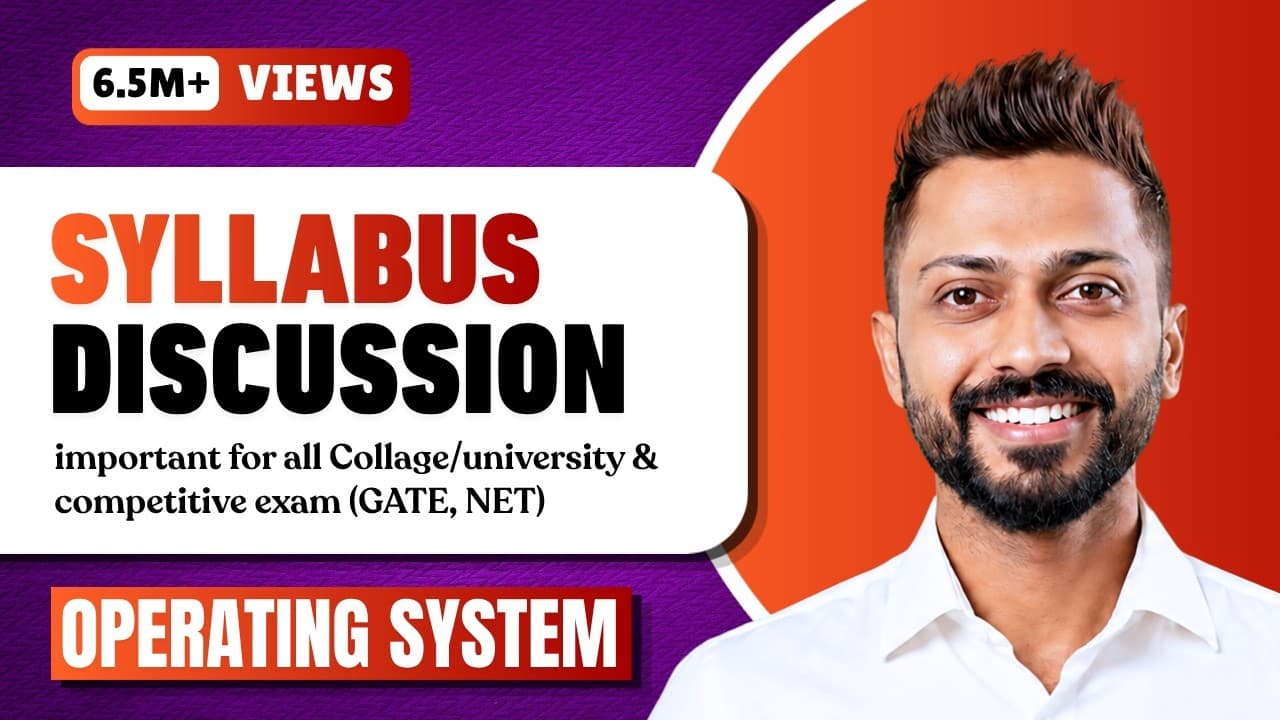
The key topics in the operating system syllabus for exams like GATE and UGC NET include process scheduling, memory management, and disk scheduling. It's essential to focus on mandatory topics such as process synchronization, deadlock, and basic Linux commands, as well as efficient study techniques. Practicing numerical questions on concepts like paging and disk algorithms can significantly enhance your exam performance.
Transcript
Hello Friends, Welcome to Gate Smashers The topic is Syllabus of operating system Before I start this video I just want to request you all, especially those who are watching my video first time Please subscribe my channel & please share with your friends and please press the bell button for latest notifications Now we are starting this video What w... Read More
Key Insights
- 💦 Smart work is essential along with hard work for success in operating system exams.
- ❓ Understanding the syllabus and focusing on mandatory topics is crucial for efficient preparation.
- 💽 Process scheduling, memory management, and disk scheduling are important topics that frequently appear in exams.
- 🧵 Familiarity with concepts such as process synchronization, deadlock, threads, UNIX commands, file management, and security is also beneficial.
- 📟 Practicing numerical questions on topics like paging and disk scheduling can improve performance in exams.
- 📁 Knowing basic Linux commands and understanding file management methods are necessary.
- 👊 A clear understanding of basic definitions, vulnerabilities, loopholes, and types of attacks in security is important.
Install to Summarize YouTube Videos and Get Transcripts
Explore YouTube Video Summarizer or Get YouTube Transcript Extractor
Questions & Answers
Q: What is the benefit of watching this video for operating system preparation?
This video provides clear information on mandatory and optional topics for exams like GATE and UGC NET. It offers a comprehensive understanding of the syllabus and allows for efficient studying.
Q: Why is smart work as important as hard work in operating system preparation?
Smart work involves finding efficient study techniques and focusing on important topics that are frequently asked in exams. It can maximize productivity and improve results.
Q: Which topics are considered mandatory for operating system exams?
Some mandatory topics include basic introduction, process scheduling, process synchronization, deadlock, and disk scheduling. These topics are consistently asked in exams like GATE and UGC NET.
Q: Can you provide an example of a frequently asked question in operating system exams?
One example is the question on Banker's algorithm, which is used to avoid deadlock. Understanding this algorithm and its implementation is crucial for the exam.
Key Insights:
- Smart work is essential along with hard work for success in operating system exams.
- Understanding the syllabus and focusing on mandatory topics is crucial for efficient preparation.
- Process scheduling, memory management, and disk scheduling are important topics that frequently appear in exams.
- Familiarity with concepts such as process synchronization, deadlock, threads, UNIX commands, file management, and security is also beneficial.
- Practicing numerical questions on topics like paging and disk scheduling can improve performance in exams.
- Knowing basic Linux commands and understanding file management methods are necessary.
- A clear understanding of basic definitions, vulnerabilities, loopholes, and types of attacks in security is important.
- Following this comprehensive syllabus can help students prepare for exams like GATE and UGC NET effectively.
Summary & Key Takeaways
-
The video discusses the syllabus of the operating system for various exams, including GATE and UGC NET.
-
It emphasizes the importance of understanding mandatory topics and offers a method for efficient studying.
-
The video covers topics such as basic introduction, process scheduling, process synchronization, deadlock, threads, memory management, disk scheduling, UNIX commands, file management, and security.
Read in Other Languages (beta)
Share This Summary 📚
Summarize YouTube Videos and Get Video Transcripts with 1-Click
Try YouTube Summary with ChatGPT & Claude or YouTube Transcript Generator
Explore More Summaries from Gate Smashers 📚


Summarize YouTube Videos and Get Video Transcripts with 1-Click
Try YouTube Summary with ChatGPT & Claude or YouTube Transcript Generator