What Makes a SaaS Business Valuable to Buyers?
TL;DR
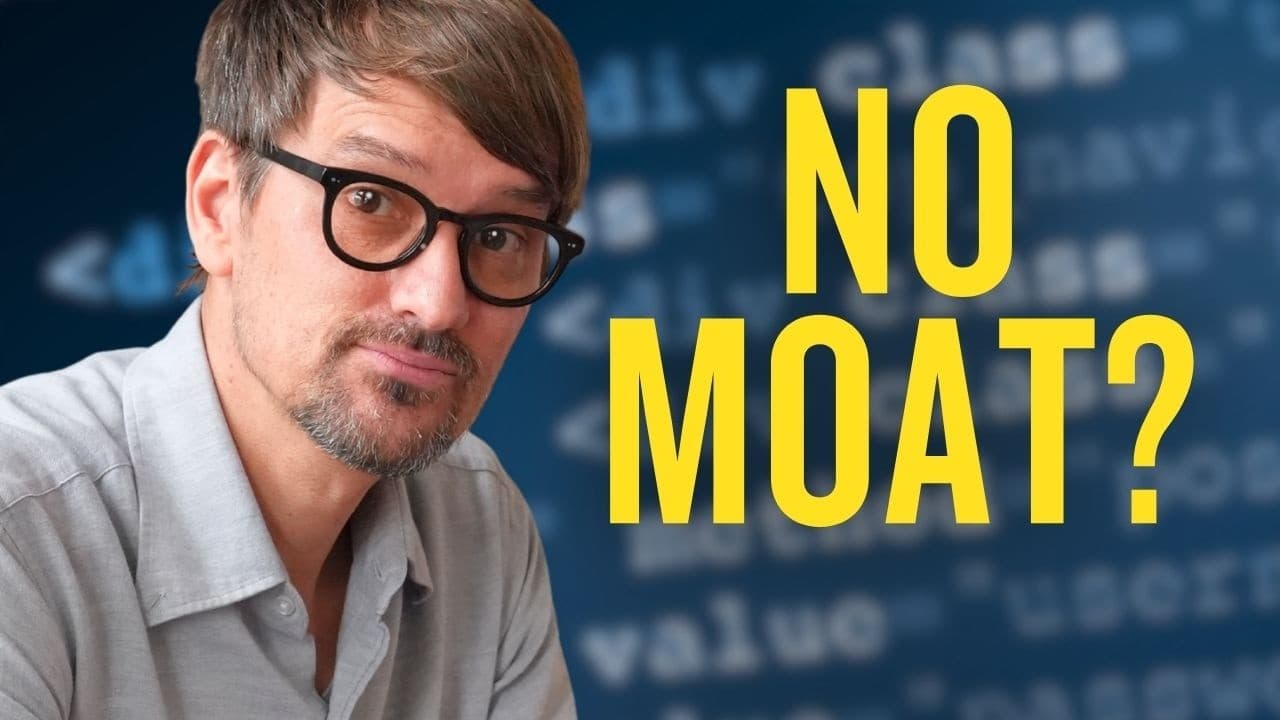
SaaS buyers now place greater value on defensibility than strong growth and retention alone. The most valuable businesses combine durable switching costs with assets that are difficult to reproduce, such as tightly integrated hardware, functioning two-sided marketplaces, embedded workflows, exclusive continuously refreshed data, and trusted support. AI lowers development costs, but it does not automatically replace software that is deeply integrated into business operations.
Transcript
Last year, a SaaS company went up for sale with metrics most founders would kill for. Great growth, great retention, the works. 22 private equity firms took a meeting. Not one of them made an offer. Nothing was wrong with the business. What changed is what buyers are now [music] looking for. Private equity firms that usually set the price have quie... Read More
Key Insights
- Strong SaaS metrics are no longer sufficient by themselves to secure acquisition offers. One company with great growth and retention met with 22 private equity firms without receiving an offer, illustrating how buyers have raised their standards for defensibility.
- AI is still software, and established SaaS companies are experienced at deploying software. Within TinySeed's portfolio of more than 200 companies, founders reported accelerating growth and feature development that sometimes took three weeks instead of six months, while public SaaS companies reported no additional AI-related churn.
- Traditional SaaS moats remain relevant in an AI-driven market. Custom integrations, strong brands, high switching costs, and owned traffic channels such as strong SEO still protect businesses, while unique features remain a false moat because competitors can reproduce functionality.
- Tightly integrated hardware can create a moat by connecting software to consequential physical operations. Digital grocery scales, software inside EV chargers, and warehouse printers are difficult to replace through a simple API swap, especially when the hardware is not an off-the-shelf component with an open API.
- Two-sided marketplaces become more defensible as supply attracts demand and demand attracts supply. They are difficult to bootstrap without existing access to at least one side of the market, but successful marketplaces can increase product stickiness and acquisition value.
- Systems of record are difficult to replace because they contain messages, approvals, shared context, coordination, and changing workflow states. A competitor may reproduce the software's functions, but moving the accumulated organizational activity and persuading every user to adopt the replacement creates substantial friction.
- Exclusive data becomes a moat when it enters a product, refreshes continuously, and cannot be fully exported through an API. A one-time snapshot has limited value when customers still need new data next month and every month afterward.
- High switching costs protect SaaS products when operational risk outweighs potential savings. Finance and warehouse teams may reject a competitor charging half as much because failures in accounting, approvals, shipping, or other core workflows could harm the business, while an established vendor also provides trusted support.
Install to Summarize YouTube Videos and Get Transcripts
Explore YouTube Video Summarizer or Get YouTube Transcript Extractor
Questions & Answers
Q: What do SaaS buyers want before considering an acquisition?
SaaS buyers want defensible advantages in addition to strong growth and retention. The highlighted advantages are tightly integrated hardware, a functioning two-sided marketplace, a system of record containing collaborative context, exclusive data that refreshes continuously, and high switching costs. Traditional defenses such as custom integrations, brand trust, and owned traffic channels also continue to matter when buyers assess durability.
Q: Why are strong SaaS growth and retention metrics no longer enough?
Strong metrics describe current business performance, but they do not necessarily show that the performance can survive easier software development and new competitors. The transcript illustrates the change with a SaaS company that had great growth and retention and met with 22 private equity firms, yet received no offers. Buyers now place more weight on advantages that competitors cannot quickly reproduce or displace.
Q: How can hardware create a moat for a SaaS company?
Hardware creates a moat when it is tightly integrated with the software and plays a key role in delivering customer value. Replacing that product then has real-world consequences beyond changing an API. Examples include digital scales in grocery stores, software operating inside EV chargers, and physical printers installed at warehouse locations. Off-the-shelf hardware with an open API offers less protection.
Q: Why are two-sided marketplaces difficult to build but valuable?
Two-sided marketplaces are difficult because founders must attract both supply and demand, and each side usually waits for the other to become useful. Existing access to one or both groups can make the model more practical. Once established, however, more supply can attract more demand and vice versa, making the platform stickier and much harder for a competitor to undo.
Q: What makes a SaaS product a defensible system of record?
A defensible system of record is where a business stores and manages messages, approvals, shared context, coordination, and the changing states of its work. Its protection comes from accumulated organizational activity, not merely its interface or feature list. Replacing it requires migrating information, changing workflows, coordinating users, and accepting the operational risks that accompany the transition.
Q: How does continuously refreshed data become a SaaS moat?
Continuously refreshed data becomes a moat when the company captures exclusive information, uses it to improve the product, and does not provide a complete export through an API. Even if a competitor obtains a snapshot, that copy quickly loses usefulness when customers require new information next month and every month afterward. The continuing data flow creates the durable advantage.
Q: How can a founder tell whether a SaaS product has high switching costs?
A practical test is to imagine a competitor offering equivalent functionality at half the price. If serious customers still stay because migration could disrupt finance, approvals, inventory, shipping, or another critical operation, the product has meaningful switching costs. The moat lies in the expense, coordination burden, and business risk of changing systems, rather than in the software features alone.
Q: Why do brand trust and customer support matter to SaaS buyers?
Brand trust matters because business customers pay for confidence that a vendor will perform a critical job reliably. They also value having someone they can call or email when something breaks, with an expectation that restoring service will be a priority. A quickly built alternative may reproduce features, but it does not automatically reproduce accountability, support relationships, or confidence earned over time.
Summary & Key Takeaways
-
Private equity buyers have raised their standards for SaaS acquisitions. Strong growth and retention may no longer produce an offer without defensible advantages. This matters even to founders who do not plan to sell, because a SaaS company remains a valuable asset whose resilience, risks, and potential opportunities deserve ongoing attention.
-
Traditional SaaS moats still matter, including custom integrations, strong brands, high switching costs, and owned traffic channels such as SEO. Unique features are not a durable moat because competitors can reproduce functionality. AI has not erased the established defenses, but faster software development has increased the importance of advantages that are harder to copy.
-
Five increasingly important moats are tightly integrated hardware, two-sided marketplaces, collaborative systems of record, exclusive continuously refreshed data, and high switching costs. These advantages reinforce retention by connecting software to physical operations, network participation, accumulated context, recurring information, or critical workflows where migration creates unacceptable cost, disruption, or business risk.
Read in Other Languages (beta)
Share This Summary 📚
Summarize YouTube Videos and Get Video Transcripts with 1-Click
Try YouTube Summary with ChatGPT & Claude or YouTube Transcript Generator
Explore More Summaries from Rob Walling 📚




Summarize YouTube Videos and Get Video Transcripts with 1-Click
Try YouTube Summary with ChatGPT & Claude or YouTube Transcript Generator