How to Build Simple Software That Makes Money
TL;DR
Validate demand and customer acquisition before investing heavily in software development. Will Cannon built profitable businesses by studying existing companies, selling useful data, cold-calling prospects, and adapting proven models rather than inventing complicated products. His experience suggests that market timing, recurring revenue, focused research, and a simple offer can matter more than technical sophistication during the early stages.
Transcript
the barrier to entry is a lot lower to build a business where you're making 10 grand a month which is life-changing [music] for 99% of people in the world. I went to a website kind of like a biz by selling there was a company for sale and they weren't for sale for like 200 grand and that's kind of one of my skill sets is researching and copying. I ... Read More
Key Insights
- A life-changing business does not need enormous scale. The discussion frames $10,000 in monthly income as a meaningful target for most people and argues that the barrier to building a business at that level is lower than many aspiring founders assume.
- Business marketplaces are valuable research tools because their listings reveal existing models, revenue levels, asking prices, and market niches. Cannon used a company offered for roughly $200,000 as inspiration to investigate whether he could build a similar list-selling operation himself.
- Cannon's core opportunity-finding skill is researching and adapting models that already work. Instead of beginning with an original technical invention, he examined an established list business, considered the assets he already owned, and created a comparable offer for identifiable customers.
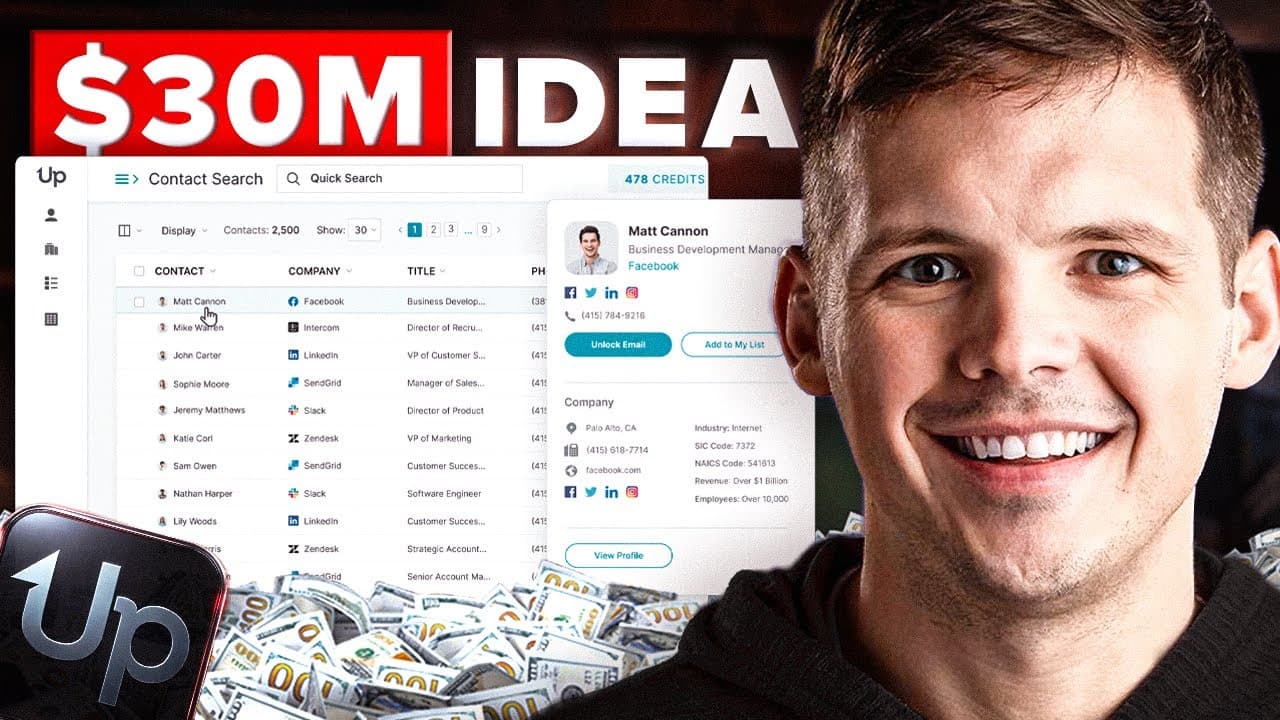
- Customer acquisition powered Cannon's early businesses. His mortgage company found homeowners through direct cold calling, while professional contact lists and cold email helped recruit loan officers and later became the basis for a separate business opportunity.
- Market timing was central to the mortgage company's rapid growth and collapse. Easy access to loans and rising housing prices supported strong demand, but the 2008 crisis quickly eliminated that favorable environment and left Cannon with foreclosures and repossessed cars.
- Existing assets can reveal adjacent business opportunities. Cannon already possessed lists of realtors and loan officers for recruiting purposes, then discovered that nearby business operators would pay for those lists, revealing demand for a dedicated data-selling service.
- Early validation can happen before a complete product exists. The conversation endorses selling before building, while the description emphasizes confirming demand before development, allowing a founder to test whether customers care before committing extensive time or resources.
- Technical sophistication is not presented as the main requirement for starting software businesses. Cannon built multiple profitable software companies without a technical background by focusing on simple products, proven demand, recurring revenue, customer acquisition, research, and automation.
Install to Summarize YouTube Videos and Get Transcripts
Explore YouTube Video Summarizer or Get YouTube Transcript Extractor
Questions & Answers
Q: How can a nontechnical founder start a software business?
A nontechnical founder can begin by studying software businesses that already serve clear customer needs, identifying a simple offer, and validating whether buyers will pay before developing extensively. Will Cannon's approach centered on research, adapting proven models, and customer acquisition rather than technical novelty. The description states that he built multiple profitable software businesses without a technical background and focused on recurring revenue, automation, and simplicity.
Q: How do business marketplaces help identify startup ideas?
Business marketplaces expose founders to companies that already generate revenue, along with details about their models, markets, and asking prices. Cannon found a list-selling company advertised for roughly $200,000 and investigated how it worked before deciding he could build something similar. The host recommends window shopping on sites such as BizBuySell or BizBen because studying available businesses and permitted due diligence materials can reveal practical opportunities without requiring a purchase.
Q: Why should founders validate demand before building software?
Validating demand helps determine whether customers value an offer before a founder commits heavily to product development. The episode's central advice is to sell before having the complete product, while the description emphasizes spotting opportunities and testing demand before building. Cannon's list business emerged from actual purchase interest among nearby operators, giving him evidence that professional contact data had buyers before he expanded the idea into a broader operation.
Q: What did Will Cannon learn from the mortgage business?
Cannon learned that strong execution can still depend on favorable market timing and product-market fit. His mortgage company grew during a period when housing prices were rising and loans were widely available, using cold calls to reach homeowners. When the 2008 crisis arrived, the business collapsed within months, four houses entered foreclosure, and his cars were repossessed. The reversal demonstrated how quickly conditions can invalidate a successful model.
Q: How did Will Cannon find customers for his mortgage company?
Cannon's mortgage company relied on direct cold calling. His team contacted homeowners who met selected criteria and offered access to money based on their home equity. Demand was supported by the period's rising housing prices and broad loan availability. The company also used purchased lists of realtors and loan officers, then sent cold emails to recruit loan officers for interviews and possible employment on its team.
Q: How did selling professional contact lists become a business?
Cannon already owned lists of realtors and loan officers because his mortgage company used them for recruiting and outreach. People working in nearby offices began asking for the realtor list, and he sold access for amounts such as $100. That interest suggested a broader market. He then found an established company selling lists for numerous professions, researched its operation, and decided to build a similar website using his existing data and internet marketing experience.
Q: Why can simple software outperform an overengineered product?
Simple software can succeed when it addresses proven demand and has an effective way to acquire customers. The description says Cannon focused on keeping products simple instead of overengineering them, and that customer acquisition mattered more than the product itself early on. His broader method started with an identifiable buyer and a tested business model, then used software, recurring revenue, and automation to support an offer people already wanted.
Q: What role does recurring revenue play in a software business?
Recurring revenue changed Cannon's approach when he moved from service work into software as a service, according to the description. It gives a software business an ongoing commercial relationship rather than relying entirely on isolated transactions. The episode connects this model with simple products, customer acquisition, and automation. Cannon's experience suggests founders should focus on a lasting customer need and a repeatable offer, not merely build complicated software features.
Summary & Key Takeaways
-
Will Cannon developed an entrepreneurial mindset early, selling custom music CDs at school before working in appliance warranties, collections, and mortgages. After seeing that his employer retained most of the revenue he generated, he and his future wife started their own mortgage company, initially operating from their apartment and later living inside their office.
-
The mortgage company grew during the subprime lending boom through direct cold calling and favorable market conditions. When the 2008 crisis arrived, revenue collapsed, four houses entered foreclosure, and Cannon's cars were repossessed. The experience taught him that apparent success can depend heavily on product-market fit and timing rather than execution alone.
-
Cannon discovered a new opportunity after selling professional contact lists to nearby businesses. He studied a list-selling company advertised on a business marketplace, researched its model, and built something similar with resources he already possessed. The broader method emphasizes examining proven businesses, validating customer demand, acquiring customers, and keeping software products simple.
Read in Other Languages (beta)
Share This Summary 📚
Summarize YouTube Videos and Get Video Transcripts with 1-Click
Try YouTube Summary with ChatGPT & Claude or YouTube Transcript Generator
Explore More Summaries from Chris Koerner on The Koerner Office Podcast 📚






Summarize YouTube Videos and Get Video Transcripts with 1-Click
Try YouTube Summary with ChatGPT & Claude or YouTube Transcript Generator