How to Sell AI Voice Agents to Local Barbers
TL;DR
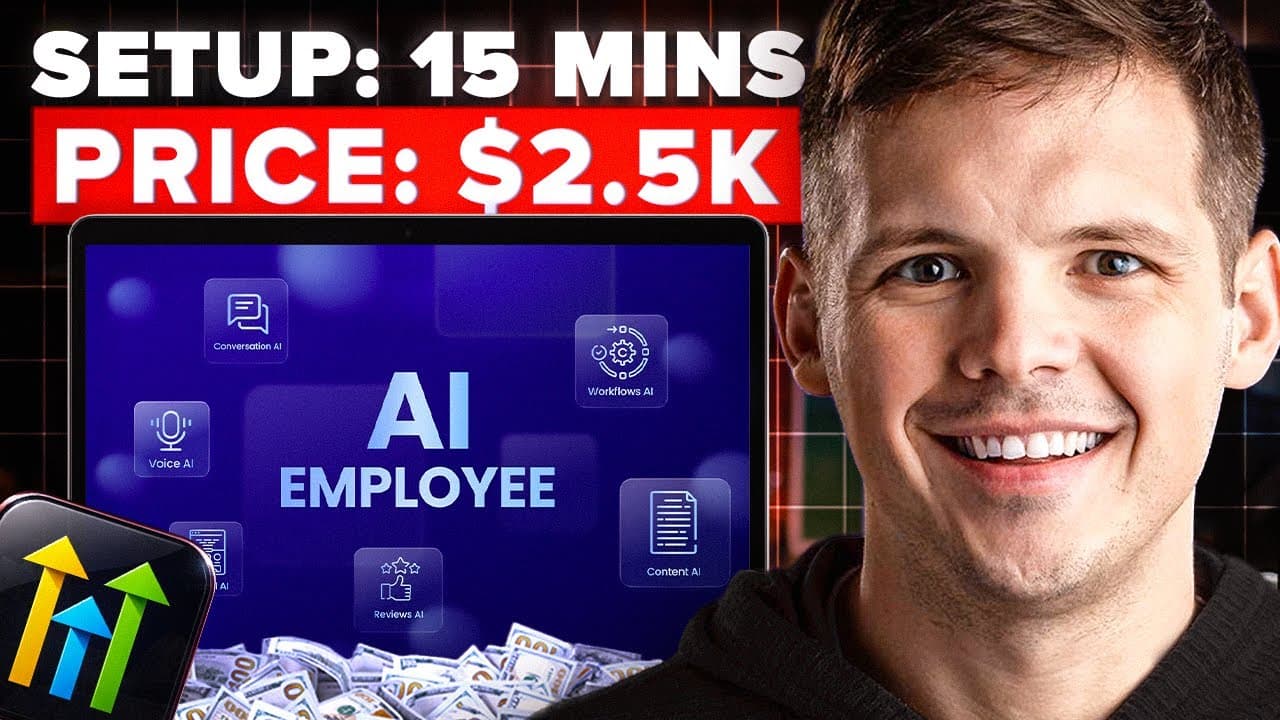
Replacing a barber's voicemail with an AI voice agent turns missed calls into booked appointments: the agent answers when the owner is busy, answers business questions, and texts a booking link. Danny built the first one free for his own barber, then turned it into an agency charging $2,500 to $5,000 upfront plus hundreds of dollars a month.
Transcript
So, the other day I come across this guy named Danny. And Danny went in to get a haircut. And he talked to his barber who's very busy and said, "Hey, have you ever thought about using a voice agent to answer your calls for you while you're cutting hair? That way you don't miss out on customers." And he said, "That sounds awesome." Danny said, "Why ... Read More
Key Insights
- The pricing model for this service is $2,500 to $5,000 upfront plus hundreds of dollars per month to maintain the voice agent, which Danny now charges barbers after proving the concept for free on his own barber.
- The core setup is a voicemail replacement: the call rings the barber's work number first, and if he does not pick up, the AI voice agent answers instead of voicemail, so he keeps the option to take calls himself.
- Training a voice agent requires very little work: it can be trained by dragging over a screenshot of the business's Google business profile or by linking the business's website, and created with just a few clicks.
- Booking is handled by text, not by the agent filling out forms. When a caller asks to schedule, the agent texts them a direct link to the barber's existing booking system, and the barber got bookings from that link the day it was turned on.
- Barbers split into two types: the one who is constantly booked and cannot answer the phone, and the one who is not booked. The busy barber is the buyer, because every missed call is a missed opportunity.
- Callers do not seem to notice or care that they are talking to an AI. Call transcripts from HighLevel show people asking for the booking link, opening hours, and business questions, and getting an answer is all they want.
- A free build for one barber works as a lead magnet because the shop sits in a salon suite with roughly 20 business owners in one room, and word of mouth from the chair produced a referral from a medical business owner.
- The window for this opportunity mirrors earlier ones: Yelp profile optimization was lucrative for a short period about 11 years ago, like the Google Business Profile moment or when Google Ads clicks cost two cents versus $2 today.
- The demo can be run live during a haircut: pull out your phone, update the voice agent so it answers as that barber shop's name, then have it call the barber while he is cutting hair, using the demo itself as the sales tool.
Install to Summarize YouTube Videos and Get Transcripts
Explore YouTube Video Summarizer or Get YouTube Transcript Extractor
Questions & Answers
Q: How much can you charge for building an AI voice agent for a barber?
Danny charges $2,500 to $5,000 upfront to build the voice agent, plus hundreds of dollars a month to maintain it. He did not charge for his first build, which he gave to his own barber for free as a test case and lead magnet. That free build returned value in other ways: free weekly haircuts at a shop that charges $50 a cut, access to roughly 20 other business owners in the same salon suite building, and a referral from a medical practice owner who heard about the work through conversation at the barbershop.
Q: How does an AI voice agent work for a barbershop?
The agent is set up to replace voicemail on the barber's work number. There are two options: the voice agent can pick up immediately when someone calls, or the phone can ring first and the agent answers only if the barber does not pick up. Danny chose the second so the barber could still take calls himself when free, for example during lunch. When the agent answers, it has been fed the business information and can answer caller questions. If the caller wants to book, the agent texts them a direct link to the barber's own booking system.
Q: How do you train an AI voice agent for a local business?
Training takes very little work. According to the video, a voice agent can be created with just a few clicks, and trained by dragging over a screenshot from the business's Google business profile, or simply by linking the business's website. Danny's build used HighLevel, and he fed the agent all of the business information so it could handle common caller questions about hours, services, and scheduling. The low setup effort is exactly why this can be demonstrated and sold on the spot rather than requiring a long build cycle.
Q: Do callers know they are talking to an AI voice agent?
The agent does not announce itself as AI by default. Danny says it presents as a full person, and he believes it will disclose that it is an agent if the caller directly asks. He used the female voice option in HighLevel. Reviewing the call transcripts HighLevel provides, callers were asking for the booking link, asking when the shop opens, and asking general business questions, with no sign they realized it was AI. As the host puts it, if they did know it would not make a difference, because they are getting their question answered and that is all they want.
Q: Why are barbers a good niche for AI voice agents?
Barbers split into two clear types with no middle ground: the one who is constantly booked and physically cannot answer the phone while cutting hair, and the one who is not booked. The busy barber is the buyer, because every unanswered call is a lost customer. Barbershops also create a natural sales channel. Danny sees his barber weekly and describes the relationship as cheaper than therapy, so the conversation is already happening. The shop is also located in a salon suite with about 20 other business owners in one room, making it a built-in lead source.
Q: How do you sell a voice agent to a business owner in person?
The video describes a live demo you can run during your own haircut. Pull out your phone, update the voice agent so it answers with that barbershop's name, for example Bob's barbershop, then have the agent call the barber while he is cutting your hair. The demo itself becomes the sales tool because the owner hears the product working for his own business in real time. Danny's other approach was to build one for free first and let the result speak, which he calls a talking advertisement that runs continuously if you have a good relationship with the owner.
Q: What is the Yelp window and why does it apply to AI voice agents?
Danny got his start about 11 years ago helping people optimize their Yelp profiles. He says there was a very small window of time on Yelp where you could make a lot of money doing it, and then it went away. He argues that same kind of window exists today for creating voice agents for local businesses. The host compares it to the Google Business Profile moment, the Facebook ads moment, and the pay-per-click moment in Google Ads, when clicks cost two cents versus $2 today. He also notes these windows can last longer than expected, since people still build websites for small businesses successfully today.
Q: Should every business type use an AI voice agent instead of a human?
No. Danny draws a line at cases where the caller needs a person. For a simple booking, a voice agent is fine, and the host says he would rather not wait on hold for a human if the booking is easy. But for a medical practice it is a different story, and they want callers to reach someone on the rep side or book a call with a person. Danny notes many medical practices are also moving to a membership model, which he plans to support through HighLevel subscriptions rather than handing the whole interaction to an agent.
Summary & Key Takeaways
-
Danny started about 11 years ago helping businesses optimize Yelp profiles, a niche that paid well for a short window before closing. He argues the same kind of window is open now for building AI voice agents for local businesses, and points out there are 33 million small businesses, the vast majority of which could use one.
-
His first build was free, for his own barber, the number one barber in Huntington Beach, California. He rebuilt the website and added an AI agent that picks up when the barber cannot. The barber was amazed, started getting bookings from the texted scheduling link on day one, and now trusts it enough that he often lets calls go through to the agent on purpose.
-
The free build paid off indirectly. The barber gives Danny free weekly haircuts worth around $200 a month at $50 each, the shop holds about 20 other business owners as leads, and a medical practice owner referred Danny after hearing about it. Danny now charges $2,500 to $5,000 upfront plus a monthly retainer.
Read in Other Languages (beta)
Share This Summary 📚
Summarize YouTube Videos and Get Video Transcripts with 1-Click
Try YouTube Summary with ChatGPT & Claude or YouTube Transcript Generator
Explore More Summaries from Chris Koerner on The Koerner Office Podcast 📚






Summarize YouTube Videos and Get Video Transcripts with 1-Click
Try YouTube Summary with ChatGPT & Claude or YouTube Transcript Generator