Is This the n8n Killer? A Full Beginner’s Guide to Agentic Workflows
TL;DR
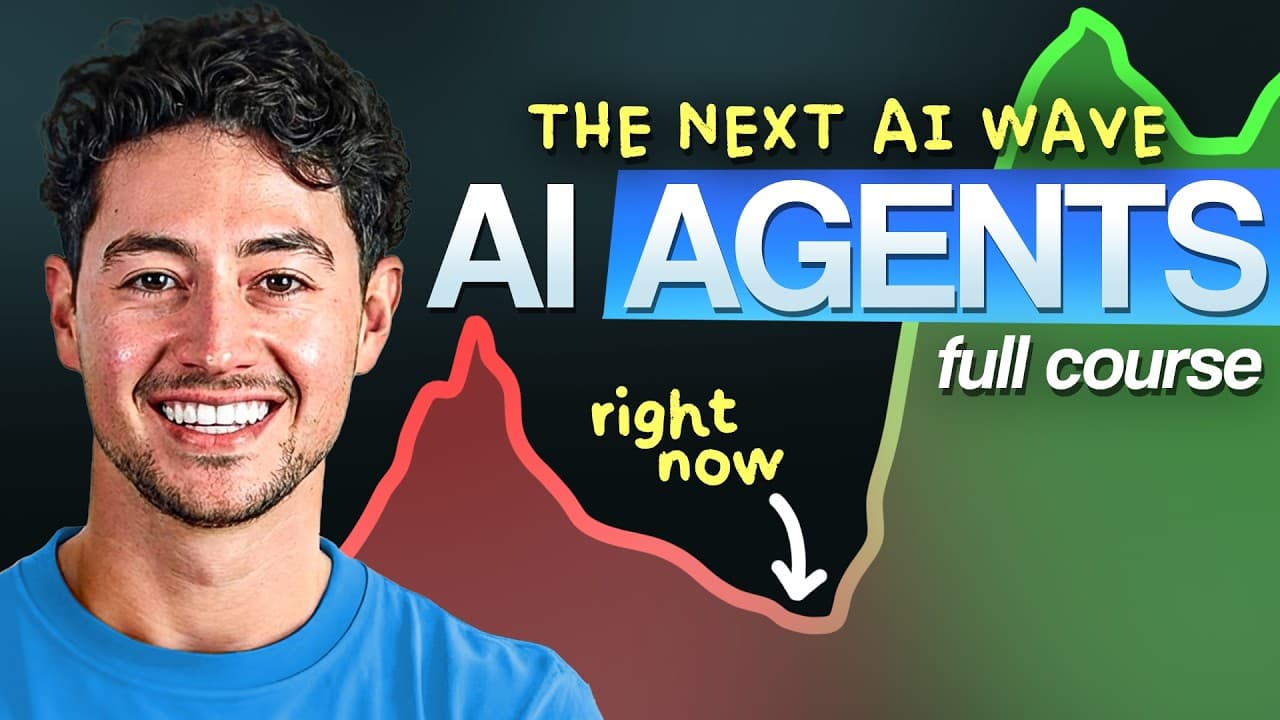
Reliable agentic workflows automate business processes by separating high-level directives from script-based execution, then planning, acting, verifying, and improving over time. Using the DOE framework and Antigravity, the demonstrated workflow scraped 200 United States realtors, validated an initial group of 25 prospects, enriched email addresses, formatted company names, and delivered the results to Google Sheets. Read on to understand the framework, validation process, and practical business applications.
Transcript
Welcome to the most comprehensive course on agentic workflows ever created absolutely free. Up until recently, the term agent was associated primarily with a ton of hype and very little in the way of actual business value. But today, the tech is now good enough that Agentic workflows are definitively here and they are without a doubt the future of ... Read More
Key Insights
- Agentic workflows are presented as practical systems for automating economically valuable business processes, rather than as technology used only for demonstrations. The course focuses on immediately applicable workflows that can generate revenue or reduce the manual labor required in sales, marketing, and related operations.
- The DOE framework is a separation-of-concerns structure built around directives, orchestration, and execution. It keeps high-level task instructions separate from the tool layer, where generated scripts call specific services and perform repeatable actions needed to satisfy the stated business requirement.
- Directives are high-level instructions that guide an agent through a process. In the demonstrated workspace, a scraping directive defines how prospects should be selected, tested against target-market criteria, rejected when necessary, and processed through a full data-collection run after successful validation.
- The execution layer is where scripts perform concrete operations such as scraping and enrichment. Instead of asking a flexible model to improvise every action, the environment creates temporary scripts, retains successful ones, and adds complexity over time to improve consistency for recurring business tasks.
- The demonstrated workflow begins with a single natural-language request to scrape 200 realtors in the United States. The agent reads its directives and execution resources, creates an implementation plan, performs the required steps, verifies its work, and delivers the resulting lead data in Google Sheets.
- The lead-validation process uses a test scrape of 25 prospects before committing to the full run. If more than 85% of those prospects belong to the intended target market, the agent keeps the filters; otherwise, it revises them and repeats the process until they satisfy the directive.
- The enrichment process increased available email addresses from 178 to 193. The workflow also created casual versions of 191 company names, applying previously defined cold-email logic so outreach could use shorter, more natural company references instead of lengthy formal business names.
- Self-annealing workflows are designed to maintain and improve themselves over time. In the example, the agent can revise inadequate scraping filters, feed outputs back into its inputs, preserve effective scripts, and build greater operational complexity while continuing to verify results against defined requirements.
Install to Summarize YouTube Videos and Get Transcripts
Explore YouTube Video Summarizer or Get YouTube Transcript Extractor
Questions & Answers
Q: What is an agentic workflow for business automation?
An agentic workflow receives a high-level request, creates an implementation plan, performs the necessary actions, verifies the outcome, and presents the results. The course applies this approach to economically valuable work such as lead scraping, email enrichment, company-name formatting, and delivery to Google Sheets.
Q: How does the DOE framework organize agentic workflows?
DOE stands for directive, orchestration, and execution. Directives store high-level instructions, while the execution layer calls specific generated scripts to complete concrete tasks; orchestration coordinates the process between them.
Q: How can beginners build agentic workflows without programming experience?
Beginners can communicate with an agent through a text panel in the Antigravity IDE. The course requires no programming or workflow-building background and guides users through setting up the agent environment from start to finish.
Q: How does an agentic lead-scraping workflow validate its filters?
The demonstrated workflow first scrapes a test group of 25 prospects and checks whether they fit the intended target market. If more than 85% qualify, it retains the filters and proceeds with the full run; otherwise, it revises the filters and tests them again.
Q: What did the real-estate lead-generation workflow automate?
The workflow scraped 200 realtors in the United States, collected lead information, enriched missing email addresses, and created casual company names. It then delivered the completed data to Google Sheets and provided a concise report of the results.
Q: Why separate directives from execution scripts?
The separation lets high-level instructions guide decisions while dedicated scripts perform repeatable actions. The transcript explains that a base model can be so flexible that it does not reliably meet the stated business need, whereas successful scripts can be retained and expanded over time.
Q: What does self-annealing mean in an agentic workflow?
A self-annealing workflow maintains and improves itself over time. In the scraping example, the agent can reject inadequate filters, create and retest revised filters, feed results back into the process, and preserve scripts that work.
Q: How much work was required to create the demonstrated workflow?
The presenter says the initial system was assembled in less than 15 minutes from start to finish. The autonomous workflow began with a brief bullet-point description and about 5 or 10 minutes of back-and-forth while the agent constructed the required script.
Summary & Key Takeaways
-
Agentic workflows can automate business processes through natural-language requests while handling planning, execution, verification, and delivery. The course introduces practical production examples before teaching the underlying system, allowing beginners to see how agents perform economically valuable work without requiring previous programming experience or a background in traditional workflow building.
-
The DOE framework separates directives, orchestration, and execution. Directives contain high-level instructions, while the execution layer uses scripts and external services to complete specific tasks. This separation limits excessive model flexibility, supports reliable outcomes, and allows useful scripts to be retained and expanded as the workflow gains complexity over time.
-
A demonstrated lead-generation workflow scraped 200 United States realtors, tested an initial group of 25 prospects, checked whether more than 85% matched the target market, enriched missing email addresses, created casual company names, and delivered the completed information in Google Sheets with a concise report of the results.
Read in Other Languages (beta)
Share This Summary 📚
Summarize YouTube Videos and Get Video Transcripts with 1-Click
Try YouTube Summary with ChatGPT & Claude or YouTube Transcript Generator
Explore More Summaries from Nick Saraev 📚



Summarize YouTube Videos and Get Video Transcripts with 1-Click
Try YouTube Summary with ChatGPT & Claude or YouTube Transcript Generator