How to Scrape Leads and Auto DM Every Social Media Platform Using AI in 2025
TL;DR
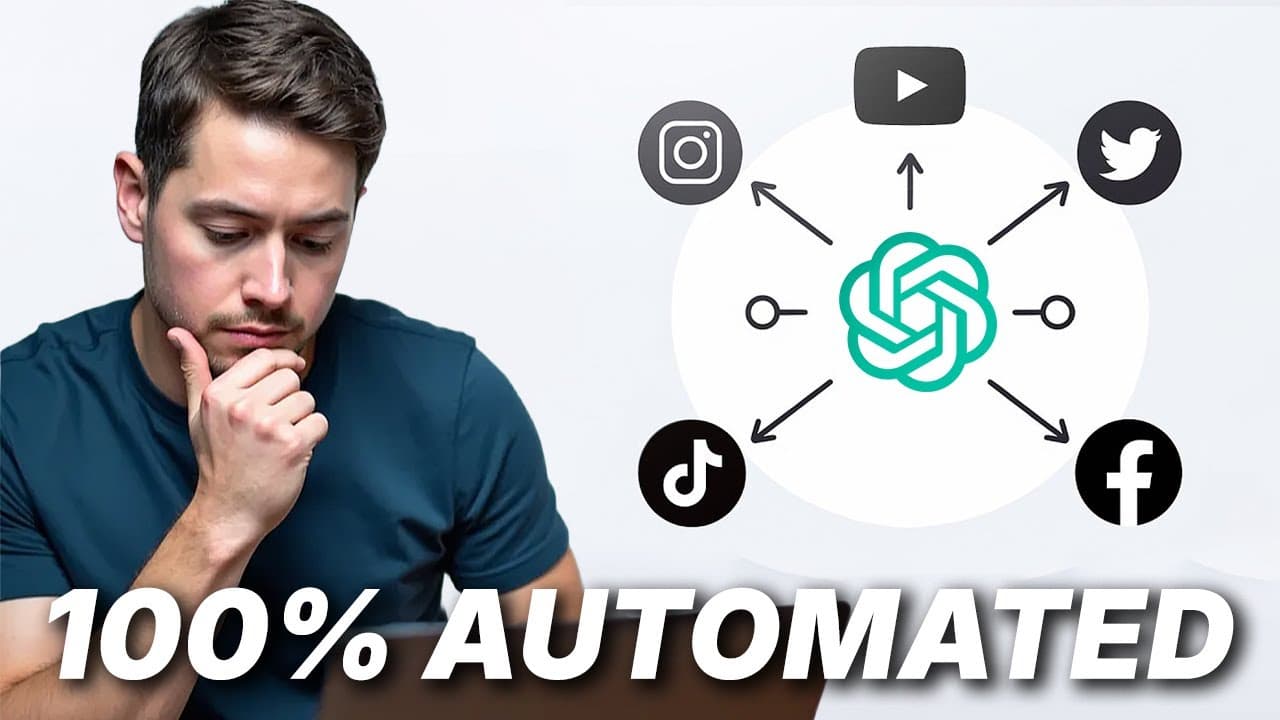
You can scrape social media leads and automate outreach by collecting relevant profiles, filtering them for useful engagement signals, and importing the qualified accounts into personalized messaging sequences. The workflow covers Facebook, Instagram, LinkedIn, Twitter/X, TikTok, and YouTube, while the detailed demonstration uses Drippy.ai to reduce 4,000 Twitter/X profiles to 1,400 leads. Read on for the exact sourcing, filtering, and message-personalization process.
Transcript
Hey, today I'm going to show you an exhaustive list of ways to scrape every major social media platform currently known to men. That includes Facebook, Instagram, LinkedIn, Twitter/X, Tik Tok, and we're even going to do YouTube. I'm also going to show you how to automate outreach on those platforms. So, you're not just going to be able to get a lis... Read More
Key Insights
- Lead collection serves outreach: The central workflow treats scraping as the beginning rather than the finished result. Profiles are collected so they can be qualified and placed into a messaging sequence that presents an offer. This connects audience discovery with an immediate outreach process instead of leaving the operator with a static list that still requires a separate system for contacting prospects.
- Six platforms remain searchable: The stated scope includes Facebook, Instagram, LinkedIn, Twitter/X, TikTok, and YouTube. Preserving these platform names matters because the workflow is presented as an exhaustive approach to major social networks, even though the available demonstration focuses in detail on Twitter/X. The linked flowchart is offered as the overview for getting started on each platform.
- Drippy.ai simplifies Twitter sourcing: The presenter identifies Drippy.ai as the simplest and easiest current method in the demonstration for scraping Twitter/X profiles and automating outreach. Its value comes from accepting a few targeting parameters, producing a lead list, and connecting those leads to outreach. The presenter also explicitly states that he is not affiliated with Drippy.ai.
- Account verification has two stages: Access requires more than connecting a social profile. The operator first enters an email address and completes email verification, then manually connects and signs into Twitter/X. Drippy.ai sends an additional verification code during that connection process. Once the account is connected, the optional onboarding session can be skipped and lead-source creation can begin directly.
- Lead sources support four paths: Drippy.ai offers scraping from a tweet, scraping from a Twitter/X profile, importing an existing CSV file, and finding lookalike leads. The lookalike option seeks people similar to current customers or an ideal customer profile. These paths allow the operator either to gather a fresh audience from Twitter/X or to reuse a list already collected elsewhere.
- Follower and following audiences differ: When a Twitter/X profile is used as the account source, the operator chooses whether to collect the account’s followers or the accounts it follows. Targeting followers can reach people already connected to a relevant creator or subject. Selecting following accounts would instead build a list from the profiles that the source account has chosen to follow.
- Previewing precedes full qualification: After the source account and audience type are selected, Drippy.ai begins importing profiles and displays a preview. The demonstrated preview contains 400 profiles, although the presenter is uncertain whether this represents a fixed 400 or about 10 percent. The preview creates an opportunity to inspect the source before proceeding to filtering and saving.
- Filters measure profile activity: Qualification controls include follower count, following count, biography rules, and number of tweets. Biography filtering can exclude profiles when their bio contains specified text or use the absence of text as a condition. The combination lets the operator narrow the list using both numerical activity signals and the descriptive information users place in their profiles.
- One filter changes the scale: The example applies a minimum threshold of more than 100 followers. The presenter uses this as a rough indicator that the account is socially engaged and not simply a new profile. With one data source and one filter, the audience falls from 4,000 profiles to 1,400 leads, making the effect visible before outreach.
- Descriptive names preserve context: The saved source is named to identify both the account being scraped and the requirement of greater than 100 followers. That naming choice makes the audience definition recognizable later when selecting a source for automation. It also records the qualification logic directly in the list name, without requiring the operator to reopen the filter settings.
- Script control improves consistency: Cold DM 2.0 provides two approaches, personalizing an existing script or generating the complete message from instructions. The recommended approach starts with copy that has already demonstrated value and delegates only selected details to AI. This limits the risk of flamboyant, annoying, or tonally inconsistent language while still allowing each recipient to receive customized wording.
- Context enables specific personalization: The AI setup can include information about the sender, business, offer, website, and relevant tweets. The demonstrated script combines a recipient’s first name and a profile-specific observation with fixed credibility about a 60,000-subscriber YouTube channel and an invitation to create short-form clips. Multiple variants can preserve the offer while preventing every lead from receiving identical wording.
Install to Summarize YouTube Videos and Get Transcripts
Explore YouTube Video Summarizer or Get YouTube Transcript Extractor
Questions & Answers
Q: How do you scrape Twitter/X followers for automated outreach?
Connect a Twitter/X account to Drippy.ai, create a new lead source, and choose the lead-scraper option. Enter the target account and select its followers rather than the accounts it follows. Let Drippy.ai import a preview, then apply filters such as requiring more than 100 followers. Review the resulting count, give the source a descriptive name, save it, and select that source when configuring the Cold DM 2.0 automation.
Q: What social media platforms does the AI scraping workflow cover?
The broader workflow covers Facebook, Instagram, LinkedIn, Twitter/X, TikTok, and YouTube. It is intended to combine lead collection with automated outreach on those platforms. The goal is to move collected profiles into sequences that can present an offer, rather than stopping after a list is produced. A linked flowchart contains the wider platform-specific overview, while the detailed excerpt demonstrates the Twitter/X process.
Q: What lead sources can Drippy.ai use for Twitter/X?
Drippy.ai can scrape leads from a tweet or a Twitter/X profile. It can also import an existing list from a CSV file or find lookalike leads resembling existing customers or an ideal customer profile. When a profile is the source, the operator can collect either its followers or the accounts it follows. These choices support both new audience discovery and the reuse of lead information gathered elsewhere.
Q: How can Twitter/X leads be filtered before messaging?
Drippy.ai can filter profiles by follower count, following count, biography content, and number of tweets. Biography rules can exclude accounts based on text or evaluate whether specified text is absent. In the demonstration, requiring more than 100 followers is used as a proxy for stronger social engagement. That filter reduces the source from 4,000 profiles to 1,400 leads before the list is saved for outreach.
Q: How do you automate cold DMs after saving a lead source?
Open the automation area, select Cold DM 2.0, and choose the saved lead source that should receive the outreach. Decide whether AI should personalize an existing script or generate a complete message from instructions. Add context about the sender, business, and offer, then create and test the message. Profile details, website information, and tweet context can support customization, while variants can change repeated wording.
Q: Should AI generate the entire outreach message?
The recommended approach is to preserve an existing script and let AI personalize only selected parts. This retains wording and structure that have already demonstrated value while still adapting the message to the recipient. The transcript warns that fully delegated writing can become flamboyant, annoying, or inconsistent with the intended tone. Controlled personalization therefore balances specificity with greater consistency across the outreach sequence.
Q: What details can personalize a Twitter/X cold DM?
The setup can explain who the sender is, what the business does, and what offer is being made. The message can then combine fixed copy with the recipient’s first name and a specific observation drawn from the profile. Website and tweet information can provide additional context for the generated portion. In the example, the fixed credibility statement mentions a 60,000-subscriber YouTube channel, followed by an invitation to create short-form clips.
Q: Why generate multiple versions of an automated DM?
Multiple variants prevent every lead from receiving exactly the same wording. AI can alter the phrasing while preserving the central purpose and offer of the original script. This makes repeated outreach less likely to resemble bulk DM spam on Twitter/X. The approach also keeps personalization within a controlled script instead of handing the entire message and its tone over to unrestricted generation.
Summary & Key Takeaways
-
Mapping the complete workflow: The process is designed to scrape leads and automate outreach across Facebook, Instagram, LinkedIn, Twitter/X, TikTok, and YouTube. Its purpose is not merely to produce a list of social profiles. Collected leads can be placed into a messaging sequence so an offer can be presented directly. A linked flowchart provides the broader platform-specific setup, while the demonstrated portion begins with Twitter/X and follows the workflow from account connection through lead collection and outreach preparation.
-
Connecting Twitter/X to Drippy.ai: Drippy.ai is presented as the simplest and easiest option for scraping Twitter/X profiles and conducting outreach. Registration starts with an email address and email verification. The operator then manually connects a Twitter/X account, signs in, and enters an additional verification code delivered by email. Drippy.ai describes itself as an AI assistant for Twitter or X direct messages. An optional onboarding session can be skipped before creating the first lead source.
-
Choosing a lead source: A new Drippy.ai lead source can collect profiles from a tweet or Twitter/X profile, accept leads imported through a CSV file, or find lookalike leads similar to existing customers or an ideal customer profile. For an account source, the operator enters the chosen profile and selects either its followers or the accounts it follows. The demonstration selects followers, after which Drippy.ai begins importing the audience and produces a preview of 400 profiles.
-
Filtering the imported profiles: Drippy.ai can qualify leads by follower count, following count, biography content, and number of tweets. Saved filters can also be reused. The example requires profiles to have more than 100 followers because the presenter wants people who appear more socially engaged, rather than new or less active profiles. After applying this single filter, the source is reduced from 4,000 profiles to 1,400 leads and assigned a descriptive name before saving.
-
Preparing automated cold DMs: Once a saved lead source is available, Cold DM 2.0 can use it for outreach. The operator may ask AI to generate an entire message from instructions or personalize selected parts of an existing script. The preferred method keeps a proven script intact while adapting details such as the recipient’s first name and a profile observation. Sender, business, offer, website, and tweet context can guide personalization, while message variants reduce repetitive wording.
Read in Other Languages (beta)
Share This Summary 📚
Summarize YouTube Videos and Get Video Transcripts with 1-Click
Try YouTube Summary with ChatGPT & Claude or YouTube Transcript Generator
Explore More Summaries from Nick Saraev 📚




Summarize YouTube Videos and Get Video Transcripts with 1-Click
Try YouTube Summary with ChatGPT & Claude or YouTube Transcript Generator