Is the Sony ZV-E10 II Worth the Upgrade?
TL;DR
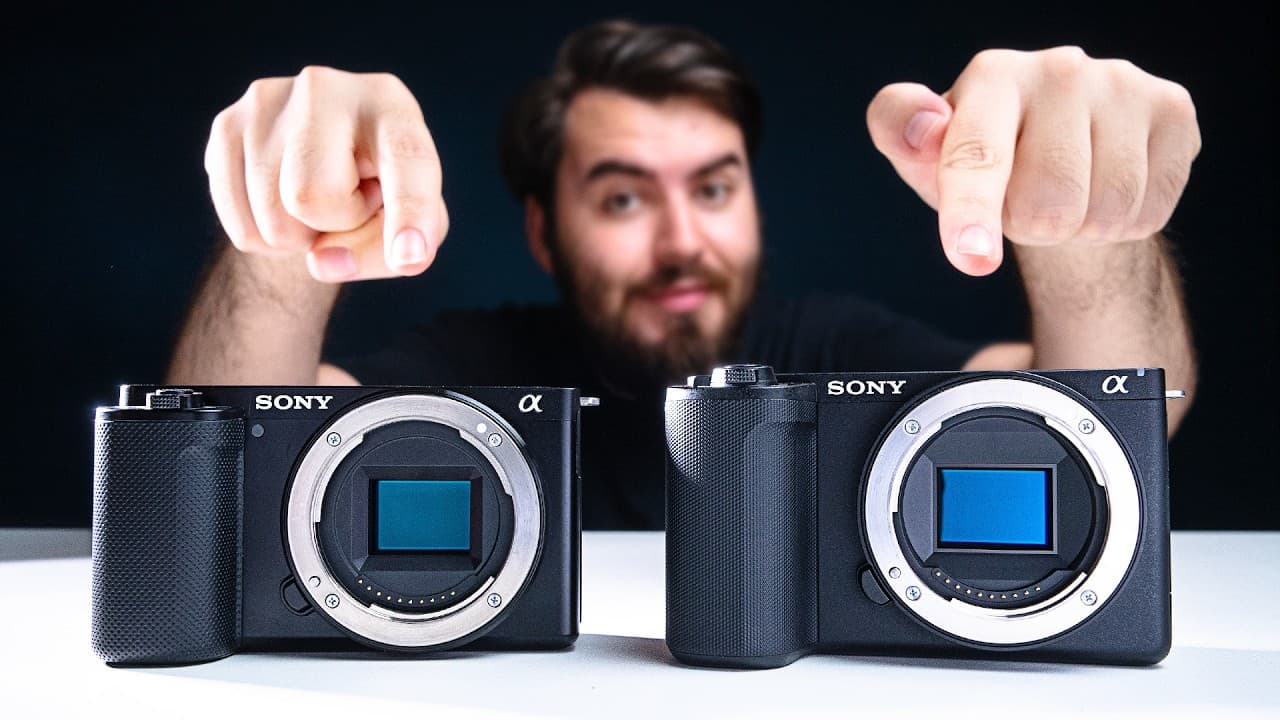
Choose the Sony ZV-E10 II if you need 4K at 60 frames per second, 10-bit color, longer battery life, more accurate skin tones, and improved autofocus. The original ZV-E10 remains the better budget choice for standard talking-head videos and vlogging, but both cameras lack in-body stabilization, and the newer model can overheat during continuous 4K 60 recording.
Transcript
if you're looking for the best camera for YouTube that's easy to use gives you that Pro look and fits your budget the Sony zv E10 has been our go-to for the past 3 years but now with the zve E10 Mark I there are some cool new features that could make shooting content even easier and may make it the better investment so in this video I'm going to co... Read More
Key Insights
- The original Sony ZV-E10 is a compact, beginner-friendly mirrorless camera with a 24-megapixel APS-C sensor, 4K recording up to 30 frames per second, a flip-out screen, dependable autofocus, and support for interchangeable lenses.
- The Sony ZV-E10 II records 4K at up to 60 frames per second, giving creators higher-resolution slow motion than the original camera, which is limited to 1080p when recording at 60 frames per second.
- The ZV-E10 II's 10-bit 4:2:2 recording captures more colors and smoother tonal transitions than the original model's 8-bit video, providing a stronger foundation for intensive color grading, especially when footage is recorded with the S-Log3 profile.
- The updated sensor in the ZV-E10 II produces more neutral, true-to-life colors, particularly in skin tones. The original ZV-E10 can lean slightly toward magenta, although both cameras deliver sharp and detailed footage with their standard picture profiles.
- The ZV-E10 II delivers modest low-light improvements, producing a cleaner image with less noise at higher ISO settings. The original model can show more blocky, fixed-pattern color noise in darker areas, though the overall difference is not described as drastic.
- Autofocus is reliable on both cameras, but the ZV-E10 II feels faster and more dependable when tracking quick subjects or handling complicated scenes. Either model remains suitable for ordinary talking-head videos and routine vlogging.
- Neither camera includes in-body image stabilization, so handheld footage can appear shaky. Lens stabilization reduces small jitters, while Active SteadyShot controls larger movements more effectively but crops the image and may require a wider lens for self-recording.
- Battery life is substantially longer on the ZV-E10 II because it uses the larger FZ100 battery. During 4K recording at 24 frames per second, the original lasted about 1 hour 30 minutes, while the newer camera reached 2 hours 21 minutes.
Install to Summarize YouTube Videos and Get Transcripts
Explore YouTube Video Summarizer or Get YouTube Transcript Extractor
Questions & Answers
Q: Is the Sony ZV-E10 II worth upgrading to?
The Sony ZV-E10 II is worth considering when 4K 60 recording, 10-bit color, extended battery life, improved autofocus, or more neutral color reproduction matters to your work. It also offers cleaner high-ISO footage, a brighter screen, simplified menus, and easier SD card access. The original remains sufficient for standard talking-head content and vlogging, particularly when affordability is the main concern.
Q: What video quality differences separate the ZV-E10 and ZV-E10 II?
Both cameras produce sharp, detailed 4K footage through APS-C sensors and look good with their standard picture profiles. The original records 4K at up to 30 frames per second, whereas the ZV-E10 II reaches 4K 60. The newer model also provides 10-bit 4:2:2 recording, more neutral skin tones, and greater flexibility when grading S-Log3 footage.
Q: Which Sony ZV-E10 model is better for slow motion?
The Sony ZV-E10 II is the stronger slow-motion option because it can record 60 frames per second at 4K resolution. The original ZV-E10 is restricted to 1080p when shooting at the same frame rate. The resolution increase is visibly noticeable, making the newer model preferable for creators who regularly use high-frame-rate footage in their finished videos.
Q: How does 10-bit video improve footage from the ZV-E10 II?
The ZV-E10 II's 10-bit recording captures more colors than the original ZV-E10's 8-bit format, producing smoother transitions between tones. This advantage becomes especially useful when recording with a flat log profile such as S-Log3 and applying substantial color grading afterward. The additional color information gives editors more control over the final appearance and supports cleaner grading results.
Q: Do the Sony ZV-E10 cameras have image stabilization?
Neither the original ZV-E10 nor the ZV-E10 II includes in-body image stabilization. Stabilized kit lenses can reduce small handheld jitters, but their effect is limited. Sony's digital Active SteadyShot handles larger shakes more effectively, although it noticeably crops the frame. Creators filming themselves may therefore need a wider lens or additional distance from the camera.
Q: Does the Sony ZV-E10 II overheat during recording?
The ZV-E10 II can overheat during demanding continuous recording. In the reported test, it stopped after about 20 minutes while recording 4K at 60 frames per second. Overheating was not a problem during 4K recording at 24 or 30 frames per second, although the newer body ran warmer and could become uncomfortable to hold after extended use.
Q: How much longer does the ZV-E10 II battery last?
During testing with both cameras recording 4K video at 24 frames per second, the original ZV-E10 operated for about 1 hour and 30 minutes. The ZV-E10 II continued for 2 hours and 21 minutes with its larger FZ100 battery. That result provides nearly one additional hour of recording and reduces the number of spare batteries needed for longer projects.
Q: Which ZV-E10 camera is best for beginner YouTube creators?
The original Sony ZV-E10 remains a practical beginner camera because it is compact, lightweight, user-friendly, and priced at $698 for the body, with occasional sales mentioned. It offers a flip-out screen, reliable autofocus, sharp 4K footage, and interchangeable lenses. The ZV-E10 II is better suited to beginners who can justify paying for its more advanced recording features and longer battery life.
Summary & Key Takeaways
-
The original Sony ZV-E10 is an affordable, compact camera aimed at YouTube creators. Its 24-megapixel APS-C sensor records sharp 4K footage at up to 30 frames per second. A flip-out screen, reliable autofocus, interchangeable lenses, and a body-only price of $698 make it particularly accessible for beginners and solo creators.
-
The Sony ZV-E10 II adds 4K recording at up to 60 frames per second, 10-bit 4:2:2 color, streamlined menus, a brighter screen, a side-mounted SD card slot, and a larger battery. Its updated sensor produces more neutral skin tones, cleaner low-light footage, faster autofocus, and somewhat less pronounced rolling shutter.
-
The upgrade introduces meaningful compromises alongside its improvements. Neither camera provides in-body image stabilization, while Sony's Active SteadyShot creates a noticeable crop. The ZV-E10 II also runs warmer and overheated after about 20 minutes of continuous 4K 60 recording, although 4K recording at 24 or 30 frames per second was reliable.
Read in Other Languages (beta)
Share This Summary 📚
Summarize YouTube Videos and Get Video Transcripts with 1-Click
Try YouTube Summary with ChatGPT & Claude or YouTube Transcript Generator
Explore More Summaries from Think Media 📚



Summarize YouTube Videos and Get Video Transcripts with 1-Click
Try YouTube Summary with ChatGPT & Claude or YouTube Transcript Generator