How to Build Self-Mastery Through Discomfort
TL;DR
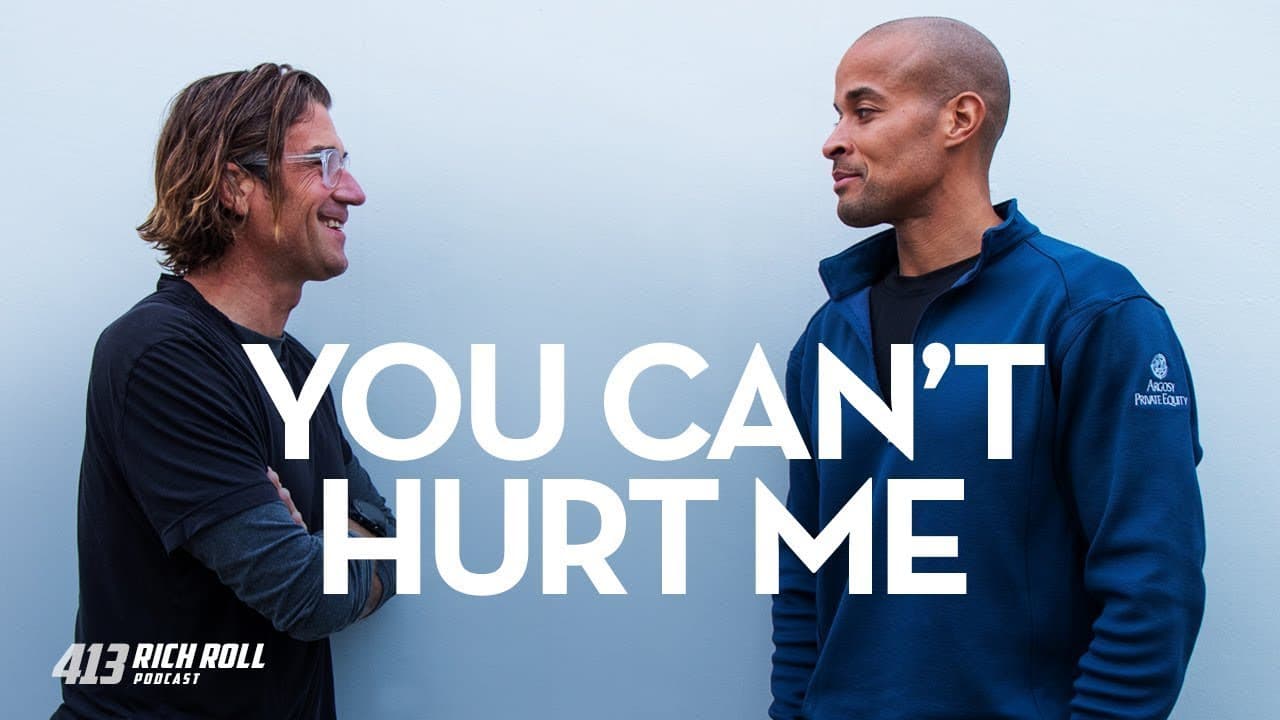
Personal transformation begins with confronting painful truths, deliberately doing difficult things, and learning from repeated failure. David Goggins says that honest vulnerability makes achievement relatable, while ownership of his story lets him share both the suffering behind his public image and the process of building a stronger identity from what he calls scraps.
Transcript
all right let's do it let's do it man man [ __ ] gaga yes that is like the refrain without the audiobook man Skolnick popping in with just like after every chapter like man I mean I thought I knew this story right and I know a lot of it right uh there's just so much more there man so much more man unbelievable it's all surface man I only had an hou... Read More
Key Insights
- Self-publishing was Goggins's way to retain complete ownership of his suffering, story, and ability to speak about both. He rejected arrangements that might restrict what an author could discuss in speaking engagements or require permission before sharing parts of a personal history.
- Goggins's book succeeded through a self-propelled approach rather than mainstream media promotion. Rich Roll observed that it ranked near the top of all books on Amazon even though Goggins had not appeared on major mainstream programs to support its release.
- Deliberately doing disliked activities is important in Goggins's philosophy. Although he identifies as an introvert and finds public sharing difficult, he chose to communicate his story because people facing similar problems might benefit from seeing the troubled person behind his hardened image.
- Vulnerability is the bridge between Goggins's extreme accomplishments and an audience's ordinary struggles. His endurance feats can make him appear superhuman, but revealing insecurity, shame, childhood suffering, and personal problems allows people to understand that his current identity was constructed rather than innate.
- The audiobook uses a hybrid format that combines narration with informal chapter discussions. Adam Skolnick reads most of the text, then he and Goggins pause to examine each chapter in a podcast-style conversation that adds context and emotional detail to the written account.
- Writing the book was difficult because it required Goggins to look directly at the person beneath his constructed identity. He had become skilled at living through the hardened character he created, but documenting his past forced him to revisit truths he had previously felt ashamed to disclose.
- Goggins's third-person self-reference reflects a perceived separation between his origins and the person he intentionally built. He describes being amazed that a human being assembled from scraps could become capable of the demanding achievements associated with his public identity.
- Repeated failure was part of Goggins's process of self-construction. He compares his development to learning an unfamiliar craft, producing flawed early attempts, and gradually gaining tools through pain and suffering until he could recognize the person those lessons had helped him build.
Install to Summarize YouTube Videos and Get Transcripts
Explore YouTube Video Summarizer or Get YouTube Transcript Extractor
Questions & Answers
Q: Why did David Goggins self-publish Can't Hurt Me?
David Goggins self-published "Can't Hurt Me" because he wanted complete ownership of his story, including the suffering that shaped it and the language used to describe it. He was concerned that a publishing arrangement could limit what he discussed in public. The decision was therefore about controlling his life narrative, not primarily about proving conventional publishing advice wrong.
Q: How does David Goggins use discomfort for personal growth?
David Goggins treats discomfort as a source of instruction. He says it is important to do things one dislikes, and he describes learning through pain, suffering, and repeated failure while constructing a stronger version of himself. His willingness to speak publicly illustrates this approach because he identifies as an introvert and finds exposure difficult, yet shares his story to help others.
Q: Why does David Goggins emphasize vulnerability?
David Goggins emphasizes vulnerability because extraordinary endurance accomplishments can make him seem fundamentally different from other people. By disclosing insecurity, shame, childhood suffering, and personal problems, he shows that his hardened identity did not appear fully formed. Rich Roll argues that these embarrassing details create emotional connection because audiences can relate more easily to struggle than to seemingly superhuman achievements.
Q: Why does David Goggins refer to himself in the third person?
David Goggins refers to himself in the third person because he perceives a meaningful division between where he began and the identity he deliberately created. He remembers the insecure person he once was while observing the hardened person he later built. The language expresses his amazement at what a human being can construct through experience, failure, pain, and persistent effort.
Q: What made writing Can't Hurt Me so difficult for Goggins?
Writing "Can't Hurt Me" was difficult because it required Goggins to examine himself honestly after becoming accustomed to living through the strong identity he had created. He had to disclose experiences that embarrassed him and revived feelings of shame. Unlike physical challenges, the writing process made him confront the painful person and history concealed beneath his public image.
Q: What is distinctive about the Can't Hurt Me audiobook?
The audiobook combines a conventional reading with informal conversations after chapters. Adam Skolnick reads most of the book, while he and Goggins pause to discuss the material in a podcast-style format. These exchanges allow Goggins to add context, remind listeners about the suffering behind his later accomplishments, and make the account feel more immediate and emotionally revealing.
Q: How did Goggins build a stronger identity from failure?
Goggins describes building himself as if he were assembling something from scrap metal without prior training. His early efforts were flawed, but each experience with pain, suffering, and failure gave him additional tools and understanding. Over time, those lessons helped him construct a person whose capabilities surprised even him, while preserving his awareness of the insecure individual at the beginning.
Q: Why did Goggins decide to share his painful past publicly?
Goggins decided to share his past after realizing that people saw only his current hardened image and labeled him extraordinary or superhuman. He knew that description omitted the insecure child and the many problems he had faced. He felt compelled to reveal those origins so people experiencing similar difficulties could see that his present identity emerged through struggle rather than from an effortless beginning.
Summary & Key Takeaways
-
David Goggins chose to self-publish "Can't Hurt Me" because he wanted complete ownership of his life story and the freedom to discuss his suffering without restrictions. Rich Roll notes that the book reached near the top of Amazon's overall rankings without mainstream media appearances, relying instead on a self-propelled approach.
-
Goggins describes a division between David Goggins, the insecure person shaped by a painful childhood, and Goggins, the strong identity he deliberately constructed. He says repeated pain, suffering, and failure taught him how to assemble that identity from scraps, even though nobody had trained him to build himself into that person.
-
Writing the book forced Goggins to confront memories and truths that his hardened public identity had allowed him to avoid. He shared embarrassing and shameful experiences so audiences could see the human being behind his endurance accomplishments. The audiobook extends that honesty through informal chapter discussions between Goggins and narrator Adam Skolnick.
Read in Other Languages (beta)
Share This Summary 📚
Summarize YouTube Videos and Get Video Transcripts with 1-Click
Try YouTube Summary with ChatGPT & Claude or YouTube Transcript Generator
Explore More Summaries from Rich Roll 📚




Summarize YouTube Videos and Get Video Transcripts with 1-Click
Try YouTube Summary with ChatGPT & Claude or YouTube Transcript Generator