How to Build Strength for Lifelong Health
TL;DR
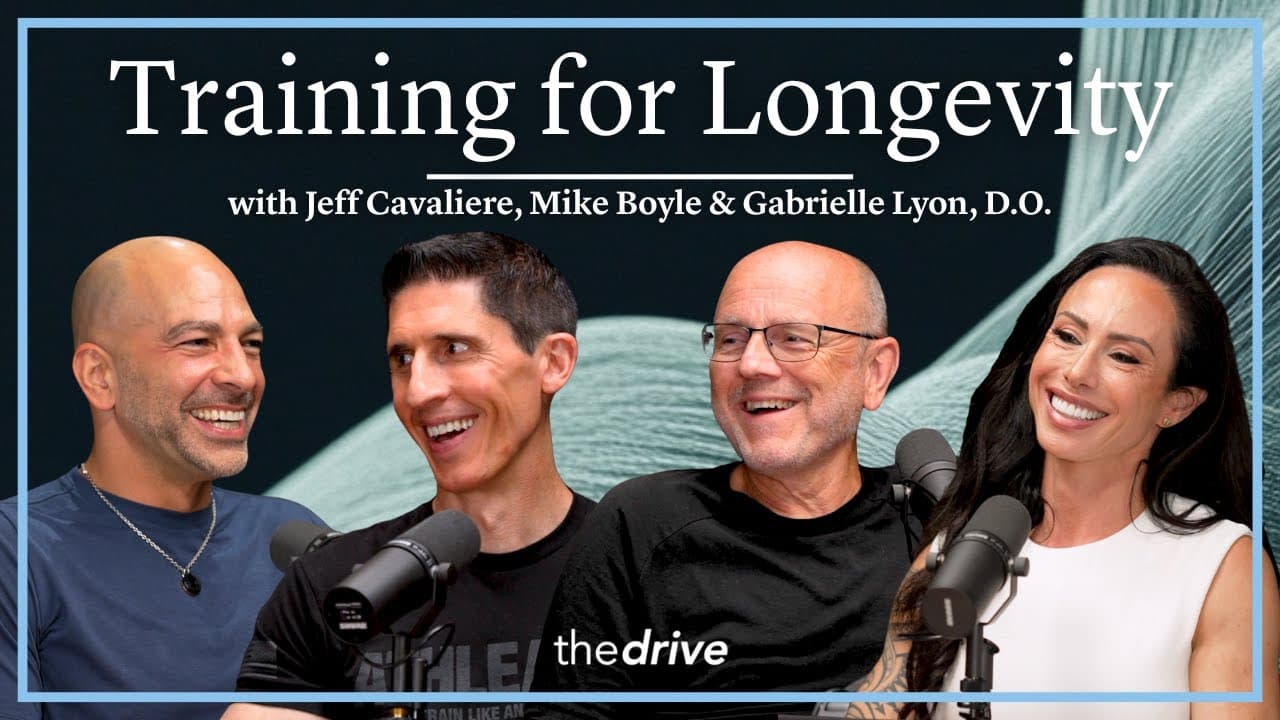
Resistance training supports lifespan, metabolic resilience, injury prevention, and the ability to remain independent across the lifespan. Start with manageable programming, prioritize consistency over discomfort, maintain skeletal muscle through appropriate strength work and protein intake, and modify exercises when their injury risk outweighs their benefit.
Transcript
You can build a great body on six exercises. I just don't see any evidence that anything trumps exercise. 50% of Americans are not training or doing any kind of exercise. You don't know you're losing the battle until it's too late. Say a little bit about the programming. I know that it works and I know that it doesn't have to be hard and it doesn't... Read More
Key Insights
- Exercise is presented as the strongest available pillar for improving lifespan, lowering chronic disease risk, and protecting quality of life. The roundtable places resistance training at the center of that argument because it preserves muscle, strength, power, metabolic resilience, and functional capacity.
- Resistance-training participation is described as remarkably low despite widespread interest in fitness. The discussion estimates that 50% of Americans perform no exercise, while gym membership, actual gym use, resistance training participation, and digital program completion each narrow the actively training population further.
- Consistency is the central challenge in strength programming. Even people who purchase a structured digital program and receive the necessary sets, repetitions, and instructions often fail to finish, with the discussed programs achieving a 20% completion rate compared with an industry standard of roughly 10%.
- Beginner training can be effective without being hard or uncomfortable. Mike Boyle emphasizes programming that helps people experience success and continue participating, reflecting the broader argument that a small, manageable exercise selection can build a strong body without unnecessary complexity.
- Skeletal muscle health is the focal point of muscle-centric medicine. Gabrielle Lyon connects muscle with health, wellness, body composition, brain function, metabolic resilience, sexual function, and the maintenance of physical capability, making muscle preservation relevant far beyond appearance or athletic performance.
- Protein recommendations should reflect body weight rather than sex alone. Lyon states that the minimum amount she would recommend is 100 grams, while the episode description adds that a protein-centered diet should also be tailored to age and activity level to support muscle health.
- Exercise selection should be governed by risk-reward trade-offs. Peter Attia describes discontinuing regular squats and deadlifts after deciding their trade-off was no longer favorable, while the roundtable considers single-leg training, knee-friendly alternatives, tendon care, and exercises whose risks may outweigh their benefits.
- Youth athletic development benefits from variety rather than increasingly early specialization. Boyle notes that advocates of year-round participation may earn their living from it, while injury rates have not declined. The group therefore emphasizes developing lifelong athletes through broader movement and sports experiences.
Install to Summarize YouTube Videos and Get Transcripts
Explore YouTube Video Summarizer or Get YouTube Transcript Extractor
Questions & Answers
Q: Why is resistance training important for longevity?
Resistance training is important for longevity because it helps preserve skeletal muscle, strength, power, metabolic resilience, and functional capacity. The discussion presents exercise as unmatched among major health pillars for improving lifespan and reducing chronic disease risk. Its value also extends to quality of life, including the physical ability to move independently, manage everyday tasks, and remain active with age.
Q: How should beginners start resistance training?
Beginners should start with manageable programming that does not need to feel extremely hard or uncomfortable. The goal is to establish successful, repeatable training rather than overwhelm someone with complexity or excessive effort. The roundtable suggests that a strong body can be developed with a small exercise selection, even six exercises, provided the program supports consistency and addresses the person’s current capabilities.
Q: Why do so few people complete strength programs?
Program completion is limited less by access to instructions than by follow-through. Jeff Cavaliere reports that only 20% of purchasers complete his team’s digital programs, even though they have the exercises, sets, repetitions, and tools they need. He describes that rate as twice the digital industry standard of roughly 10%, showing that motivation at purchase does not guarantee sustained participation.
Q: How does skeletal muscle support overall health?
Skeletal muscle is described as a focal point of health and wellness rather than merely a source of strength or appearance. The discussion connects muscle health with metabolic resilience, body composition, brain function, sexual function, injury prevention, and physical independence. Maintaining muscle across the lifespan therefore supports both disease-risk reduction and the practical ability to perform daily activities as people age.
Q: How much protein does Gabrielle Lyon recommend?
Gabrielle Lyon states that the minimum amount of protein she would recommend is 100 grams. She also says the recommendation is not sex-specific but body-weight-specific. The episode description further frames the preferred approach as a protein-centered diet tailored to age and activity level, linking nutrition directly to the maintenance of skeletal muscle, strength, and metabolic health.
Q: When should someone replace squats or deadlifts?
Squats or deadlifts should be reconsidered when their risk-reward trade-off no longer supports the person’s goals, health, or injury history. Peter Attia explains that he continued both movements with reduced weight until deciding their trade-off was no longer worthwhile. The discussion supports using alternatives, including single-leg and knee-friendly lower-body exercises, when they deliver needed function with more acceptable risk.
Q: How can people train around injuries as they age?
People can train around injuries by modifying exercise selection instead of abandoning resistance training entirely. Jeff Cavaliere emphasizes understanding injuries and using strategies that allow continued training when physical problems emerge with age. The episode also highlights tendon care, knee-friendly lower-body options, appropriate programming, and removing exercises whose risk exceeds their likely benefit for the individual’s goals and condition.
Q: Why can early youth sports specialization be harmful?
Early specialization can expose young athletes to more year-round play without evidence in the discussion that injury rates are improving. Mike Boyle notes that many people promoting continuous participation earn their living from year-round sports, creating an incentive worth recognizing. The roundtable favors sports variety because broader experiences can develop more adaptable athletes and support lifelong participation rather than narrowly focused short-term development.
Summary & Key Takeaways
-
Resistance training is presented as a leading tool for improving lifespan, reducing chronic disease risk, and preserving quality of life. Yet participation and program completion remain low. The experts argue that effective training does not need to be excessively difficult or uncomfortable, especially when helping beginners establish a sustainable routine.
-
Skeletal muscle contributes to metabolic health, body composition, physical function, and independence across the lifespan. Nutrition supports that tissue, with Gabrielle Lyon stating that 100 grams is the minimum daily protein amount she recommends. Protein needs are described as body-weight-specific rather than determined by sex, with age and activity also informing dietary strategy.
-
Exercise selection should reflect goals, injury history, age, and risk-reward trade-offs. The discussion favors training around physical limitations, considering knee-friendly and single-leg options, and questioning heavy bilateral lifts when their risks become unnecessary. For young athletes, varied sports participation is favored over early year-round specialization and its associated injury concerns.
Read in Other Languages (beta)
Share This Summary 📚
Summarize YouTube Videos and Get Video Transcripts with 1-Click
Try YouTube Summary with ChatGPT & Claude or YouTube Transcript Generator
Explore More Summaries from Peter Attia MD 📚
Summarize YouTube Videos and Get Video Transcripts with 1-Click
Try YouTube Summary with ChatGPT & Claude or YouTube Transcript Generator