Game Theory #13: How Do Global Powers Manipulate Reality in Epstein’s World?
TL;DR
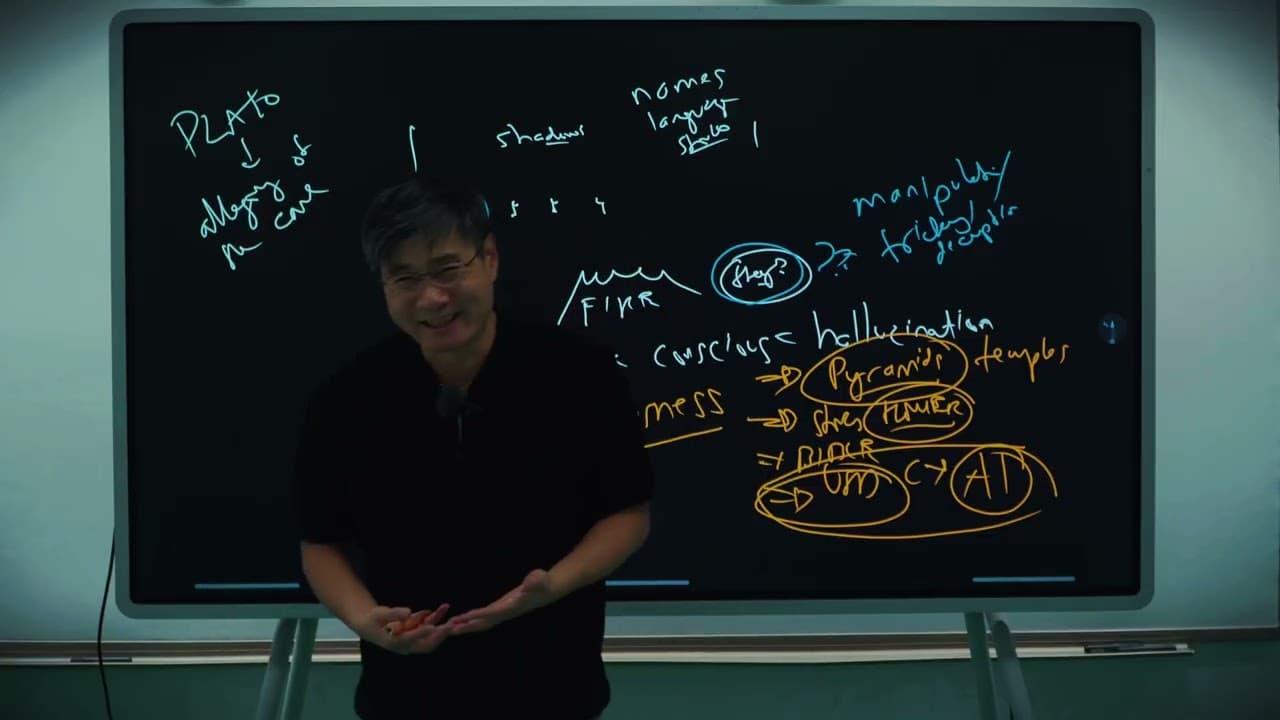
Global powers manipulate reality, according to Game Theory #13: Epstein’s World, by directing conscious attention through financial systems, military force, education, media, and culture. Using Plato’s allegory of the cave, the episode argues that the US dollar stores and extracts human-created wealth while Jeffrey Epstein operated within a transnational elite network. Read on to understand the episode’s wider argument about power, artificial intelligence, and the US–Iran conflict.
Transcript
Today I want to look at three questions. Why did this war between the United States and Iran start? How will this war end? And what will happen after this war ends? And to answer these three questions, we need we need to discuss the nature and structure of our reality. And the first thing you need to understand which is very hard is that our world ... Read More
Key Insights
- Reality is a collective hallucination shaped by our consciousness and perception.
- Wealth is generated by focused conscious attention and is extracted by elites through financial systems.
- The American Empire uses military force and financial systems to maintain global control.
- The global financial order is structured to benefit the United States and its allies.
- Education, media, and culture are used to indoctrinate people into believing in the fairness of the system.
- Jeffrey Epstein is portrayed as a key figure within a transnational network of elites.
- The system is likened to a parasite extracting value from the host, the nation-states.
- A civil conflict exists between the current elite and counter-elites seeking to become the new power brokers.
Install to Summarize YouTube Videos and Get Transcripts
Explore YouTube Video Summarizer or Get YouTube Transcript Extractor
Questions & Answers
Q: How do global powers manipulate reality in Game Theory #13: Epstein’s World?
The episode describes reality as a collective fantasy created through human consciousness, imagination, and perception. It argues that elites manipulate this shared reality through deception, financial systems, military force, education, media, and culture rather than relying only on direct coercion.
Q: How does Plato’s allegory of the cave explain the episode’s view of reality?
The episode imagines about a million people chained together and watching shadows projected onto a cave wall. Because they cannot see what produces the shadows, they name them, tell stories about them, and accept them as reality; this illustrates how a shared perception can become a collective hallucination.
Q: Why does the episode say conscious attention creates wealth?
It argues that focused thought and effort improve what people create and therefore increase its marketplace value. The example contrasts a distracted person making a vase with someone fully focused on making the most beautiful vase possible.
Q: How do money and capital extract and store consciousness?
The episode claims that conscious attention produces value, while money and capital capture and store that value as wealth. It presents the US dollar as the main mechanism for extracting and storing wealth in the current world order.
Q: What systems have historically been used to focus attention and create wealth?
The episode identifies religion, temples, stories, and money as mechanisms for focusing attention and motivating action. Its examples include the Egyptian pyramids, Homer’s Iliad and Odyssey, the Bible, and the US dollar.
Q: What conflict does the episode describe between the US dollar and artificial intelligence?
The episode presents the US dollar as the mechanism of the old world order and artificial intelligence as a developing replacement. It characterizes their competition as a war for humanity’s consciousness, though the excerpt does not explain how that struggle will be resolved.
Q: How is Jeffrey Epstein portrayed in the episode?
Jeffrey Epstein is portrayed as an operator within a transnational network of elites connecting finance, intelligence, and crime. The existing page summary also associates him with influential figures, arms trafficking, money laundering, and powerful families such as the Rothschilds.
Q: Why does the episode connect its theory of reality to the United States–Iran war?
The episode opens by asking why the war began, how it will end, and what will follow it, then says those questions require examining the structure of reality. The page summary frames Iran as challenging the global financial order and American dominance, making the conflict a struggle over the system that defines and distributes power.
Summary & Key Takeaways
-
The video draws parallels between Plato's allegory of the cave and the current global power structure, suggesting reality is a collective hallucination controlled by elites. Wealth is created through conscious attention and manipulated via financial systems like the US dollar, benefiting the American Empire and its allies.
-
The global financial order is maintained through military force, financial institutions, and cultural indoctrination, with education, media, and culture reinforcing the system's perceived fairness. Figures like Jeffrey Epstein are depicted as operators within this transnational network of power.
-
The system, described as a parasite, extracts value from nation-states, leading to a civil conflict between the current elite and counter-elites seeking to become the new power brokers. The video suggests no peace can exist between the US and Iran due to the fundamental nature of the conflict over reality itself.
Read in Other Languages (beta)
Share This Summary 📚
Summarize YouTube Videos and Get Video Transcripts with 1-Click
Try YouTube Summary with ChatGPT & Claude or YouTube Transcript Generator
Explore More Summaries from Predictive History 📚



Summarize YouTube Videos and Get Video Transcripts with 1-Click
Try YouTube Summary with ChatGPT & Claude or YouTube Transcript Generator