How to Build Wealth Through Side Hustles
TL;DR
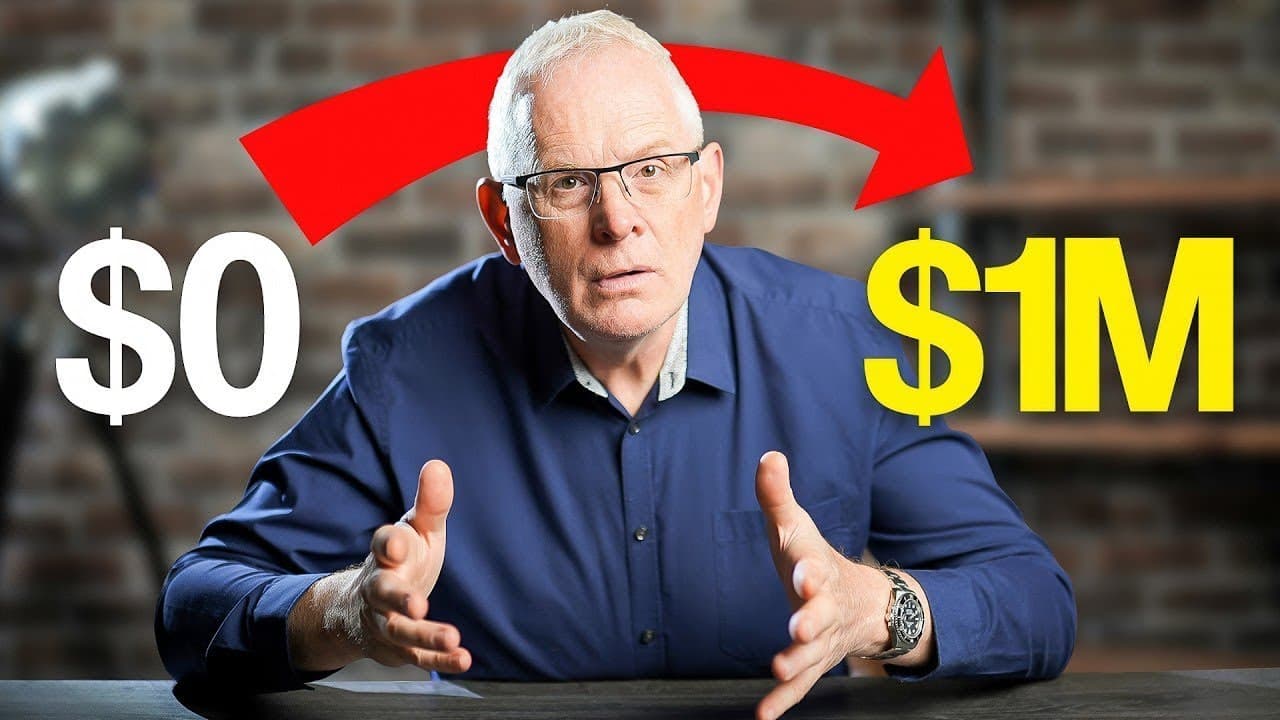
Build an emergency fund through multiple side hustles, then use that financial breathing room to pursue a scalable business in an industry you understand and enjoy. Mark Tilbury credits early sales practice, confidence, relentless work, and the discovery of income that continues beyond hourly labor, while warning that such income still requires substantial setup and ongoing maintenance.
Transcript
Hi guys, it's Mark. So today I'm gonna be talking about how passive income allowed me to go from a normal teen working a nine to five job to becoming a millionaire in my twenties. I'm gonna be sharing with you all the strategies that actually worked for me, as well as lots of my mistakes, so hopefully you can do even better. This is the story of ho... Read More
Key Insights
- Early selling experience is practical training in confidence and customer response. Tilbury sold candy and soda at school, then learned to restructure his fish offer after discovering that customers preferred five fish for $1 over ten fish for the same price.
- Hourly employment is presented as limiting because income depends on available working time and managerial decisions. Tilbury felt trapped when his carpentry wages barely covered his bills and his manager kept him on repetitive trash-can work despite his training and desire for greater responsibility.
- Multiple side hustles are the method Tilbury used to create financial breathing room. He combined Saturday shop work, buying and reselling inexpensive cars, and teaching people to fly radio-controlled helicopters on Sundays until he had built an emergency fund.
- An emergency fund is valuable because it increases the ability to pursue opportunities without immediately worrying about bills. Tilbury argues that living paycheck to paycheck narrows attention toward the next wage and can cause potentially useful opportunities to pass unnoticed.
- Passive income is not effortless income in Tilbury's account. It requires difficult initial work, such as establishing a business or investing money, plus continuing maintenance, but it can generate earnings during periods when the owner is not actively working.
- Industry familiarity and personal interest are central to Tilbury's business selection process. His planned model store grew from experience in a radio-controlled model shop, where he observed operational mistakes, researched a location, and imagined a store that could eventually function without his presence.
- Business ideas are vulnerable when complete plans are disclosed too early. Tilbury says a friend used his detailed model-store plan to launch Model World independently, leading him to recommend keeping strong ideas private or sharing only separate portions with different people.
- Setbacks are presented as reasons to reassess and continue rather than abandon entrepreneurship. After his shop concept was taken, Tilbury returned to intense work and bought his first apartment to improve his credit score and reduce the financial vulnerability that had constrained him.
Install to Summarize YouTube Videos and Get Transcripts
Explore YouTube Video Summarizer or Get YouTube Transcript Extractor
Questions & Answers
Q: How did Mark Tilbury start developing business skills?
Mark Tilbury began experimenting with selling while he was a teenager. He sold candy and cans of soda to other students, caught mackerel on weekends, and offered the fish around his neighborhood. When ten fish for $1 attracted little interest, he changed the package to five fish for $1. The improved response taught him about adjusting an offer, selling confidently, and responding to customer preferences.
Q: Why did Mark Tilbury become dissatisfied with his carpentry job?
Tilbury completed his carpentry apprenticeship with honors and received leadership awards, but his managers assigned him repetitive work making wooden trash cans. When he requested a greater challenge, his manager said the company had a five-year Walmart contract and that he would continue making the bins. Because his wages only covered his bills, he felt unable to quit, save meaningful money, or control his professional development.
Q: What side hustles did Mark Tilbury use to save money?
Tilbury took a Saturday job at a radio-controlled model shop, bought underpriced cars to repair and resell, and taught people to fly radio-controlled helicopters on Sundays. He says cars costing roughly $200 to $300 could generally be resold for about $500 to $600. Demand for helicopter lessons kept his Sundays booked when the weather was good, helping him establish an emergency fund.
Q: Why does Mark Tilbury consider an emergency fund important?
Tilbury says an emergency fund creates freedom to act when opportunities appear without immediately fearing that regular bills will go unpaid. Before building one, his carpentry income only covered current expenses, leaving him trapped in work he disliked. He argues that paycheck-to-paycheck living creates an opportunity cost because attention remains fixed on the next wage instead of possibilities that could improve income or independence.
Q: What does passive income mean in Mark Tilbury's story?
Passive income means doing substantial work or committing money initially, then receiving income even during periods when active work is not occurring. Tilbury gives establishing a business and investing money as examples. He cautions that the phrase can be misleading because creating this arrangement is difficult and maintenance remains necessary. Its attraction is that earnings are less directly constrained by the number of hours available for work.
Q: How did meeting a wealthy homeowner change Mark Tilbury's plans?
While helping install a staircase, Tilbury observed a homeowner relaxing, playing golf, and living in a house with marble floors, chandeliers, a private swimming pool, and sports cars. Tilbury asked how that lifestyle was possible and learned that the owner's business could make money while he slept. The conversation introduced him to passive income and challenged his assumption that a normal job was the only available route to earning money.
Q: Why did Mark Tilbury plan to open a radio-controlled model store?
Tilbury selected a radio-controlled model store because he already worked in that industry on Saturdays and enjoyed it. His experience allowed him to notice mistakes made by the existing shop and identify practices he believed could be improved. He researched a suitable location, chose the name Model World, and envisioned developing operations that could eventually continue without requiring him to remain physically present at all times.
Q: What lesson did Mark Tilbury draw from having his business idea copied?
Tilbury concluded that a promising business plan should not be disclosed completely before it can be executed. After he shared his entire model-store concept with a friend, that friend launched Model World without him. Tilbury recommends operating quietly or sharing different fragments with different people instead of revealing the whole plan. Although the experience damaged his confidence, he treated it as a lesson and resumed working toward financial independence.
Summary & Key Takeaways
-
Mark Tilbury began developing entrepreneurial skills as a teenager by selling candy, soda, and fish. When customers rejected ten fish for $1, he changed the offer to five fish for $1 and saw demand increase. He later identified sales ability and confidence as foundational skills that supported his subsequent business ambitions and financial progress.
-
After leaving school at 16, Tilbury chose a carpentry apprenticeship that paid about $2 an hour. Although he completed it with honors and won leadership awards, his manager repeatedly assigned him to make wooden trash cans. Limited pay, repetitive work, and dependence on management convinced him that hourly employment restricted both his freedom and earnings.
-
Tilbury added Saturday work, car flipping, and Sunday helicopter lessons to build an emergency fund. Meeting a wealthy business owner introduced him to income that could continue without constant labor. His first planned model shop was launched by a friend who copied the idea, teaching him to protect plans, recover from setbacks, and keep building resources.
Read in Other Languages (beta)
Share This Summary 📚
Summarize YouTube Videos and Get Video Transcripts with 1-Click
Try YouTube Summary with ChatGPT & Claude or YouTube Transcript Generator
Explore More Summaries from Mark Tilbury 📚




Summarize YouTube Videos and Get Video Transcripts with 1-Click
Try YouTube Summary with ChatGPT & Claude or YouTube Transcript Generator