How Is Porsche Integrating E-Fuels for Gas Cars?
TL;DR
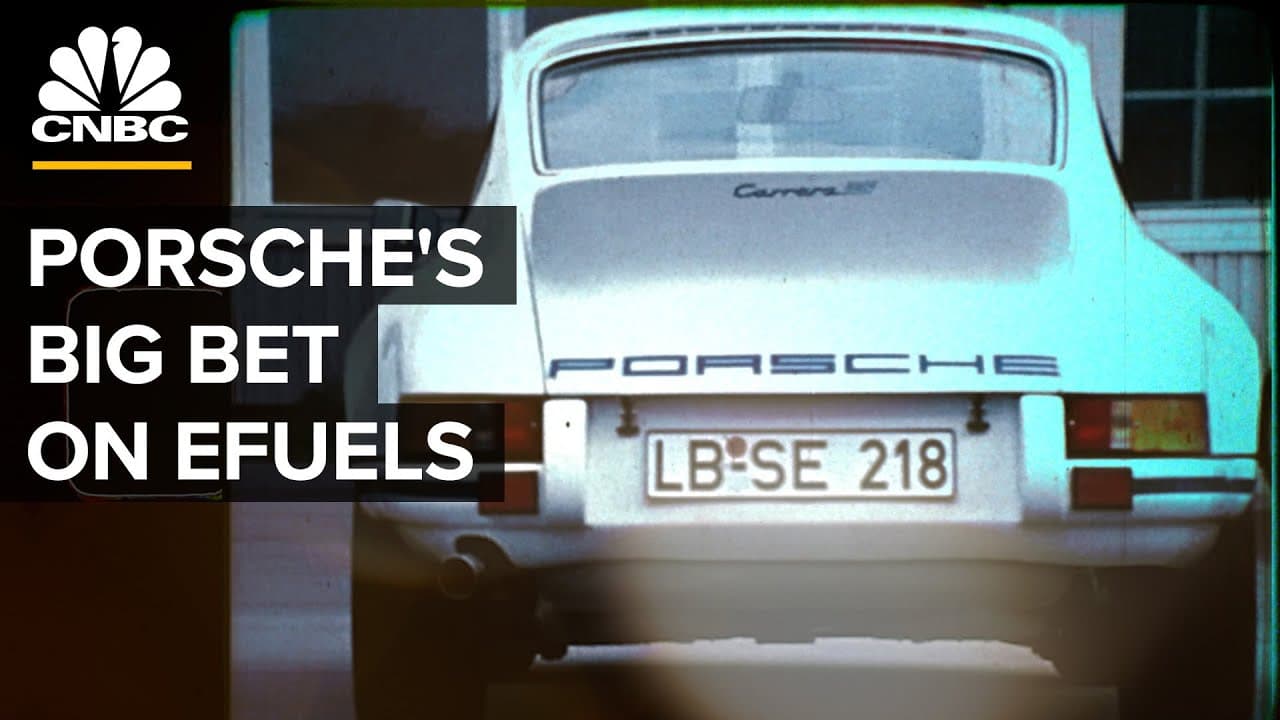
Porsche is investing over $100 million in e-fuels, synthetic fuels created using carbon captured from the atmosphere, to reduce CO2 emissions and support gas-powered cars. This approach aims to decarbonize existing combustion engine vehicles while contributing to the preservation of Porsche's iconic models like the 911 amidst the shift toward electric vehicles.
Transcript
it's been around for more than 50 years a flagship model of a brand that has commanded an unmatched loyalty from fans with unique engineering a strong racing pedigree and a long lasting Heritage of rear-mounted combustion engines but in the middle of an EV Revolution how can a brand so linked to the technology of the past survive Porsche thinks it ... Read More
Key Insights
- 😨 Porsche's investment in e-fuels reflects its commitment to reduce the CO2 emissions of its combustion engine cars and meet fleet emission targets.
- 😐 E-fuels offer a potential carbon-neutral alternative to gasoline, as they are manufactured using carbon extracted from the atmosphere.
- 😘 The challenges associated with e-fuels include the availability and cost of necessary equipment and the lower energy efficiency compared to electric vehicles.
- 🚙 Porsche's strong heritage, reputation, and loyal customer base for its combustion engine cars pose challenges in transitioning to electric vehicles.
- 🌍 E-fuels may find applications in aviation and marine transportation, where electrification is more challenging.
- 🚒 The success of Porsche's electric vehicle, the Taycan, does not necessarily guarantee the same response for combustion engine models like the Macan and Cayenne.
- 🚙 The 911 sports car, Porsche's flagship model, may continue to be a combustion engine car due to its iconic status and loyal customer base.
Install to Summarize YouTube Videos and Get Transcripts
Explore YouTube Video Summarizer or Get YouTube Transcript Extractor
Questions & Answers
Q: What are e-fuels, and how are they produced?
E-fuels, also known as synthetic fuels, are manufactured fuels that are produced in a factory using carbon extracted from the atmosphere. The process involves extracting hydrogen from desalinated seawater and combining it with carbon to create methanol, which can be converted into gasoline or other fuel types.
Q: Why has Porsche invested in e-fuels?
Porsche has invested in e-fuels as a solution to reduce the CO2 emissions of its combustion engine cars and meet fleet emission targets. The company believes that improving combustion engine technology alone is insufficient, and e-fuels offer a carbon-neutral alternative to fossil fuels.
Q: How does Porsche plan to use e-fuels?
During the pilot phase, Porsche will buy all the e-fuels produced in Chile for its Motorsports programs and facilities. The company plans to gradually expand production, with over 1 billion liters of e-fuels being produced between the Chilean plant and facilities in Texas and Australia by 2028.
Q: What are the challenges associated with e-fuels?
One challenge is the availability of the necessary equipment, such as the electrolyzer, which breaks down water and extracts hydrogen. Additionally, capturing carbon dioxide from the air is not as technologically advanced as other parts of the process. The cost and energy efficiency of e-fuels are also concerns.
Key Insights:
- Porsche's investment in e-fuels reflects its commitment to reduce the CO2 emissions of its combustion engine cars and meet fleet emission targets.
- E-fuels offer a potential carbon-neutral alternative to gasoline, as they are manufactured using carbon extracted from the atmosphere.
- The challenges associated with e-fuels include the availability and cost of necessary equipment and the lower energy efficiency compared to electric vehicles.
- Porsche's strong heritage, reputation, and loyal customer base for its combustion engine cars pose challenges in transitioning to electric vehicles.
- E-fuels may find applications in aviation and marine transportation, where electrification is more challenging.
- The success of Porsche's electric vehicle, the Taycan, does not necessarily guarantee the same response for combustion engine models like the Macan and Cayenne.
- The 911 sports car, Porsche's flagship model, may continue to be a combustion engine car due to its iconic status and loyal customer base.
Overall, Porsche's investment in e-fuels reflects an attempt to sustain combustion engine cars amidst the EV revolution and reduce their environmental impact. However, challenges remain in terms of cost, energy efficiency, and the transition to electric vehicles.
Summary & Key Takeaways
-
Porsche has invested $100 million in the development of e-fuels to reduce the CO2 footprint of its combustion engine cars and meet emission targets.
-
E-fuels are synthetic fuels produced in a factory using carbon extracted from the atmosphere, making them a potential carbon-neutral alternative to gasoline.
-
Porsche has partnered with Siemens Energy and Exxon Mobil to produce e-fuels, and a pilot project in Chile has already begun commercial operations.
Read in Other Languages (beta)
Share This Summary 📚
Summarize YouTube Videos and Get Video Transcripts with 1-Click
Try YouTube Summary with ChatGPT & Claude or YouTube Transcript Generator
Explore More Summaries from CNBC 📚




Summarize YouTube Videos and Get Video Transcripts with 1-Click
Try YouTube Summary with ChatGPT & Claude or YouTube Transcript Generator