How Does Political Transparency Rebuild Trust?
TL;DR
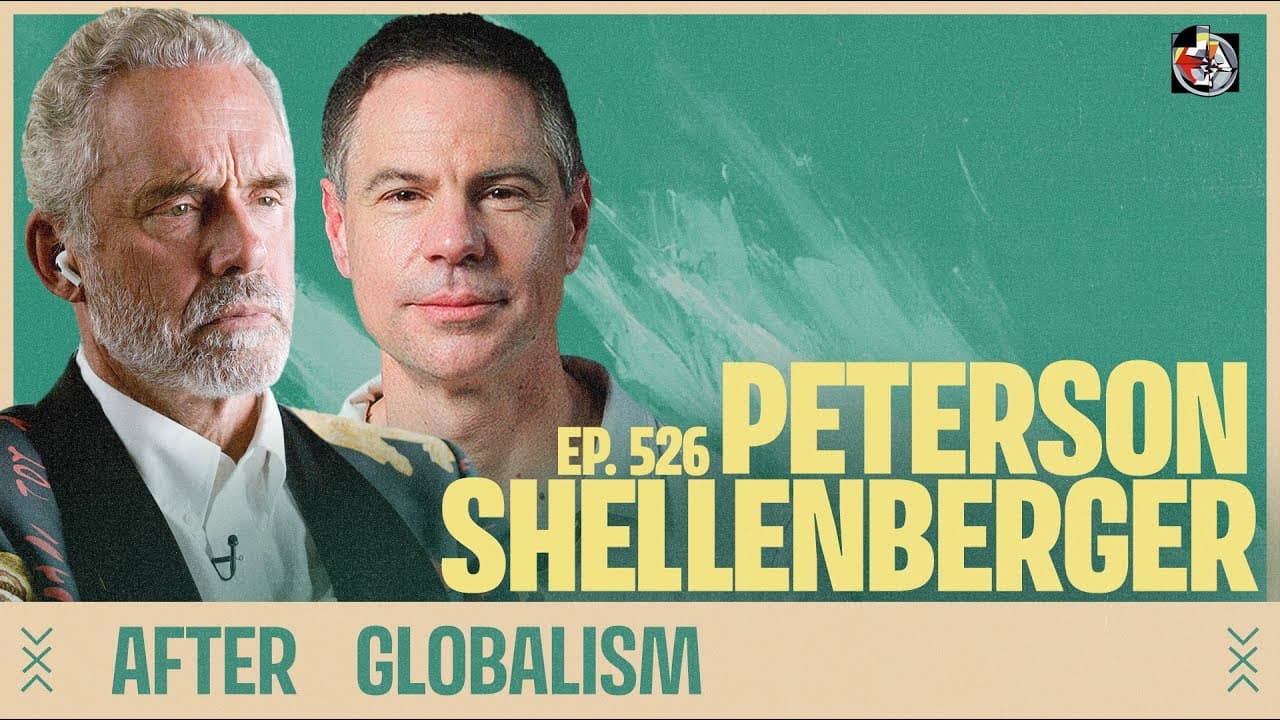
Political transparency can rebuild institutional trust by exposing censorship, scrutinizing government spending, and defending citizens’ responsibility to participate in public life. Michael Shellenberger argues that free speech, family and community commitments, national service, and accountable government are essential to renewing the West, while political leaders must address migration and censorship without abandoning cooperation.
Transcript
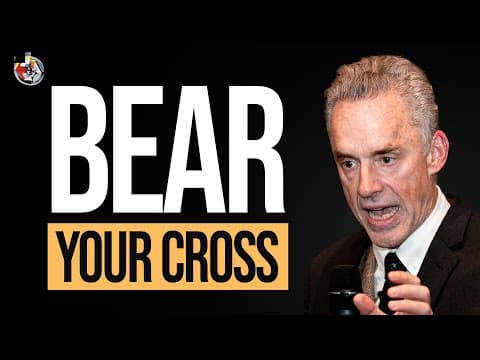
if you don't shoulder your political obligation then the tyrants will take the right to do so out of your hands and use it against you I think the last 12 years we should think of it as a woke reign of terror I mean really it starts with black lives matter ends with the election of President Trump we discover thanks to the Twitter files the existen... Read More
Key Insights
- Political transparency is presented as a prerequisite for restoring trust in government and media institutions. Shellenberger connects the Twitter Files, investigations into censorship, and scrutiny of government spending with a broader demand that powerful organizations disclose how decisions are made and public resources are used.
- The Twitter Files are described as evidence of an elaborate censorship system involving government-linked disinformation efforts. Peterson credits Shellenberger with helping report the files after Elon Musk provided access to Twitter’s internal records following his purchase of the platform.
- Free speech is portrayed as a fundamental American requirement, not merely a desirable political benefit. Shellenberger argues that European attempts to regulate speech on social media threaten American users and companies while placing strain on relations between the United States and Europe.
- JD Vance’s Munich speech is interpreted as an expression of a new national conservative position. According to Shellenberger, Vance connected mass migration, censorship, European political direction, and the durability of NATO while emphasizing that America’s commitment to free speech has strategic consequences.
- Western Europe is characterized as the principal center of the continent’s censorship and migration problems. Peterson attributes these developments to Brussels, the European Union, globalist institutions, and political leaders who seek greater authority by presenting the future as dangerous or catastrophic.
- Eastern Europe is presented as politically distinct from Western Europe. Peterson argues that countries such as Hungary and Poland retain stronger commitments to national sovereignty and Western traditions, partly because Eastern Europeans remember living under Soviet totalitarian control for 75 years.
- Hungary’s family policy is cited as an example of cultural change pursued without increased policing. Peterson states that Hungary reduced its abortion rate by 38 percent, lowered divorce, increased women’s workforce participation, and slowed the decline of its birth rate.
- Political responsibility is described as extending beyond voting or criticizing institutions. The discussion links a healthy political order to marriage, children, families integrated into communities, and service to one’s state and nation, warning that neglected civic obligations can be seized by tyrants.
Install to Summarize YouTube Videos and Get Transcripts
Explore YouTube Video Summarizer or Get YouTube Transcript Extractor
Questions & Answers
Q: How can political transparency rebuild public trust?
Political transparency can rebuild trust by revealing how institutions make decisions, regulate speech, and spend public money. Shellenberger connects the Twitter Files and investigations of government-linked censorship with a larger effort to expose hidden relationships between public agencies, media systems, and technology platforms. The discussion argues that accountability must accompany disclosure because trust depends on institutions demonstrating honest and responsible conduct.
Q: What do the Twitter Files reveal according to Michael Shellenberger?
Shellenberger describes the Twitter Files as revealing an elaborate censorship industrial complex that included government-run disinformation efforts. Peterson says Elon Musk gave Shellenberger access to Twitter’s internal systems after purchasing the platform, allowing him to help document what had occurred previously. Their broader claim is that these disclosures exposed institutional practices that the public could not adequately evaluate without access to internal records.
Q: Why is free speech central to relations between America and Europe?
Shellenberger argues that Americans treat free speech as an indispensable political guarantee rooted in the country’s founding, while European leaders may treat it as less essential. He says European efforts to impose censorship on social media companies also threaten American voices and businesses. In his interpretation, continued pressure on speech could weaken American patience with Europe and place broader alliances, including NATO, under strain.
Q: What did JD Vance argue at the Munich Security Summit?
According to Shellenberger, JD Vance presented a national conservative case focused on mass migration, free speech, censorship, and Europe’s political direction. Vance warned that Europe’s movement toward censorship threatened social media companies, individual voices, and the transatlantic relationship. Shellenberger says Vance also connected these concerns to NATO and communicated that free speech is a necessary condition of continued American confidence in Europe.
Q: Why does the discussion distinguish Eastern and Western Europe?
Peterson argues that Western Europe, especially countries influenced by Brussels, the European Union, and globalist institutions, faces serious problems involving censorship and migration. He contrasts this with Eastern European countries such as Hungary and Poland, which he portrays as more committed to sovereignty and Western traditions. He attributes part of that difference to Eastern Europe’s memory of 75 years under Soviet totalitarian control.
Q: What results does Peterson attribute to Hungary’s family policy?
Peterson says Hungary developed a sophisticated pro-family policy that produced cultural changes without an increase in policing. He states that the country reduced its abortion rate by 38 percent, lowered its divorce rate, increased the proportion of women participating in the workforce, and slowed the decline in its birth rate. He presents these outcomes as evidence that family policy can pursue several social goals simultaneously.
Q: What political responsibilities do citizens have in this discussion?
The discussion defines political responsibility as more than participating in elections. Citizens are encouraged to marry, have children, integrate their families into a community, and serve their state and nation. The opening warning holds that people who refuse to shoulder political obligations risk allowing tyrants to take those rights and use them against the public. Personal responsibility and civic freedom are therefore treated as mutually reinforcing.
Q: How are Donald Trump and Elon Musk connected to greater transparency?
Peterson and Shellenberger associate Donald Trump’s election and Elon Musk’s actions at Twitter with an emerging political coalition that challenges established institutions. Musk’s release of internal Twitter records enabled reporting on alleged censorship, while his government spending investigations are presented as another form of institutional scrutiny. Trump’s political return is described as marking the end of a 12-year period Shellenberger calls a woke reign of terror.
Summary & Key Takeaways
-
Michael Shellenberger describes the election of Donald Trump, Elon Musk’s acquisition of Twitter, and publication of the Twitter Files as parts of a political transformation centered on transparency. He argues that disclosures about government-linked censorship and renewed scrutiny of public spending have challenged institutions whose credibility had already deteriorated.
-
The conversation presents free speech as a foundational American commitment and a central issue in relations with Europe. Shellenberger interprets JD Vance’s Munich speech as a warning that European censorship policies and mass migration threaten both democratic legitimacy and the strength of Western alliances, including NATO.
-
Jordan Peterson and Shellenberger connect political renewal with personal responsibility. Their discussion emphasizes marriage, children, integrated families, community membership, and service to state and nation. They also distinguish Western European institutions from Eastern European countries that Peterson describes as more committed to national sovereignty, family policy, and Western traditions.
Read in Other Languages (beta)
Share This Summary 📚
Summarize YouTube Videos and Get Video Transcripts with 1-Click
Try YouTube Summary with ChatGPT & Claude or YouTube Transcript Generator
Explore More Summaries from Jordan B Peterson 📚

Summarize YouTube Videos and Get Video Transcripts with 1-Click
Try YouTube Summary with ChatGPT & Claude or YouTube Transcript Generator