How Can Neuroscience Inform AI Development?

TL;DR
Neuroscience can significantly inform AI development by providing frameworks for designing general learning algorithms that adapt to various tasks, similar to human cognition. By studying the brain, AI researchers at DeepMind aim to enhance understanding of memory, concepts, and imagination, leveraging insights like hippocampal replay for algorithm efficiency and flexibility. The collaboration between these fields fosters advancements in artificial general intelligence.
Transcript
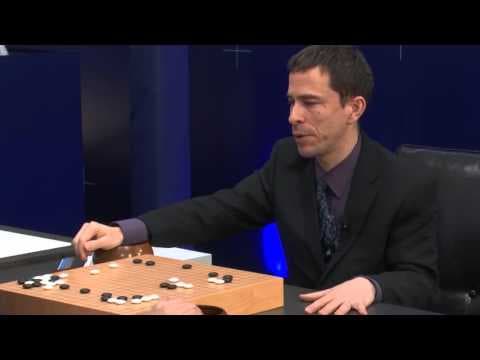
so let me start um I have um the pleasure of introducing very briefly demisis and this is continuing a tradition that I started with Kristoff um is uh much better known than I am and he was a post do with me D Miss and and of course he ideal for today because it's a mixture of a neur scientist and a technologist and an entrepreneur thanks toic so u... Read More
Key Insights
- 🪡 DeepMind emphasizes the need for general learning algorithms that can adapt across multiple tasks, contrasting with the rigidity of narrow AI.
- 🦮 Systems neuroscience serves as a guiding framework for developing AI architectures, driven by human cognitive experiences.
- 👾 Utilizing games for AI experimentation offers unlimited data and challenging environments, fostering rapid advancement in AI capabilities.
- 🛝 Grounded cognition suggests that true AI should be based on sensory data, echoing human learning processes.
- ❓ Memory, concepts, and imagination are crucial areas of focus for AI development at DeepMind, modeled after biological learning systems.
- 🧠 DeepMind aims for efficiencies in algorithm development by employing principles derived from brain functionality, such as hippocampal replay.
- 🏑 There is a reciprocal relationship between neuroscience and AI, as advancements in one field benefit the other, particularly in understanding intelligence and consciousness.
- 🎙️ More videos with Demis Hassabis:
Install to Summarize YouTube Videos and Get Transcripts
Explore YouTube Video Summarizer or Get YouTube Transcript Extractor
Questions & Answers
Q: How does DeepMind differentiate between artificial general intelligence (AGI) and narrow AI?
DeepMind defines AGI as a system that can perform well across diverse environments with flexibility and adaptability, in contrast to narrow AI that is typically handcrafted for specific tasks. AGI aims for algorithms that learn automatically from experience and operate across various domains without manual tuning.
Q: Why does DeepMind focus on using simulated environments like games for AI development?
Simulated environments like games provide unlimited training scenarios and a structured way to test algorithms in challenging situations designed for human play. They allow for faster, parallel testing of AI agents, making it easier to measure incremental improvements without the unpredictability of real-world testing.
Q: What role does neuroscience play in shaping the algorithms developed at DeepMind?
Neuroscience offers significant insights into learning and cognition that can inspire new algorithms and architectures for AI. By studying mechanisms in the brain, such as memory encoding and retrieval, DeepMind seeks to incorporate these principles into AI development, enhancing the models' capabilities and efficiencies.
Q: How is DeepMind enhancing memory functions in AI?
DeepMind is integrating memory into neural networks by developing architectures that combine recurrent neural networks with large memory stores. This approach allows AI to control memory more effectively, enabling it to learn from examples and to represent and manipulate information in meaningful ways.
Q: What are some challenges DeepMind faces in exploring imagination-based planning in AI?
One significant challenge is around model-based planning, where compounded errors in predictions can lead to incorrect outcomes when imagining numerous steps ahead. Developing high-level, abstract representations instead of pixel-level details can mitigate some of these issues and improve the planning process.
Q: How does DeepMind integrate contemporary neuroscience techniques into AI research?
DeepMind utilizes advanced neuroscience techniques, such as fMRI and optogenetics, to analyze brain functions and apply insights for machine learning. The goal is to guide the development of AI systems in ways that align closely with biological learning processes, enriching both fields' understanding.
Summary & Key Takeaways
-
The speaker, CEO of DeepMind, emphasizes the importance of systems neuroscience in enhancing artificial intelligence (AI) by focusing on general learning algorithms that adapt to various tasks without pre-programmed constraints.
-
DeepMind advocates experimenting in simulated environments, like games, to develop AI systems that can learn flexibly and operate with generality, drawing inspiration from human cognitive processes and brain functionalities.
-
The collaboration between neuroscience and AI development opens avenues for new algorithms, experimental designs, and understanding mechanisms of learning, memory, and imagination, which are essential for achieving artificial general intelligence.
Read in Other Languages (beta)
Share This Summary 📚
Summarize YouTube Videos and Get Video Transcripts with 1-Click
Try YouTube Summary with ChatGPT & Claude or YouTube Transcript Generator
Explore More Summaries from Google DeepMind 📚


Summarize YouTube Videos and Get Video Transcripts with 1-Click
Try YouTube Summary with ChatGPT & Claude or YouTube Transcript Generator