How to Track Crypto Project Vulnerabilities with AI
TL;DR
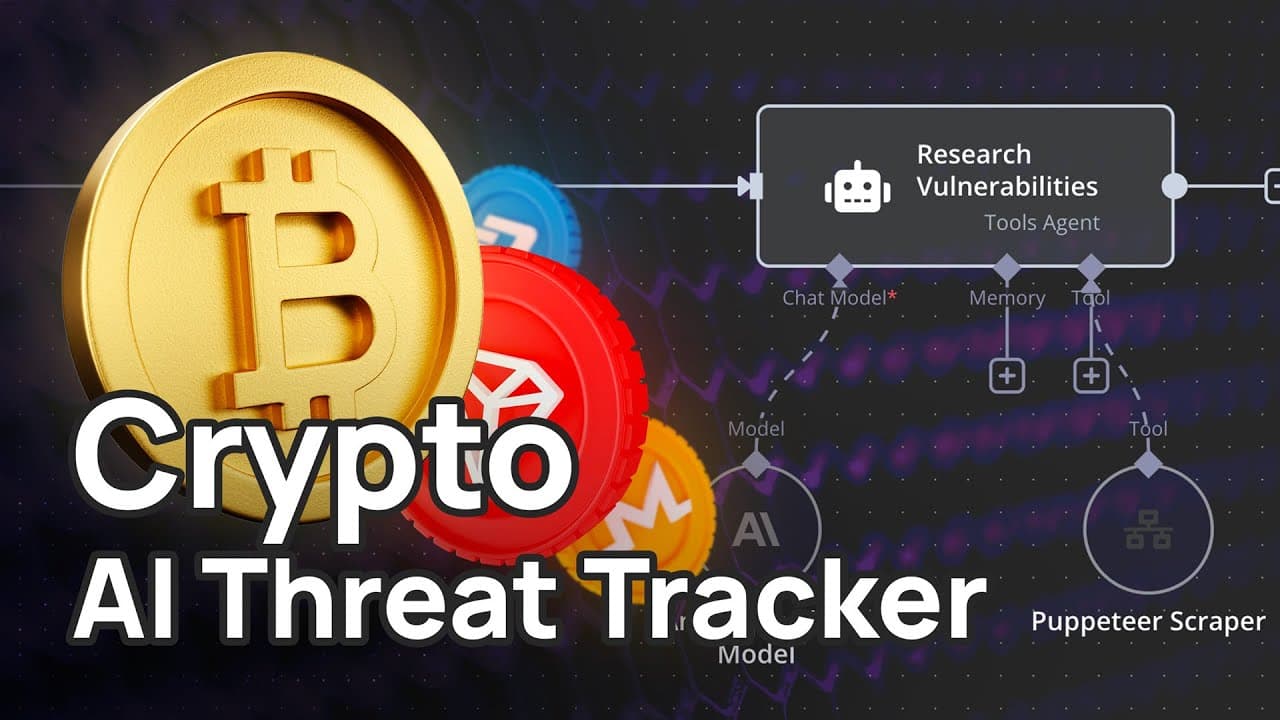
Track crypto project vulnerabilities by collecting newly listed projects, removing duplicates, finding their websites and social links, and using an AI research agent with custom scrapers to analyze available documentation. The resulting project summaries and potential vulnerabilities can support hyper-personalized outreach that references specific, recognizable details instead of relying on generic AI personalization.
Transcript
yeah hey it's Max the original flow grammar and this is the studio the show where I share the stories of flow grammar across n it ends Global Community de You cryptocurrencies by their nature exist on a blockchain a blockchain is a publicly inspectable Ledger inherently that means it's scrapable the same is true for its websites related GitHub proj... Read More
Key Insights
- The tracker is an n8n automation that discovers new crypto projects, gathers public project information, and coordinates AI analysis with custom web scrapers. Its primary work involves scraping, researching, summarizing, and preparing vulnerability-related insights for personalized outreach to each project team.
- Duplicate prevention is handled by comparing newly scraped projects with records already stored in Google Sheets. The workflow removes matching entries, merges the remaining data, confirms that each project is new, and then adds qualified records to the sheet before beginning deeper research.
- Social-link collection is performed by a custom Python scraper that receives a project website and returns available links. An OpenAI step then restructures the results into a JSON string containing the categories the workflow needs, such as the website, documentation, GitHub, Twitter, and email.
- Project documentation is the research agent’s preferred information source. When a documentation link exists, the agent calls a recursive scraper that explores the documentation website, retrieves its links, visits linked pages, and combines the resulting material to provide extensive context for later analysis.
- The research agent uses fallback routes when documentation is not directly available. It can retrieve website links, let AI identify links that may contain documentation, scrape a manually selected list, recursively inspect the main website, or preserve information from the original project overview page.
- Escape paths are essential to this agent because websites can lack links, scraping tools can fail, and project pages can disappear. The workflow defines alternative actions for these conditions so the agent can route itself toward another source instead of simply ending without usable information.
- Hyper-personalized outreach is the business outcome of the research workflow. The client can contact a crypto team with a message that references its own project and a potential vulnerability, creating greater relevance than an average AI-personalized cold email that lacks specific project evidence.
- AI-assisted prompt writing is part of Nikita’s development process. He describes explaining the desired agent behavior to Claude and asking it to produce a detailed prompt, because prompts written with AI can work more reliably for agents than an initial manually drafted instruction.
Install to Summarize YouTube Videos and Get Transcripts
Explore YouTube Video Summarizer or Get YouTube Transcript Extractor
Questions & Answers
Q: How can AI track vulnerabilities in new crypto projects?
AI can support vulnerability tracking by researching public information associated with newly discovered crypto projects. In the demonstrated workflow, automation collects project listings, removes duplicates, finds websites and social links, scrapes documentation and relevant pages, and gives the aggregated content to a research agent. The system then prepares project summaries and potential vulnerability insights that the client can use when contacting project teams.
Q: How does the crypto project discovery workflow work?
The discovery workflow runs against a source containing crypto projects and has a duplicate version for a second source. It extracts details such as the project date, name, and other available information. It then compares those records with projects already stored in Google Sheets, removes duplicates, checks whether each entry is genuinely new, and adds accepted projects to the sheet for subsequent research.
Q: How does the automation collect crypto project social links?
The main workflow sends the project website, source, and name to another workflow that calls a custom Python scraper. That scraper finds available social and project links, which may include a website, documentation, GitHub repository, Twitter account, or email address. An OpenAI step restructures the raw results into a requested JSON format, and the organized information is written back to Google Sheets.
Q: Why does the research agent prioritize project documentation?
Project documentation is treated as the main source of detailed information for the research process. When a documentation link appears among the collected social links, the agent invokes a custom recursive scraper. The scraper visits the documentation website, gathers its links, follows linked pages, and collects extensive text. That combined material supplies the context needed for deeper project analysis and summary generation.
Q: What happens when a crypto project has no documentation link?
When no documentation link is initially available, the agent uses an HTTP-based tool to retrieve links from the project website. It analyzes those links to identify addresses that might lead to documentation, then sends suitable pages to the recursive scraper. If that approach produces no useful links, it can scrape a manually selected list or recursively inspect the main website as another fallback route.
Q: How does the AI agent handle scraper failures or missing content?
The agent has several defined fallback paths for incomplete or failed research. It can search website links for hidden documentation, use a manual scraper on selected pages, run the recursive scraper against the main website, or rely on the overview page from the original project source. These escape paths account for websites with no returned links, unavailable content, deleted pages, and HTTP retrieval failures.
Q: How can vulnerability research improve cold outreach?
The research allows outreach messages to reference a specific crypto project and a potential vulnerability connected to that project. According to the discussion, this approach is more relevant than average AI personalization because recipients may recognize details from their own codebase or materials. The client uses the project summary and vulnerability analysis to generate personalized messages offering help with the identified bottlenecks or concerns.
Q: What business automation use cases does Nikita consider production ready?
Nikita identifies content production, automated follow-ups, and client research as prominent business use cases. Content systems can generate ideas, research successful competitor posts, and create material in a client’s style with fine-tuned models. Follow-up automation addresses businesses that fail to contact prospects consistently, while automated client research produces insights that can help teams communicate with customers more effectively.
Summary & Key Takeaways
-
The automation discovers newly listed crypto projects from two sources, extracts project details, checks existing Google Sheets records, removes duplicates, and stores only new entries. It then gathers useful social links, including websites, documentation, GitHub repositories, Twitter accounts, and email addresses, before preparing each project for deeper automated research and analysis.
-
A custom research agent analyzes each crypto project through three scraper tools. It prioritizes documentation links, searches website links when documentation is not initially available, and recursively collects content. When standard routes fail, it attempts the main website or uses the source platform’s overview page, ensuring that some research context can still be retained.
-
The client uses the collected research to summarize projects, identify potential vulnerabilities, and generate personalized messages for project teams. Referencing a real concern and recognizable project details can make outreach more relevant than generic AI-generated emails. Nikita also highlights automated follow-ups, client research, and content production as practical business automation use cases.
Read in Other Languages (beta)
Share This Summary 📚
Summarize YouTube Videos and Get Video Transcripts with 1-Click
Try YouTube Summary with ChatGPT & Claude or YouTube Transcript Generator
Explore More Summaries from n8n 📚

![Stop Vibe Coding: Context Engineering & RAG for AI Agents [# 12 Cole Medin] thumbnail](/_next/image?url=https%3A%2F%2Fi.ytimg.com%2Fvi%2F7zZtxUW6dhc%2Fhqdefault.jpg&w=750&q=75)

Summarize YouTube Videos and Get Video Transcripts with 1-Click
Try YouTube Summary with ChatGPT & Claude or YouTube Transcript Generator