How to Build a $40K/Month Solo Founder App
TL;DR
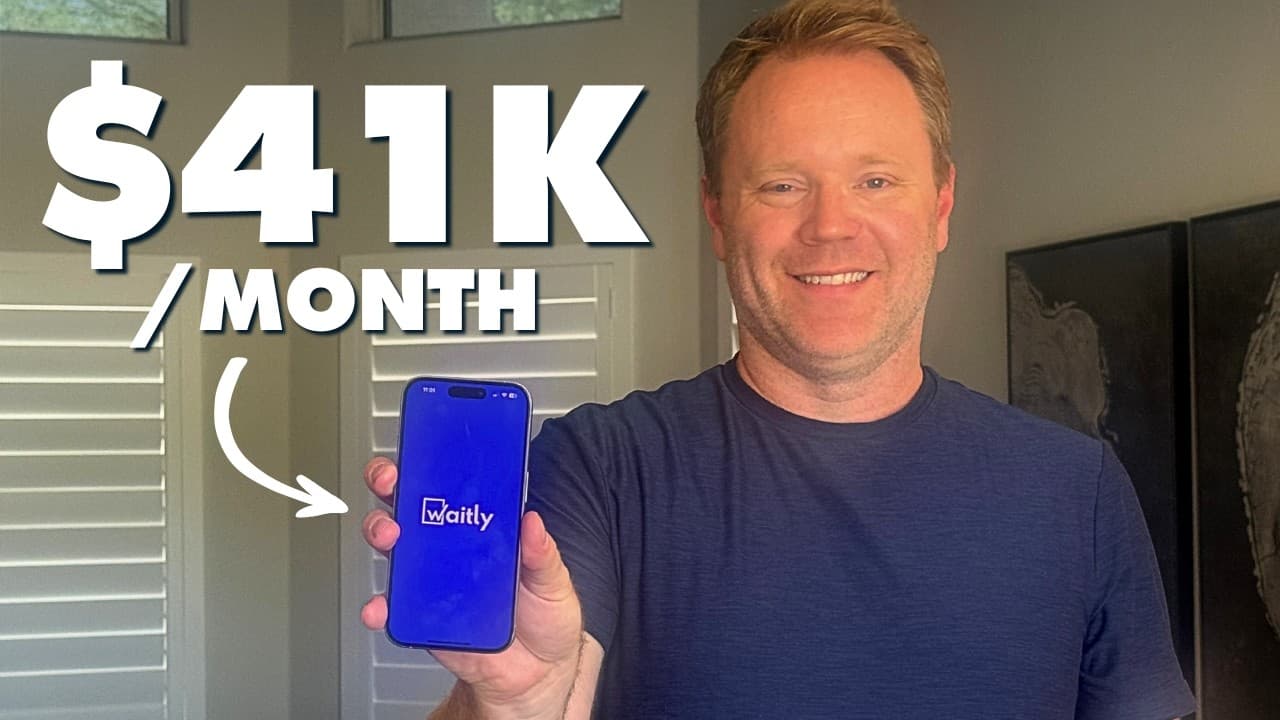
A focused app can compete with larger platforms by serving an underserved niche through lower prices, simpler workflows, and responsive support. Joe Rozek grew Waitly from a side project into a business earning over $40,000 per month, using Apple Search Ads, customer onboarding, promotional offers, and adaptation to unexpected demand from retail chains during COVID.
Transcript
I'm going to be honest. I get a lot of DMs from people who want to come onto the channel. I'm sure they're cool, but 90% of those DMs don't go anywhere. But what about the other 10%. Well, that's who you're going to meet today. This is Joe. He's never shared his story before, and he DM'd me and said, "I'm a solo founder and I make over $40,000 a mo... Read More
Key Insights
- Waitly originated from unnecessary friction in an existing customer experience. A restaurant link required Joe to download Yelp and create an account merely to view his wait time, revealing an opportunity for a simpler web-based experience without an app download.
- Waitly grew gradually rather than generating immediate revenue. It made no money during its first year, earned $14,500 in year two, reached $116,000 in year three, and continued rising until year seven revenue reached $445,000.
- Paid acquisition is profitable when customer economics support the cost. Waitly reports an acquisition cost of about $130 and a customer lifetime value between $750 and $1,000, giving the business a stated return on spending through Apple Search Ads.
- Customer conversion is supported by structured onboarding. Waitly sends helpful emails, provides quick-start videos, offers Zoom onboarding and employee training, and presents promotions near the end of trials to encourage customers to complete their first purchase.
- Waitly competes with larger platforms through price, simplicity, and service. Its full-feature plan costs a flat $100 per month, its focused product works beyond restaurants, and callers to its support line receive an immediate answer from a person.
- Unexpected market changes can create major growth opportunities. During COVID, retail chains needed capacity-management waitlists, and Waitly was deployed across more than 700 locations in the United States, producing a tenfold increase in the business that year.
- A viable product idea does not need to be entirely original. Joe recommends improving a problem that others already address, locating an underserved niche, using AI to build a minimum viable product quickly, gathering early feedback, and remaining ready to adapt.
- Waitly operates with a focused technology stack and measurable expenses. It uses Firebase, Node.js, Swift, and ReactJS, while major costs include about $700 monthly for Firebase, about $2,500 monthly for text messages, subscription fees, payment processing, and advertising.
Install to Summarize YouTube Videos and Get Transcripts
Explore YouTube Video Summarizer or Get YouTube Transcript Extractor
Questions & Answers
Q: How did Joe Rozek come up with the idea for Waitly?
Joe identified the problem while waiting for brunch in 2017. A restaurant sent him a link to view his wait time, but the link required him to download Yelp and create an account. His table became ready before he completed that process. He concluded that guests should reach a simple wait-time page without registering, and his wife suggested building a waitlist app.
Q: How long did it take Joe to launch and monetize Waitly?
Joe had a working prototype about six months after starting, although it could add people only and could not yet send text messages. Around a year and a half into the project, he committed to preparing it for the App Store. The launch produced ten downloads in its first week, and he introduced in-app purchases roughly two years into the effort.
Q: How did Waitly grow from no revenue to over $40,000 per month?
Waitly earned no money in its first year, followed by $14,500 in year two and about $116,000 in year three. Annual revenue then rose to $186,000, $307,000, $354,000, and $445,000 across years four through seven. At the time of the interview, the business was on pace to earn more than half a million dollars during the current year.
Q: What marketing strategies helped Waitly acquire and convert customers?
Apple Search Ads is one of Waitly's principal acquisition channels because targeted keywords encourage relevant businesses to download the app. The company reports spending about $130 to acquire a customer whose lifetime value ranges from $750 to $1,000. It then uses onboarding emails, quick-start videos, Zoom assistance, employee training, and promotions near trial expiration to improve conversion.
Q: How does Waitly work for businesses and their customers?
A business enters a guest's name, party size, estimated wait, phone number, and seating preferences into Waitly. The guest quickly receives a text containing a link to view the wait time without downloading an app. When service is available, the business taps a notification control to send another text, then checks the party off after serving them.
Q: How can a small app compete with billion-dollar platforms?
Waitly competes through a narrower product, lower pricing, and direct customer service. It charges a flat $100 per month to unlock all features, while Joe says larger competitors charge hundreds per month and may add cover fees for platform reservations. Its focus on waitlists and reservations also makes it adaptable to other industries, while support calls are answered immediately.
Q: What framework does Joe recommend for finding and testing app ideas?
Joe recommends starting with an existing problem instead of insisting on a completely new concept. A founder can improve the current solution and discover an underserved niche, as Waitly did with smaller restaurants. He then suggests using AI to create a minimum viable product in a couple of weeks, releasing it quickly, collecting feedback from early customers, and preparing to adapt.
Q: What are Waitly's customers, usage metrics, technology, and costs?
More than 15,000 businesses have tried Waitly, 700 businesses currently pay for it across the United States and Canada, and more than 59 million parties have been added to waitlists since launch. The product uses Firebase, Node.js, Swift, and ReactJS. Reported costs include about $700 monthly for Firebase, $2,500 monthly for texts, 1% of iOS subscription revenue for RevenueCat, and 3% for Stripe website payments.
Summary & Key Takeaways
-
Software engineer Joe Rozek conceived Waitly after a restaurant wait-time link required him to download Yelp and create an account. His wife suggested building a waitlist app, prompting him to learn iOS development. After a slow build and an initial launch with ten first-week downloads, he later introduced in-app purchases and began growing revenue.
-
Waitly developed from earning nothing in its first year to $14,500 in year two, $116,000 in year three, and $445,000 in year seven. Its acquisition strategy combines Apple Search Ads with onboarding emails, quick-start videos, Zoom sessions, employee training, and trial-ending promotions designed to convert businesses into paying subscribers.
-
Waitly serves businesses with waiting customers through waitlists, reservations, estimated waits, preferences, and text notifications that require no customer app. It competes through a $100 monthly flat fee, simplicity, and immediate support. The company has 700 paying customers and has processed waitlist entries for more than 59 million parties.
Read in Other Languages (beta)
Share This Summary 📚
Summarize YouTube Videos and Get Video Transcripts with 1-Click
Try YouTube Summary with ChatGPT & Claude or YouTube Transcript Generator
Explore More Summaries from Starter Story 📚
Summarize YouTube Videos and Get Video Transcripts with 1-Click
Try YouTube Summary with ChatGPT & Claude or YouTube Transcript Generator