How to Create a DIY Custom LCD Display at Home
TL;DR
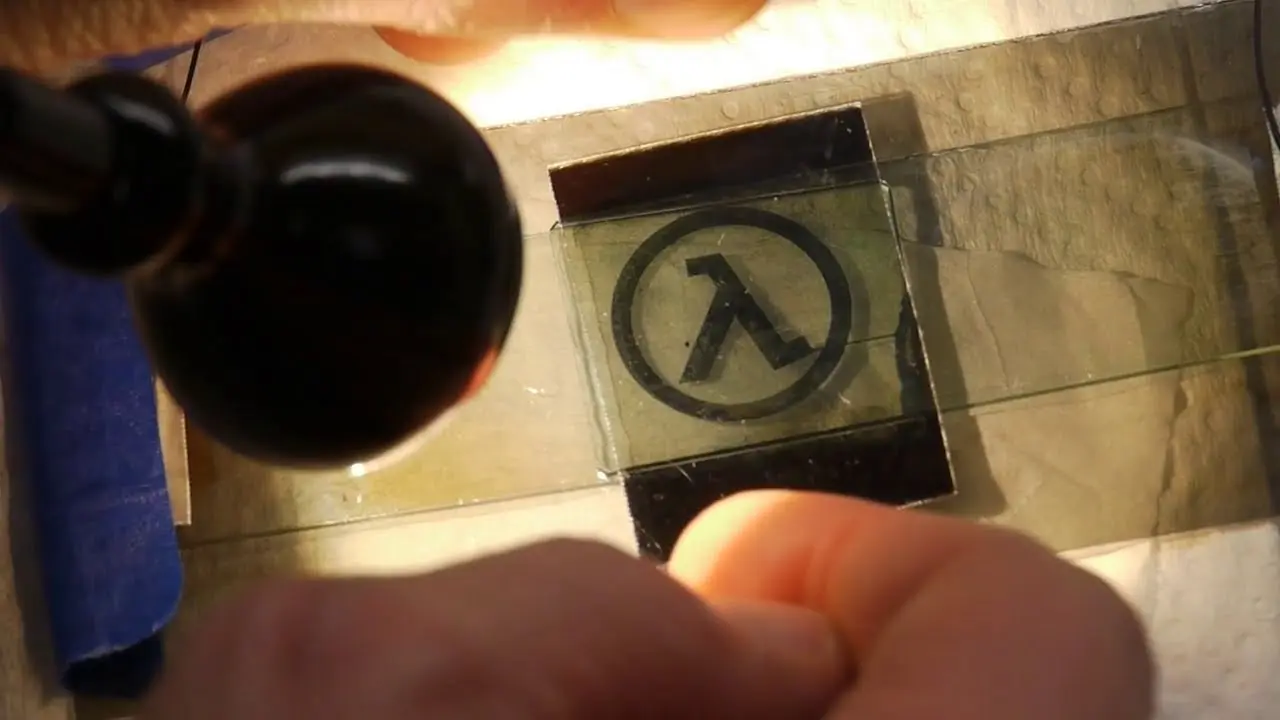
You can create a custom LCD display by cleaning microscope slides and depositing a conductive coating, which can also be bought pre-coated. The process includes applying photoresist, UV exposure, and etching to create graphics. Final assembly requires polarizers and liquid crystals, and most steps are manageable with common tools.
Transcript
hey guys check it out I finished my first custom LCD and so in this video I'll talk about the steps that I took to produce this and check out my other videos if you're interested in more of the in-depth info I'm building this out of microscope slides and so the first step is to clean them really well so I load the slides into an acetone bath in an ... Read More
Key Insights
- 🛝 Cleaning microscope slides thoroughly and depositing a conductive coating is crucial for creating a custom LCD display.
- 🙂 The process of creating a graphic on the display involves coating the slide with photoresist, exposing it to ultraviolet light through a pattern, and then removing the conductive coating using developer and etching solutions.
- 🫗 The final assembly includes polarizers, electrodes, and liquid crystal to create a functioning display.
- 😑 The vacuum deposition step can be skipped by purchasing pre-coated glass or modifying the PCB-making process.
- 🫗 Liquid crystal can be purchased in small quantities from Alibaba, making it accessible for DIY projects.
- 🫗 Rubbing the slides in specific directions helps align the liquid crystal molecules.
- 👪 Most steps in the process can be done at home using readily available tools and equipment.
Install to Summarize YouTube Videos and Get Transcripts
Explore YouTube Video Summarizer or Get YouTube Transcript Extractor
Questions & Answers
Q: Can I create a custom LCD display at home without the vacuum deposition step?
Yes, most steps in the process can be done at home, except for the deposition of the conductive coating. You can purchase glass already coated with a conductive layer or modify your usual PCB-making process to include a few extra chemicals for patterning.
Q: Where can I purchase liquid crystal for the display?
Alibaba is one option, where some sellers have a minimum order of just 30 grams. This quantity is equivalent to around 30 or $40 worth of liquid crystal.
Q: What tools and equipment are necessary for creating a custom LCD display?
You will need microscope slides, an acetone bath, ultrasonic cleaner, vacuum chamber, photoresist, hot plate, ultraviolet exposure rig, developer solution, etching solution, polarizers, electrodes, liquid crystal, and a power supply.
Q: How does rubbing the slides affect the alignment of liquid crystal molecules?
Rubbing one slide parallel to its length and the other slide perpendicular to its length helps align the liquid crystal molecules properly, allowing the display to function correctly.
Summary & Key Takeaways
-
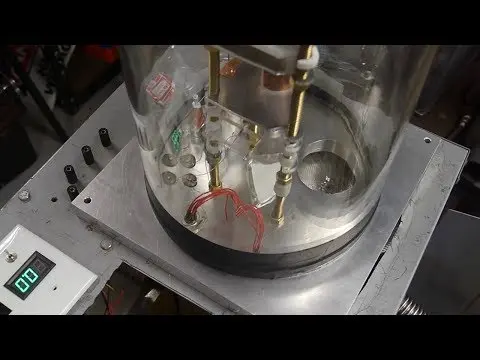
The video demonstrates how to clean microscope slides thoroughly and deposit a conductive coating on them using an acetone bath, ultrasonic cleaner, and vacuum chamber.
-
The process of creating a graphic on the display involves coating the slide with photoresist, exposing it to ultraviolet light through a pattern, and then removing the conductive coating using a developer and etching solution.
-
The final assembly includes a polarizer, solid electrode, liquid crystal, patterned electrode, and another polarizer, resulting in a functional custom LCD display.
Read in Other Languages (beta)
Share This Summary 📚
Summarize YouTube Videos and Get Video Transcripts with 1-Click
Try YouTube Summary with ChatGPT & Claude or YouTube Transcript Generator
Explore More Summaries from Applied Science 📚
Summarize YouTube Videos and Get Video Transcripts with 1-Click
Try YouTube Summary with ChatGPT & Claude or YouTube Transcript Generator