How to Simulate and Save a Universe
TL;DR
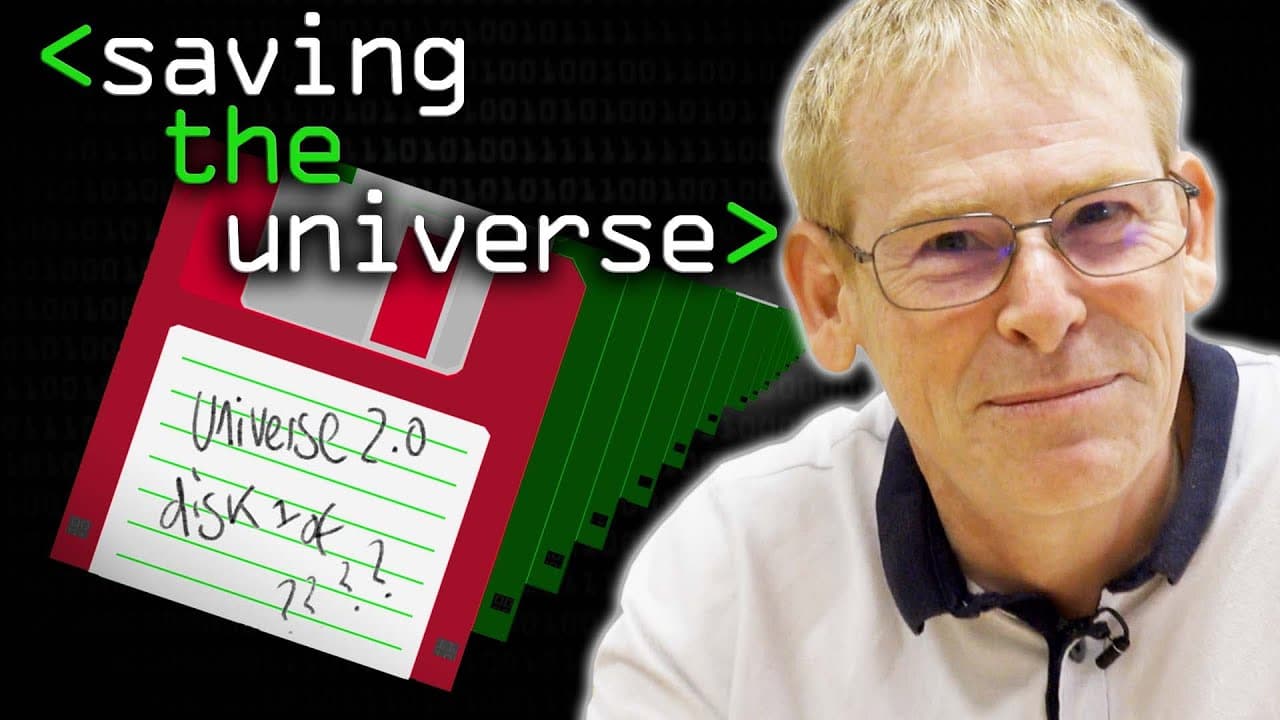
Simulating a universe requires a supercomputer with extensive processing power and effective job scalability. Each simulation generates vast amounts of data, posing significant storage and transfer challenges, particularly as the simulation progresses and snapshots are taken to track changes over time.
Transcript
how to build a universe in a computer and not just any computer a super computer what's the jaws phrase we're going to need a bigger boat are we going to need a bigger computer we always need a bigger computer i've built universities in various computers we have a supercomputer-ish here that it has about 000 processors or something which you can do... Read More
Key Insights
- 🏛️ Building universes on supercomputers requires scalability and divisibility of the job.
- ❓ Each snapshot of a universe simulation can generate terabytes of data.
- 🔇 Proper data storage and transfer become crucial due to limited supercomputer availability and the volume of data.
- 💾 Analysis of saved data may require a separate, less resource-intensive system.
- 🗂️ Dividing the job into sections helps overcome processor limitations and improves efficiency.
- ⌛ Saving snapshots enables the tracking and analysis of changes in the simulated universe over time.
- 💆 Challenges include determining mass allocation, communication between processors, and handling program errors.
Install to Summarize YouTube Videos and Get Transcripts
Explore YouTube Video Summarizer or Get YouTube Transcript Extractor
Questions & Answers
Q: What are the requirements for building a universe on a supercomputer?
To build a universe on a supercomputer, you need a job that can be divided into smaller tasks and scales well with increasing processors.
Q: How does the process of running a job on a supercomputer work?
You submit your job with desired parameters, and the batch system allocates resources and starts the job. You receive notifications when the job starts and finishes.
Q: How do you handle the limitations and restrictions of parallelizing a job?
Despite having numerous processors, certain restrictions can slow down the process. Breaking the job into smaller sections and allowing communication between processors in lock steps helps overcome these limitations.
Q: How much data is generated and saved while simulating a universe?
A typical simulation with a billion particles generates terabytes of data per snapshot, with hundreds of snapshots saved for analysis.
Summary & Key Takeaways
-
Building a universe in a computer requires a supercomputer with a large number of processors.
-
The job must be scalable and divisible into smaller tasks to utilize the computing power efficiently.
-
Data storage is a significant challenge, with each simulation generating terabytes of information.
Read in Other Languages (beta)
Share This Summary 📚
Summarize YouTube Videos and Get Video Transcripts with 1-Click
Try YouTube Summary with ChatGPT & Claude or YouTube Transcript Generator
Explore More Summaries from Computerphile 📚

Summarize YouTube Videos and Get Video Transcripts with 1-Click
Try YouTube Summary with ChatGPT & Claude or YouTube Transcript Generator