What Is Mersault's Perspective on Death in The Stranger?
TL;DR
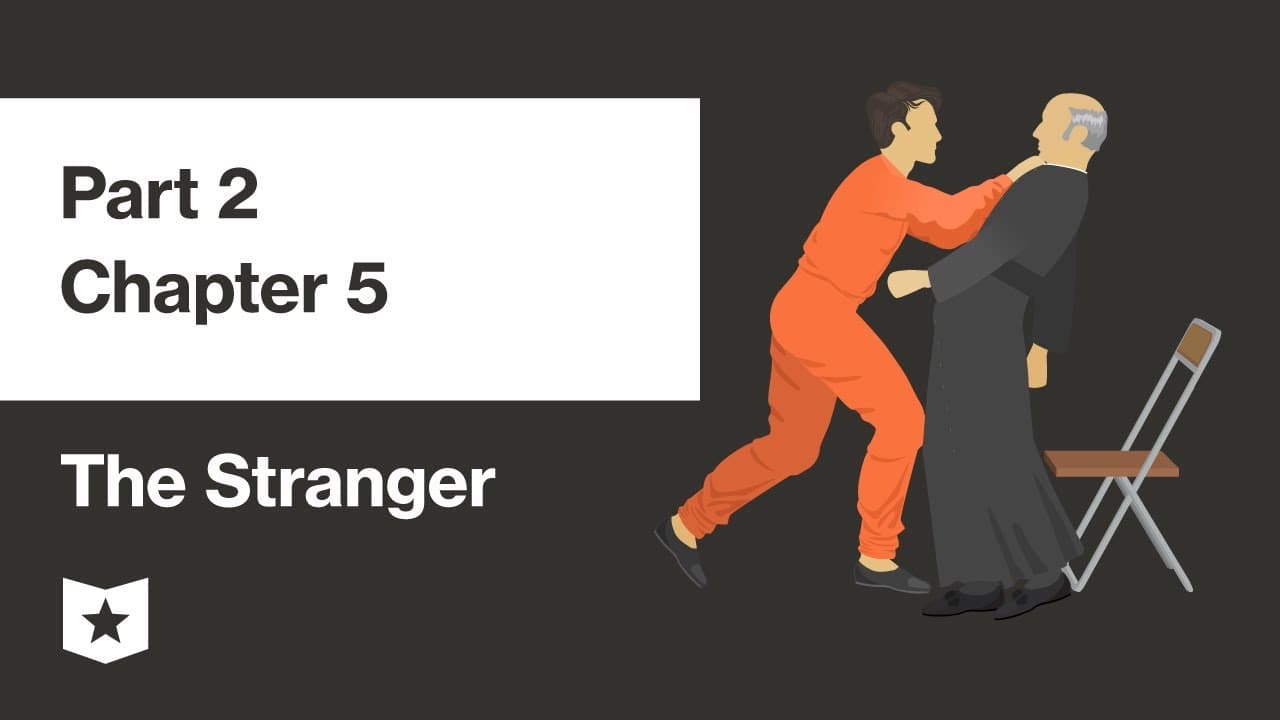
Mersault accepts the inevitability of death, embracing a life devoid of meaning and rejecting traditional hopes or beliefs in an afterlife. His confrontation with the chaplain highlights his existential nihilism, culminating in a desire for hatred from onlookers at his execution, symbolizing a search for personal significance amidst the finality of life.
Transcript
in part two chapter five of the stranger in his prison cell mere so fantasizes about somehow disappearing were breaking through the police guards to escape we're so thinks he would reform penal codes in a way that would give a condemned man a remote chance of escape being executed by the guillotine gives him no chance we're so knows that on the day... Read More
Key Insights
- ❓ Mersault's acceptance of death reflects existential nihilism.
- ❓ The chaplain's attempts to impose Christian beliefs highlight the clash of ideologies.
- ❓ Mersault's desire for hatred at his execution signifies personal meaning.
- 🛟 The novel explores themes of life's meaning, death, and existentialism.
- ❓ Mersault's defiance towards the chaplain reveals his steadfast beliefs.
- ❓ The specter of imminent execution forces Mersault to confront mortality.
- 🤞 Hope and meaning are challenged by Mersault's stark worldview.
- 🎙️ More videos with Albert Camus:
Install to Summarize YouTube Videos and Get Transcripts
Explore YouTube Video Summarizer or Get YouTube Transcript Extractor
Questions & Answers
Q: How does Mersault view the idea of hope in the face of death?
Mersault rejects the notion of hope and embraces the meaningless finality of death, choosing acceptance over false optimism.
Q: How does Mersault's interaction with the chaplain reflect his beliefs?
Mersault's defiance towards the chaplain showcases his rejection of Christian morality and his insistence on personal meaning in the face of death.
Q: What significance does Mersault's desire for hatred from spectators hold?
Mersault's wish for hatred at his execution symbolizes his transcendence of existential nihilism and his pursuit of personal significance in the face of mortality.
Q: How does Mersault's perspective on life and death differ from the chaplain's?
Mersault sees life as meaningless and death as final, while the chaplain urges him to consider divine justice and morality, showcasing opposing views on existence.
Summary & Key Takeaways
-
Mersault, facing his imminent execution, contemplates the meaninglessness of life and rejects hope.
-
The chaplain confronts Mersault with Christian beliefs, provoking anger and defiance.
-
Mersault ultimately accepts the finality of death and hopes for hatred from spectators at his execution.
Read in Other Languages (beta)
Share This Summary 📚
Summarize YouTube Videos and Get Video Transcripts with 1-Click
Try YouTube Summary with ChatGPT & Claude or YouTube Transcript Generator
Explore More Summaries from Course Hero 📚

Summarize YouTube Videos and Get Video Transcripts with 1-Click
Try YouTube Summary with ChatGPT & Claude or YouTube Transcript Generator