Why Is the Microplastics Crisis Getting Worse?
TL;DR
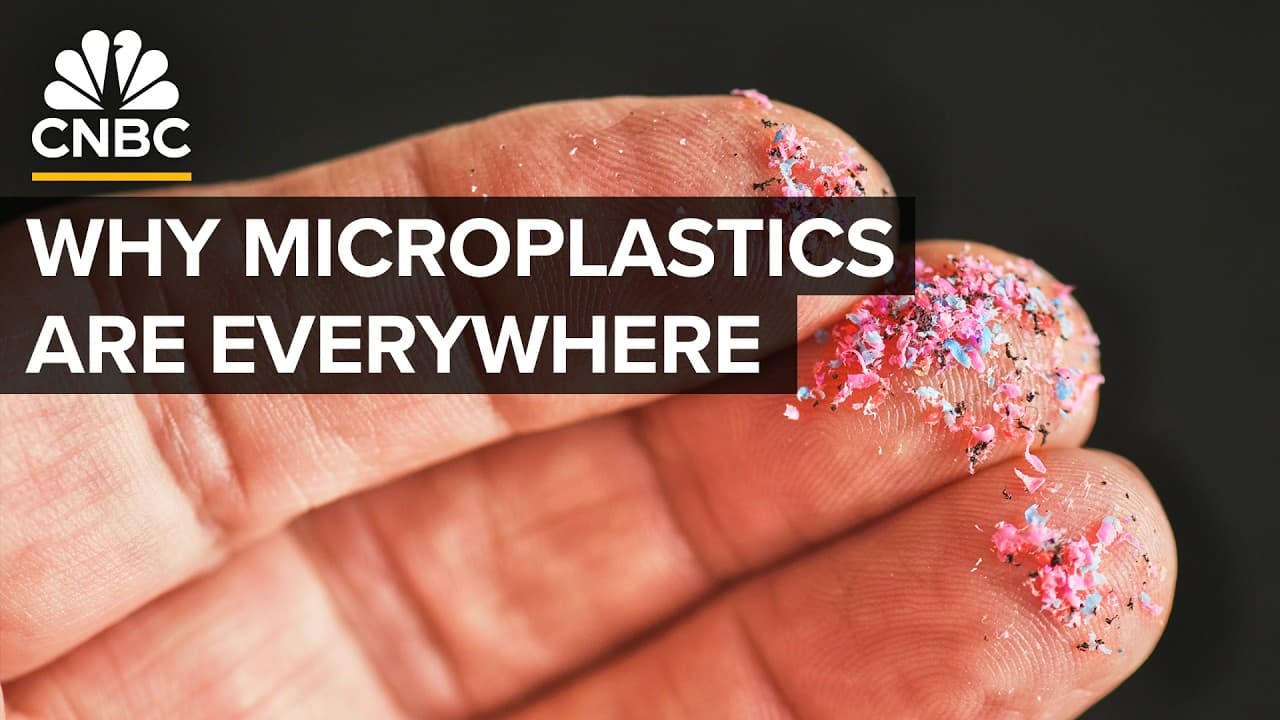
Plastic production is projected to grow more than 40% between 2025 and 2040, increasing the amount of persistent waste that breaks into microplastics. These particles are already present in human bodies and food, while their precise health effects remain under study. Cheap fossil fuel feedstocks, corporate investment, weak recycling economics, and rising petrochemical demand are driving further production.
Transcript
Nearly everything we eat and drink is wrapped in plastic. In fact, global plastic production more than doubled between 2000 and 2022. And now we're realizing it's showing up in our bodies, too. One recent study showed the level of microplastics in the frontal cortex of our brains increased by about 50% between 2016 and 2024. You cannot take th... Read More
Key Insights
- Plastic pollution is persistent because plastic never fully decomposes. It breaks into progressively smaller pieces, becoming microplastic below five millimeters and then nanoplastic at still smaller scales, allowing plastic particles and their associated chemicals to spread through food chains and enter human bodies.
- Microplastics are already present throughout the human food supply. Researchers found particles in fish muscle tissue, fruits, vegetables, packaged grocery products, and material released while chewing gum. One cited study detected microplastics in 99% of the fish examined off the Oregon coast.
- Human brain samples contained substantially more plastic in 2024 than in 2016. A University of New Mexico cadaver study reported an increase of about 50% in the frontal cortex, and researchers estimated that the plastic mass in the evaluated 2024 brains was approximately seven grams.
- The health evidence suggests potential harm but does not establish every causal relationship. Reviews associate microplastics with adverse reproductive, respiratory, and digestive effects and possible cancer risks, while factors such as genetics and lifestyle make it difficult to prove that microplastics directly caused a particular disease.
- Plastic can act as a delivery mechanism for potentially toxic substances. Plastics contain more than 16,000 chemicals used to soften materials, block ultraviolet light, and provide other characteristics, but the transcript says only about one-quarter have been documented as harmful, leaving many insufficiently studied.
- Fossil fuel companies view petrochemicals as a way to offset weakening demand elsewhere. BP said declining road-transport oil use could be offset by growing use of oil as petrochemical feedstock, while ExxonMobil and Shell earned more than $110 billion in combined chemical-business revenue during 2024.
- Cheap natural gas and ethane encourage new plastic production in the United States. Fracking helped make the country the largest oil producer at nearly 13.5 million barrels per day, and abundant feedstocks make virgin plastic inexpensive despite an increasingly oversupplied market and compressed chemical margins.
- Plastic recycling remains economically and technically limited. About 9% of global plastic waste was recycled in 2019, compared with roughly 5% in the United States. Complicated product structures, collection and sorting problems, processing constraints, and cheap fossil feedstocks make new plastic cheaper to produce.
Install to Summarize YouTube Videos and Get Transcripts
Explore YouTube Video Summarizer or Get YouTube Transcript Extractor
Questions & Answers
Q: Why is the microplastics crisis expected to get worse?
The crisis is expected to worsen because plastic production is projected to grow more than 40% between 2025 and 2040. Plastic never fully decomposes, so additional production creates material that can persist and fragment into smaller particles. Oil and gas companies are investing heavily in petrochemical facilities, while inexpensive natural gas and ethane make new plastic cheap to manufacture.
Q: What are microplastics and nanoplastics?
Microplastics are plastic fragments smaller than five millimeters, approximately the width of a pencil eraser. They form because plastic does not fully decompose but instead breaks into progressively smaller pieces. Nanoplastics are an even smaller subset. This fragmentation allows plastic particles to disperse through food, water, ecosystems, and human bodies rather than disappearing from the environment.
Q: How much microplastic was found in human brains?
Researchers at the University of New Mexico analyzed cadaver samples and found that microplastic levels in the frontal cortex increased by about 50% between 2016 and 2024. Based on the 2024 samples they evaluated, they calculated that the total plastic mass would equal about seven grams, which the transcript compares with the size of a plastic spoon.
Q: What health effects are linked to microplastic exposure?
A researcher who evaluated thousands of studies concluded that microplastics are suspected of adversely affecting reproductive, respiratory, and digestive health. The observed mechanisms could also increase the risk of colon and lung cancer. However, many studies show correlation rather than causation, so researchers cannot yet attribute particular diseases exclusively to microplastic exposure without considering other factors.
Q: Why is it difficult to prove that microplastics cause disease?
Researchers can confirm that microplastics are inside human bodies, but isolating their effects is difficult because chronic diseases can also result from lifestyle, genetic, and other environmental factors. For example, brain samples from people with dementia contained more microplastic than samples without the disease, but that association alone cannot prove that microplastics caused the dementia.
Q: Why are oil companies investing in plastic production?
Oil and gas companies see plastics and petrochemicals as potential growth businesses as demand for gasoline weakens. They already control oil, natural gas, ethane, and much of the necessary infrastructure. BP's 2024 outlook said declining oil use in road transport could be offset by increasing use of oil as petrochemical feedstock for plastics, textiles, and other materials.
Q: Why is so little plastic waste recycled?
Plastic recycling involves difficult collection, sorting, and processing steps, while current recycling technology has limits. Many modern plastic products combine complicated structures and properties that are inconsistent with mechanical recycling. Cheap and abundant oil and natural gas also make new plastic less expensive to manufacture. In 2019, about 9% of global plastic waste and 5% of United States waste was recycled.
Q: How did recycling become central to the plastic industry's strategy?
Public concern about plastic pollution produced efforts during the 1970s, 1980s, and 1990s to ban plastic bags and other products. According to the transcript, the industry promoted recycling partly to defend against those restrictions and reassure consumers about disposable products. Critics allege that some investments were performative and that initiatives or facilities were reduced when regulatory pressure declined.
Summary & Key Takeaways
-
Plastic does not fully decompose but fragments into microplastics smaller than five millimeters and even smaller nanoplastics. Researchers have detected these particles in human brains, food, fish, fruits, vegetables, and chewing gum. Studies associate exposure with several health concerns, although establishing direct causation remains difficult because other health and lifestyle factors can contribute.
-
Plastic production is an $880 billion industry, and oil and gas companies increasingly view petrochemicals as a growth market as gasoline demand weakens. ExxonMobil, Shell, Saudi Aramco, and SABIC have invested heavily in chemical production. Abundant natural gas and ethane make new plastic inexpensive, even as supply increasingly outpaces demand and compresses industry margins.
-
Recycling has not matched the scale or complexity of plastic waste. Only about 9% of global plastic waste was recycled in 2019, while the United States recycled about 5%. Collection, sorting, processing, mixed materials, and technical limitations create barriers. Cheap oil and gas also make producing new plastic less expensive than recycling existing products.
Read in Other Languages (beta)
Share This Summary 📚
Summarize YouTube Videos and Get Video Transcripts with 1-Click
Try YouTube Summary with ChatGPT & Claude or YouTube Transcript Generator
Explore More Summaries from CNBC 📚





Summarize YouTube Videos and Get Video Transcripts with 1-Click
Try YouTube Summary with ChatGPT & Claude or YouTube Transcript Generator