How to Heal Your Inner Child Through Forgiveness
TL;DR
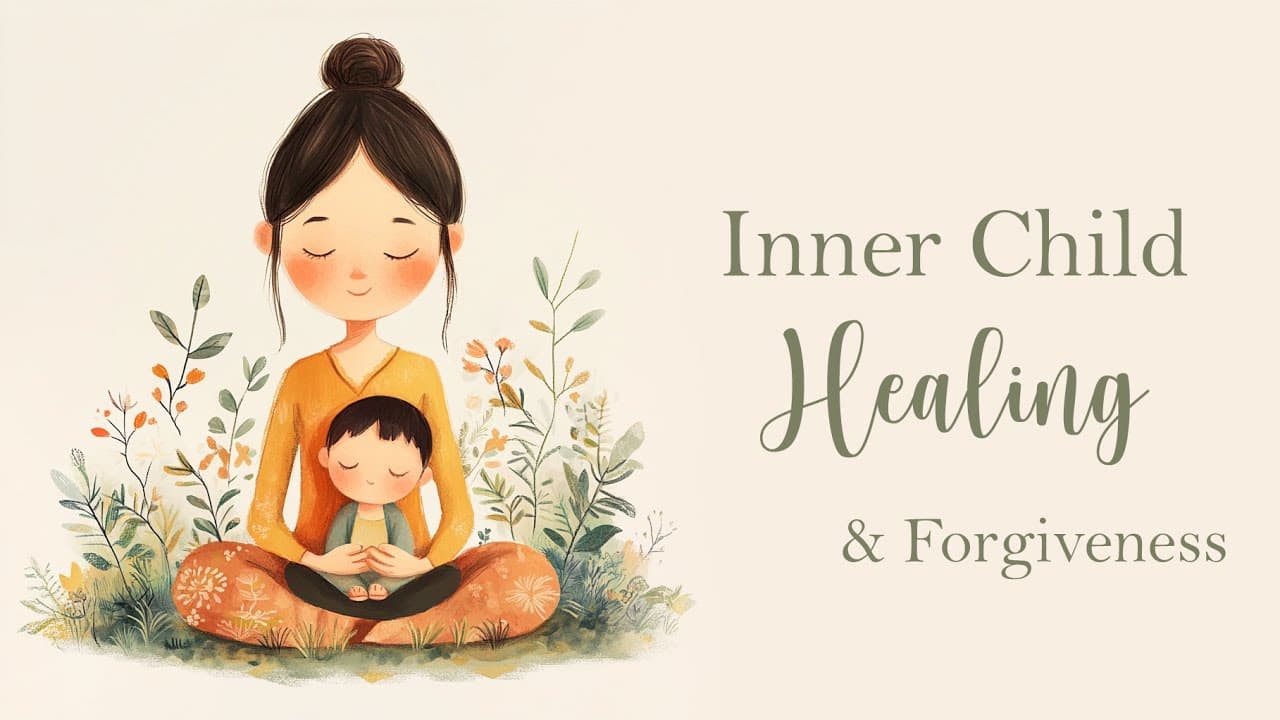
Begin by relaxing your body, observing your breath gently, and imagining the child version of yourself. Acknowledge what you endured, offer that child love and care, and affirm your willingness to forgive what happened, release what no longer serves you, and repeatedly choose happiness, joy, freedom, appreciation, and love.
Transcript
Begin by getting into a comfortable position whatever that looks like for you in this moment getting curious and asking your body what it wants from you Hing pause if you need to and coming back when you're ready and once you are lovingly close your eyes allow your awareness to begin to drift inwards tuning in to breath and body as you simply obser... Read More
Key Insights
- The practice begins with bodily curiosity, asking what position feels comfortable and what the body wants in the present moment. This establishes a gentle approach in which physical comfort and personal needs guide the meditation rather than forcing the body into a predetermined posture.
- The observer role is the foundation of the breathing practice. When thoughts wander, the instruction is to notice what happened without blame, let yourself off the hook, and gently return attention to the breath, the body, and the words being heard.
- Relaxation involves softening the belly, allowing it to expand during inhalation, and releasing muscles that are not needed. The breath may also slow when that feels appropriate, while the meditator is repeatedly encouraged to trust what the body wants and needs.
- Being present for yourself is presented as an empowering choice. The affirmation, "I am here for me," accompanies a deep breath and reinforces the idea that pausing everything else for the practice is a meaningful way of saying yes to yourself.
- Forgiveness is framed primarily as an act of personal release. The meditation connects it with becoming free from what weighs you down emotionally, mentally, and physically, even when part of you doubts that you deserve such freedom.
- Inner child visualization works by imagining a younger version of yourself and becoming aware of the pain they may still carry. You acknowledge what happened, apologize for what they endured, express love, and assure them that you can now become your own caregiver.
- Choosing the inner child's happiness requires repeated commitment. The practice emphasizes choosing joy and freedom again and again, then supporting that choice by letting go, forgiving, embracing love, and releasing everything that does not reflect love.
- Forgiveness transforms into appreciation as loving feelings deepen. The meditation directs appreciation toward yourself, your freedom, your strength, your bravery, and everything that led to the present moment before ending with gratitude, an embrace, and a gradual physical return.
Install to Summarize YouTube Videos and Get Transcripts
Explore YouTube Video Summarizer or Get YouTube Transcript Extractor
Questions & Answers
Q: How do you begin an inner child forgiveness meditation?
Begin by moving into any position that feels comfortable and asking your body what it wants from you in the present moment. Close your eyes if doing so feels comfortable and possible, then direct your attention inward. Observe the natural movement of your breath and body gently, soften your belly, and invite muscles you do not need to become heavy and relaxed.
Q: What should you do when your mind wanders during meditation?
When your mind wanders, recognize that nothing has gone wrong. Let yourself off the hook and return to the role of a gentle observer. Notice the distraction with a sense of allowing, without criticizing yourself or trying to fight the thought. Then guide your attention back to your breathing, bodily sensations, and the words you are hearing.
Q: How does the meditation use breathing to encourage relaxation?
The meditation invites you to observe how the breath feels as it moves in and out, without demanding a rigid pattern. If comfortable, soften the belly and let it expand during inhalation. You may allow the breath to slow when that feels good and right. A deeper breath is also used to connect with empowerment and the affirmation that you are here for yourself.
Q: Why is forgiveness practiced for your own freedom?
Forgiveness is described as more of an act for you than for the person, event, or circumstance being forgiven. Its purpose within the meditation is to help release what weighs you down emotionally, mentally, and physically. You begin by finding even a small willingness to believe that you deserve freedom and by affirming your readiness to release what no longer serves you.
Q: How do you visualize your inner child during the meditation?
Imagine a small child version of yourself and allow yourself to notice some of the pain they may have carried. Become present with that child, recognize what they experienced, and help them feel seen. Tell them you are sorry for what they endured, express your love, and reassure them that you are now free to forgive, release the past, and provide your own care.
Q: What can you say to your inner child for healing and forgiveness?
You can tell your inner child that you are sorry they went through what they experienced and that you love them. Reassure them that you are free now, can become your own caregivers, and can release everything that is not love. Tell the child that you choose their happiness, joy, and freedom repeatedly, and support those choices through forgiveness and love.
Q: What affirmations are used in the forgiveness meditation?
The practice uses affirmations centered on presence, willingness, forgiveness, and love. These include telling yourself, "I am here for me," "I am willing to let go of what no longer serves me," and "I am willing to forgive everything." Later, you affirm that you forgive everything and choose to see and feel love while recognizing your strength, bravery, and freedom.
Q: How should you finish the inner child meditation?
Remain with the feeling of love and appreciation for as long as you wish. If it feels right, embrace the small child version of yourself again and say thank you and I love you. When you are ready to return, take your time. Roll your shoulders, wiggle your fingers and toes, and gently open your eyes to the world around you.
Summary & Key Takeaways
-
The meditation begins by inviting you to find a comfortable position, close your eyes, and direct awareness toward your breath and body. You are encouraged to soften your belly, release unnecessary muscular tension, and observe distractions without criticism before gently returning your attention to the present moment and the guiding words.
-
The central practice frames forgiveness as an act that can free you from emotional, mental, and physical burdens. You identify even a small willingness to let go, affirm that you are present for yourself, and recognize that you deserve to feel good and become free from what weighs you down.
-
The visualization asks you to meet your inner child, acknowledge their pain, apologize for what they experienced, and offer love and care. You choose their happiness, joy, and freedom while releasing everything that is not love. The practice ends with appreciation, an embrace, gentle movement, and a gradual return.
-
Key Insights
Read in Other Languages (beta)
Share This Summary 📚
Summarize YouTube Videos and Get Video Transcripts with 1-Click
Try YouTube Summary with ChatGPT & Claude or YouTube Transcript Generator
Explore More Summaries from Great Meditation 📚




Summarize YouTube Videos and Get Video Transcripts with 1-Click
Try YouTube Summary with ChatGPT & Claude or YouTube Transcript Generator