How Does ICT's First Presented FVG Opening Range Work?
TL;DR
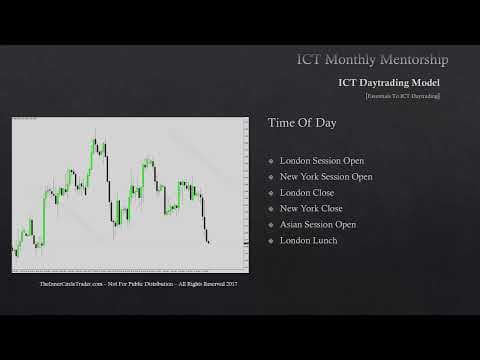
ICT’s first presented FVG opening range logic uses the fair value gap associated with displacement and a bearish market-structure change during the London opening range as the level price references algorithmically. That opening range runs from 1:30 to 2:00 a.m. Eastern and is always a 30-minute window. The method depends on current time and price rather than daily or weekly bias; read on to understand which gap qualifies and how to evaluate it.
Transcript
Hello folks, how are you? Hope you're doing well. So, you're probably wondering where has ICT been? I have been rambling up and down the east coast of uh America. We took several road trips, went to Cape Cod, stayed up in Maine for a little while, and drove all the way down to the southernmost tip of the United States, mile marker zero, Key West, F... Read More
Key Insights
- The London session opening range is defined as 1:30 a.m. to 2:00 a.m. Eastern time, a 30-minute window. Opening ranges are always 30 minutes, not 15 minutes or 5 minutes, which distinguishes them from other setups.
- The first presented fair value gap forming within the opening range is what price algorithmically references. This applies across forex, indices, commodities, and currencies whenever they trade during the London open kill zone.
- Session trading is independent of daily bias, weekly bias, or any longer-term narrative. It depends only on what is available in the marketplace right now based on time and price.
- Displacement is the key differentiator when using opening ranges. It separates the correct application from the generic material in books and other sources that parrot ICT content without accuracy.
- PD arrays should be measured by discount sensitivity and premium sensitivity, not simply labeled old support or old resistance. Their inability to trade to a specific level while staying within a narrative measures effectiveness.
- Premium sensitivity appears when price in the upper quadrant draws back down to equilibrium, the midpoint called consequent encroachment, then moves into the lower half toward the low.
- A bullish signal is when price gets to the upside of the volume imbalance and defends the upper half, never trading back to the lower half. Trading no higher than the halfway point signals bearishness.
- Failing to reach the upper quadrant of a daily wick before repelling back up is usually indicative of bullishness or strength, as demonstrated in the NASDAQ December contract review.
Install to Summarize YouTube Videos and Get Transcripts
Explore YouTube Video Summarizer or Get YouTube Transcript Extractor
Questions & Answers
Q: How does ICT’s first presented FVG opening range work?
During the London opening range from 1:30 to 2:00 a.m. Eastern, ICT identifies the first fair value gap connected to displacement and a market-structure change. He says this is the gap price references algorithmically, rather than simply selecting the earliest visible gap.
Q: What time is the ICT London opening range?
The London opening range runs from 1:30 a.m. to 2:00 a.m. Eastern time. ICT defines an opening range as a 30-minute window, not a 15-minute or 5-minute period.
Q: How do you identify the qualifying first presented fair value gap?
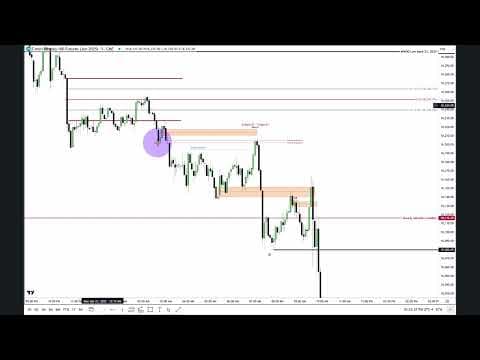
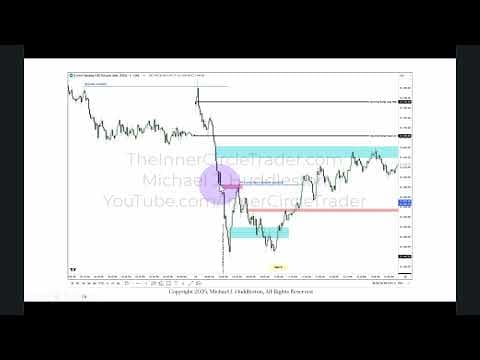
Look for displacement after liquidity is taken and determine which fair value gap engages the relevant swing low or nearby liquidity. In the example, the earlier gap did not take out the low, while the later gap engaged that low and accompanied a bearish market-structure change.
Q: Why is displacement important in the opening-range setup?
Displacement distinguishes the qualifying opening-range fair value gap from a gap that merely appears first chronologically. ICT uses the displacement and resulting market-structure change to determine which gap should be used.
Q: How is the opening-range FVG different from the silver bullet?
The opening-range setup uses a 30-minute opening range and requires attention to displacement. ICT describes the silver bullet more generically as the first fair value gap forming after 10:00 within the 10:00-to-11:00 morning hour.
Q: Does session trading require a daily or weekly bias?
No. ICT says session trading is not dependent on daily bias, weekly bias, or another longer-term narrative; it uses what is currently available in the market based on time and price.
Q: Which markets can use the London opening-range logic?
ICT says the logic applies to instruments trading during the London open kill zone, including forex, indices, commodities, and currencies. He advises checking historical charts to study how the setup behaves rather than accepting the claim without verification.
Q: How should ICT PD arrays be evaluated?
PD arrays should be measured through discount sensitivity and premium sensitivity rather than labeled only as old support or resistance. Their effectiveness is shown by how price approaches or fails to reach a level and how quickly it repels while remaining within the underlying narrative.
Summary & Key Takeaways
-
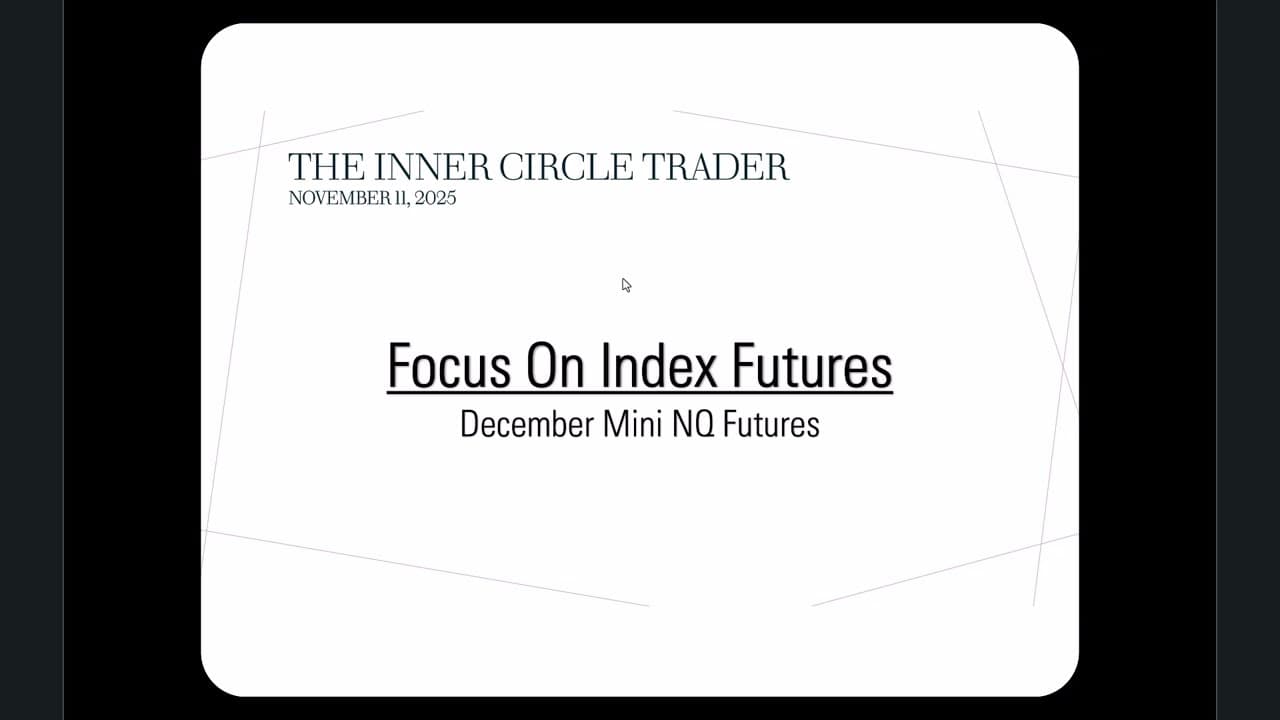
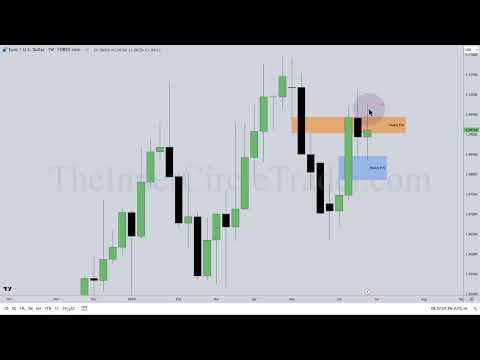
The lecture reviews December mini NASDAQ futures for November 11th, tracing price from the weekly chart down through daily, hourly, 15-minute, 5-minute, and 1-minute time frames. A weekly volume imbalance, a bullish fair value gap, and a bullish order block frame the underlying bullish narrative being tracked.
-
Price is analyzed as a continuum from higher to lower time frames, measuring each PD array's effectiveness through discount and premium sensitivity. Price failing to reach the upper quadrant of a daily wick before repelling higher indicated strength, while a white-shaded volume imbalance midpoint set the weekly bias.
-
The core teaching is the first presented fair value gap inside the London opening range of 1:30 to 2:00 a.m. Eastern. Opening ranges use 30-minute windows and require displacement. This session logic works across all markets independent of daily or weekly bias.
Read in Other Languages (beta)
Share This Summary 📚
Summarize YouTube Videos and Get Video Transcripts with 1-Click
Try YouTube Summary with ChatGPT & Claude or YouTube Transcript Generator
Explore More Summaries from The Inner Circle Trader 📚

Summarize YouTube Videos and Get Video Transcripts with 1-Click
Try YouTube Summary with ChatGPT & Claude or YouTube Transcript Generator