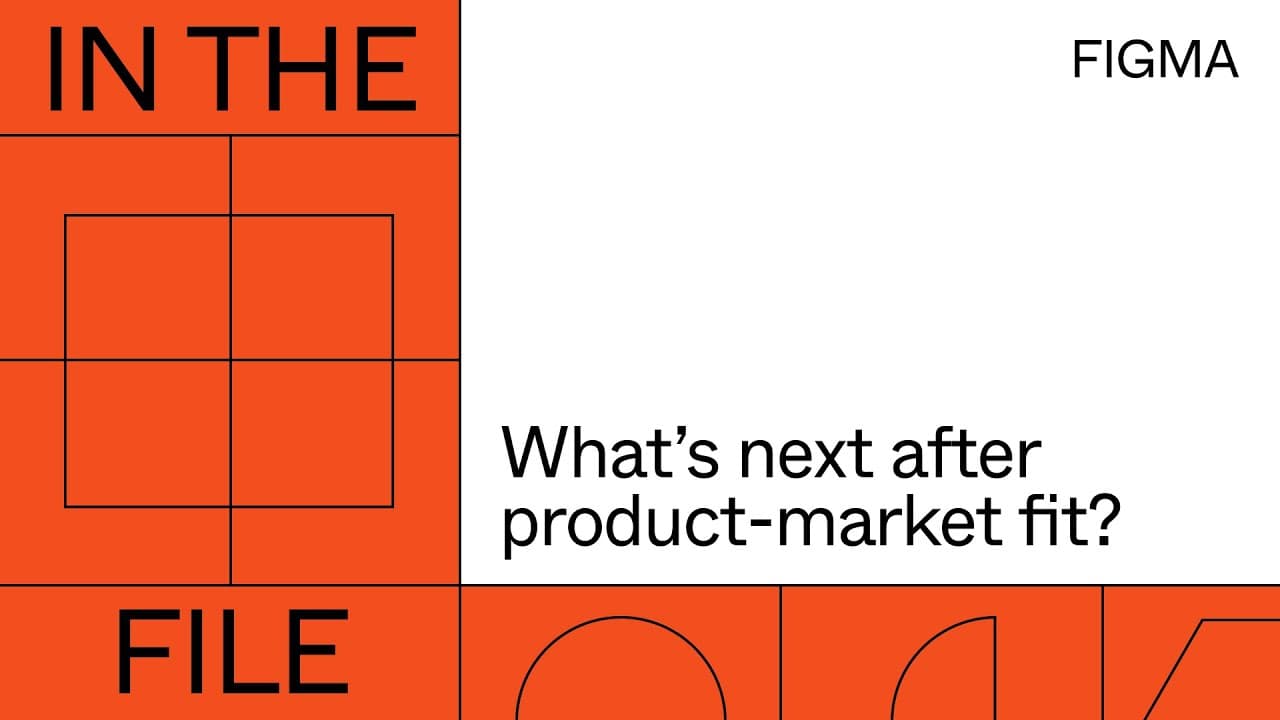
What to Do After Achieving Product-Market Fit?
TL;DR
After achieving product-market fit, prioritize feedback by seeking out both heard and unheard user insights, and consider customer, business, and macro environmental factors. Utilize alternative methods to build features efficiently, such as encouraging user-generated content and adapting insights from competitors. Effectively communicate your prioritization framework to customers to foster trust when saying no to feature requests.
Transcript
hi everyone my name is stephanie i joined figma last april it's been a little over a year and a half and i run product marketing and brand here at figma um and i'm going to be introducing yuki um someone that we actually fun fact joined the exact same day at figma and it's been such a joy to work with him um and i'll be also managing the q a and as... Read More
Key Insights
- 🏛️ Seeking out all feedback, including unheard feedback, is crucial in making informed decisions on what to build next.
- 🤔 Thinking beyond code and utilizing alternative methods like user-generated content and competitor insights can help efficiently develop more features.
- 🏛️ Treating customers as equals and discussing the company's prioritization framework can make saying no to feature requests more effective and build trust.
- 🥅 Determining when to turn an experiment into a product feature depends on success metrics, goals, and alignment with the company's vision.
- ⚾ Prioritizing features based on the needs of the highest paying customers should be balanced with the needs of the broader user base.
- 🎨 Failures can reshape the design process and inform updates in design philosophy, leading to processes that consider global markets and involve testing based on actual user bases.
Install to Summarize YouTube Videos and Get Transcripts
Explore YouTube Video Summarizer or Get YouTube Transcript Extractor
Questions & Answers
Q: How do you decide which feedback is important when there are so many ideas and feature requests?
Yuki suggests seeking out all feedback, even unheard feedback, and considering customer insights, business insights, and macro environmental insights to determine what is most important.
Q: What strategies can be used to efficiently build more features with limited resources?
Yuki recommends thinking beyond code, utilizing alternative methods like SQL queries and emails, and involving users and even competitors in the feature development process.
Q: How do you say no to feature requests from high-paying customers without alienating them?
Yuki suggests explaining the company's priorities and framework to customers, inviting feedback on the prioritization, and considering if the requested feature can be generalized to benefit other customers.
Q: How do you determine when to turn an experiment into an actual product feature?
Yuki advises doing a thorough thought experiment and pre-mortem before running the experiment, considering success metrics, and evaluating if the experiment aligns with the company's goals.
Key Insights:
- Seeking out all feedback, including unheard feedback, is crucial in making informed decisions on what to build next.
- Thinking beyond code and utilizing alternative methods like user-generated content and competitor insights can help efficiently develop more features.
- Treating customers as equals and discussing the company's prioritization framework can make saying no to feature requests more effective and build trust.
- Determining when to turn an experiment into a product feature depends on success metrics, goals, and alignment with the company's vision.
- Prioritizing features based on the needs of the highest paying customers should be balanced with the needs of the broader user base.
- Failures can reshape the design process and inform updates in design philosophy, leading to processes that consider global markets and involve testing based on actual user bases.
- Focusing on building features that address the needs of the entire team, not just designers, can lead to a more successful product.
Summary & Key Takeaways
-
Yuki shares his experiences of working on products that had already achieved product-market fit, and the challenges of deciding what to build next.
-
He emphasizes the importance of seeking out all feedback, including unheard feedback, and using it to determine which ideas are important.
-
Yuki offers strategies for efficiently building more features, such as utilizing alternative methods to code and leveraging user-generated content.
-
He explains how to say no to feature requests by treating customers as equals and discussing the company's prioritization framework.
Read in Other Languages (beta)
Share This Summary 📚
Summarize YouTube Videos and Get Video Transcripts with 1-Click
Try YouTube Summary with ChatGPT & Claude or YouTube Transcript Generator
Explore More Summaries from Figma 📚




Summarize YouTube Videos and Get Video Transcripts with 1-Click
Try YouTube Summary with ChatGPT & Claude or YouTube Transcript Generator