What Is Putin Endgame in Ukraine According to Game Theory
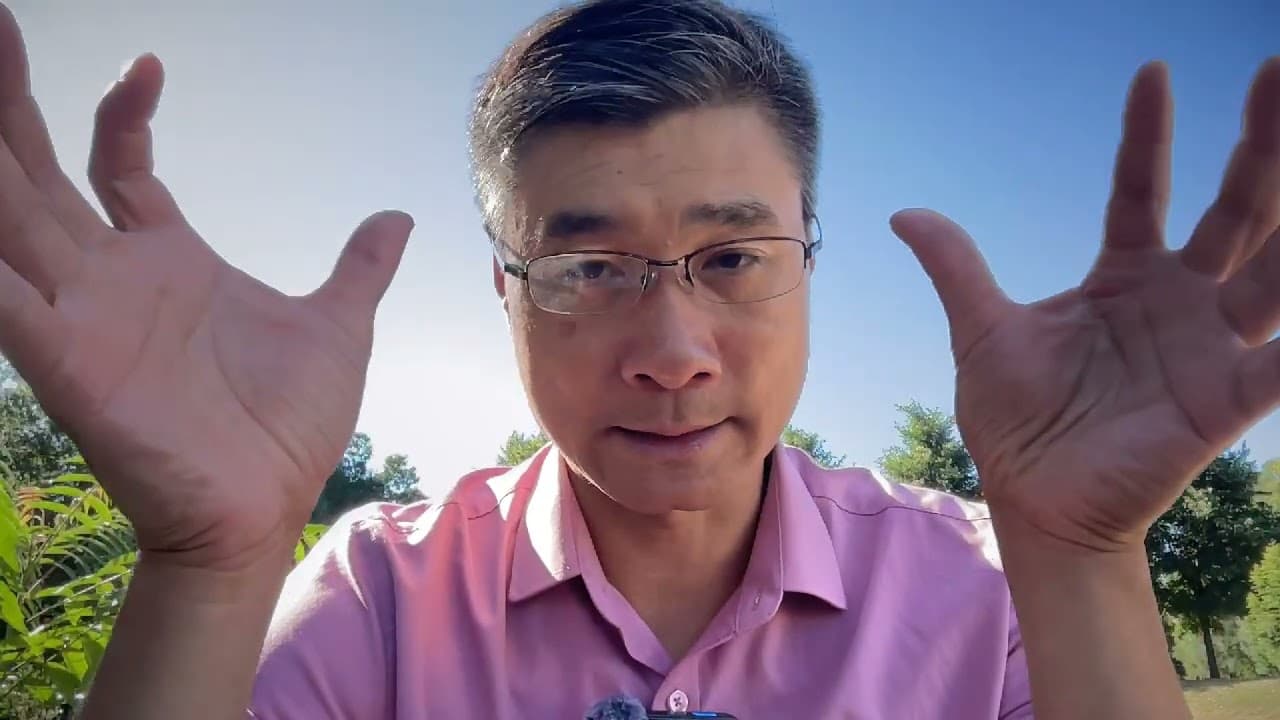
TL;DR
Putin is analyzed as the subject of a hidden power nexus that may view him as a second coming of Stalin. The talk uses game theory to compare counterfactuals, discusses how US policy may be self-defeating, and presents three predictions about Ukraine, China relations, and Iran. It also explores Putin’s origins and future goals.
Transcript
Good morning YouTube. Professor Jang here coming to you from a beautiful Toronto morning. So um two big news to report. The first big news is that there's chatter now that the Israelis will resume air strikes against Iran very very shortly. And this comes after Netanyahu's visit to Washington last week where he presumably received permission to do ... Read More
Key Insights
- Putin is examined through a game theory lens and counterfactual scenarios.
- Three examples show how American policy might be self-defeating in Russia and Ukraine.
- A hidden power nexus is proposed that could see Putin as the Second Coming of Stalin.
- Three explicit predictions are given about Odessa, China Russia relations, and Iran.
- The Nord Stream incident is analyzed as a strategic move with lasting consequences.
- The discussion questions Putin’s origins and how he rose to power.
- The talk emphasizes that some questions about Putin’s goals are unanswerable with available data.
- The speaker presents a hypothesis framework that yields testable predictions.
- More videos from this channel:
- More from this channel: Predictive History
Install to Summarize YouTube Videos and Get Transcripts
Explore YouTube Video Summarizer or Get YouTube Transcript Extractor
Questions & Answers
Q: How does the video define its counterfactuals for Ukraine without Western intervention
The video presents a counterfactual where the United States and NATO do not intervene, allowing Ukraine to fight Russia on its own. In this scenario, Russia would advance quickly through eastern Ukraine, encircle Odessa, and face supply and morale problems that could lead to Ukrainian victory. This contrasts with the observed reality where Ukraine pushes back and adapts to Russian pressure.
Q: What three American policies are cited as self-defeating in the Ukraine conflict
The three policies cited are aggressive Ukrainian strategy against Russia, targeted sanctions on Russian oligarchs, and the destruction of the Nord Stream pipeline. The narrative argues these actions have backfired, strengthening Russian resolve, uniting Russian business elites under Putin, and blaming the United States for German economic hardship, potentially reshaping alliance dynamics.
Q: Why is there a focus on a hidden power nexus within Russia
The video suggests there is a secret nexus of power that views Putin as the Second Coming of Stalin and seeks to unite the Orthodox world. This hypothesis frames Putin not as an isolated figure but as part of a broader power structure, guiding strategic goals and long term plans that influence Ukraine and other regional conflicts.
Q: What are the three predictions associated with the proposed hypothesis
The three predictions are that Odessa will witness a cataclysmic battle between NATO and Russia, that China and Russia will have a falling out, and that Russia will defend Iran. These predictions are derived from the hypothesis and are intended to test its validity by looking for consistent future developments.
Q: How does the video describe Ukraine’s battlefield lessons and drone warfare
The video argues that Ukraine fought for every inch of territory, which trained the Russian military to use drone warfare and adapt quickly. This dynamic allegedly produced battlefield dominance for Russia, while Ukraine faced manpower shortages and morale problems, demonstrating the evolving nature of modern conflict and deterrence.
Q: What is said about Nord Stream and its political fallout
The video claims that Nord Stream was blown up and uses this to argue that it shifted blame to the United States, contributing to a narrative of German economic suffering being linked to American actions. This is presented as a strategic move with long term consequences for European energy policy.
Q: What questions about Putin does the talk acknowledge are unanswerable
The talk states that the three big questions about Putin—his endgame, his rise from nowhere, and his future goals—are unanswerable with the available information. The presenter emphasizes uncertainty and proposes a hypothesis with testable predictions rather than definitive answers.
Q: How does the speaker characterize the comparison between Russia and China policies
The speaker suggests that American policy towards China is more calibrated to long term interests, while policy toward Russia appears self-defeating. This contrast is used to argue that Western strategy may be more effective in China than in Russia, possibly affecting future geopolitical alignments and alliances.
Summary & Key Takeaways
-
The video uses a game theory lens to examine Putin and a potential secret power within Russia. It argues three main questions drive the talk: Putin’s endgame, his rise, and the wider strategic implications for the West. Predictions and counterfactuals are used to illustrate possible futures.
-
It contrasts American policy outcomes with those in China, and it critiques sanctions and energy politics, including Nord Stream, to illustrate complex leverage and misalignment with long-term interests.
-
The discussion culminates in three explicit predictions and a framework showing how narratives about Putin could influence global alignments, including potential shifts in European energy dependencies.
Read in Other Languages (beta)
Share This Summary 📚
Summarize YouTube Videos and Get Video Transcripts with 1-Click
Try YouTube Summary with ChatGPT & Claude or YouTube Transcript Generator
Explore More Summaries from Predictive History 📚



Summarize YouTube Videos and Get Video Transcripts with 1-Click
Try YouTube Summary with ChatGPT & Claude or YouTube Transcript Generator