Why Did the Byzantine Empire Rise and Fall?
TL;DR
Constantinople helped the Eastern Roman Empire survive for more than a thousand years because it was defensible, centrally located near wealthy eastern provinces, and positioned to answer threats from Persia. The lecture also argues that Christianity, fortified walls, sea defenses, and Greek Fire supported imperial endurance, while overexpansion, urban crowding, and the Justinian plague exposed serious vulnerabilities.
Transcript
okay so good morning um today this morning we are doing the bantine Empire and I will be looking at three questions the first question is why do we have the bantin Empire um historically we have seen the Byzantine Empire as a continuation of the Roman Empire we have the bisan Empire because Constantine the Great in 330 um transfer the capital of th... Read More
Key Insights
- • The Byzantine Empire was the Eastern Roman Empire, and its inhabitants identified themselves as Romans rather than Byzantines. The term "Byzantine" was applied by later historians to distinguish this eastern continuation from the earlier Roman Empire centered on Rome.
- • Constantine transferred the Roman capital to Byzantium in 330, called it New Rome, and established the foundation of the Byzantine Empire. The city later became known as Constantinople and survives today as Istanbul in Turkey.
- • Constantinople was more defensible than Rome because its location and fortifications made it difficult to besiege. Rome, by contrast, could be captured by successful provincial military governors who brought their armies into the city and declared themselves emperor.
- • The Roman Empire faced structural instability because its enormous territory lacked natural boundaries, while Germanic and Gothic tribes threatened it from the north and Persia challenged it from the east. Civil wars, invasions, plague, and economic collapse culminated in the third-century crisis.
- • The traditional explanation for Constantine's move emphasizes strategy: Constantinople stood nearer the empire's wealthy eastern provinces, including Egypt, Anatolia, and the Levant, and allowed the emperor to respond more directly to the Persian threat.
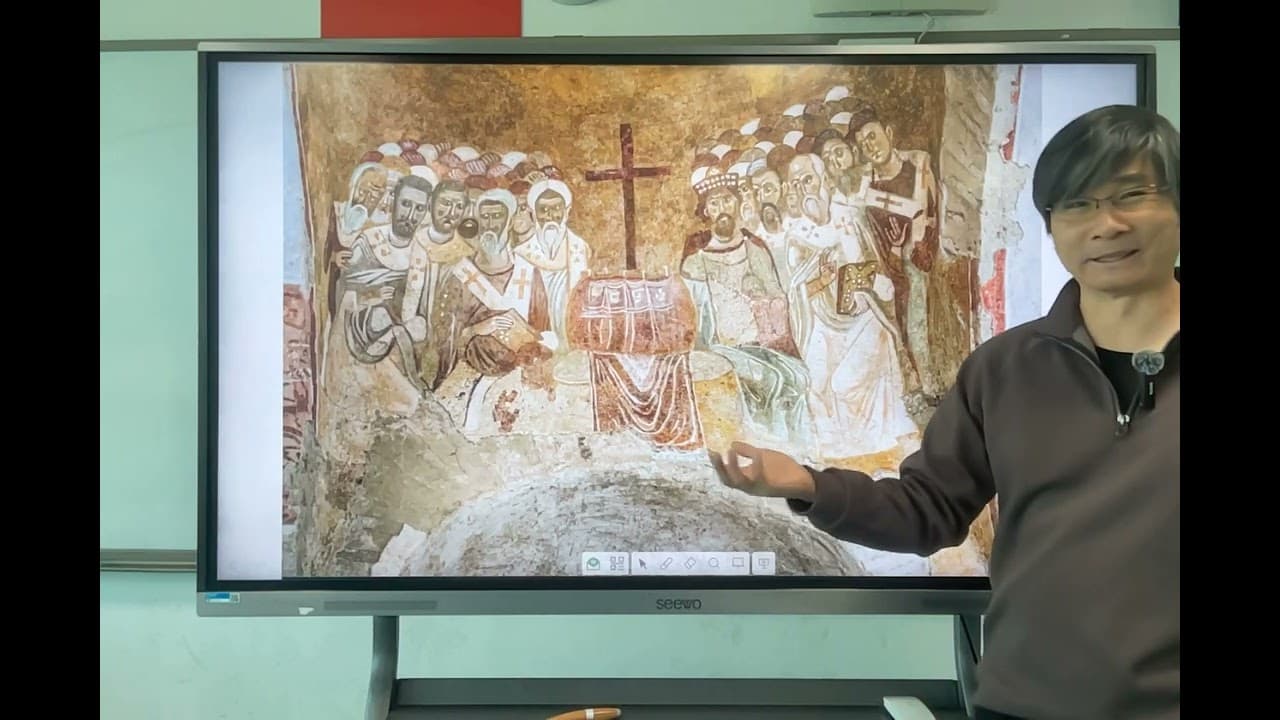
- • Christianity became central to the eastern empire under Constantine, the first Christian Roman emperor. The Council of Nicaea rejected Arianism's unequal view of Jesus and affirmed the Holy Trinity, defining God, Jesus, and the Holy Spirit as separate but co-equal.
- • Constantinople's survival depended heavily on layered defenses, including the Theodosian walls, a moat, and sea walls. These fortifications required relatively few defenders, while Greek Fire prevented hostile fleets from safely conducting naval attacks against the capital.
- • Imperial success created new risks under Justinian, when Belisarius helped recover extensive Roman territory by 565. Constantinople's population reached about 500,000, and the Justinian plague reportedly killed 300,000 residents, illustrating how overpopulation made the capital vulnerable to disease.
- More videos from this channel:
- More from this channel: Predictive History
Install to Summarize YouTube Videos and Get Transcripts
Explore YouTube Video Summarizer or Get YouTube Transcript Extractor
Questions & Answers
Q: Why did Constantine move the Roman capital to Constantinople?
The conventional explanation is that Constantine chose Constantinople because it was easier to defend, closer to the empire's center of gravity, and better positioned against Persia. Rome sat too far west and could be seized by successful provincial commanders. Constantinople was also nearer wealthy eastern provinces such as Egypt, Anatolia, and the Levant, allowing the emperor to manage strategically important territory more directly.
Q: Was the Byzantine Empire a continuation of Rome?
The Byzantine Empire was the eastern continuation of the Roman Empire. Its people called themselves Romans and did not use the name "Byzantine" for their state. Later historians adopted that label to distinguish the Eastern Roman Empire, centered on Constantinople, from the earlier empire centered on Rome. After western territories were overrun, the eastern state preserved the Roman imperial identity.
Q: Why was the Roman Empire unstable before Byzantium emerged?
The Roman Empire was difficult to sustain because it covered an enormous territory without natural boundaries. Northern Germanic and Gothic groups repeatedly invaded, while Persia remained a major eastern adversary. Internally, power was divided among aristocratic ruling houses in the Senate, wealth became concentrated, and provincial discontent grew. Civil wars, economic collapse, invasions, and plague drove the third-century crisis.
Q: How did Constantinople's defenses protect the Byzantine Empire?
Constantinople was protected by massive land fortifications, including the Theodosian walls and a moat, as well as walls facing the sea. The scale and layered design of these defenses allowed a relatively small number of soldiers to resist attackers. The lecture credits the walls with protecting the city for roughly a thousand years and supporting its image as an eternal city.
Q: What was Greek Fire and why was it important?
Greek Fire is described as a kerosene-like incendiary weapon that could be thrown at enemy vessels and then ignited. It was used when Muslim forces were expanding and threatening Constantinople in the eighth century. By setting attacking ships on fire, the weapon made naval expeditions against the capital extremely dangerous and strengthened the protection already provided by Constantinople's sea walls.
Q: How did Constantine influence Christianity?
Constantine was the first Christian Roman emperor and helped establish the intellectual foundation of the empire's Christianity through the Council of Nicaea. The council addressed disagreement about the nature of Jesus and his relationship with God. It affirmed the Holy Trinity, according to which God, Jesus, and the Holy Spirit are separate but co-equal, rather than accepting the Arian interpretation.
Q: How did the Byzantine Empire expand under Justinian?
The Byzantine Empire nearly reconstituted the territory of the earlier Roman Empire under Justinian by 565. Much of this expansion was achieved through the military leadership of Belisarius, whom the lecture describes as the last great Roman general and compares with Julius Caesar and Hannibal. His campaigns extended Byzantine influence, although reaching this imperial peak also introduced new problems and vulnerabilities.
Q: How did the Justinian plague affect Constantinople?
The Justinian plague devastated Constantinople after imperial expansion contributed to severe urban crowding. The city had a population of about 500,000, and the lecture states that the disease killed 300,000 people, or roughly 50 to 60 percent of its residents. The disaster illustrates the lecture's broader argument that an empire's peak can produce dangerous conditions, especially overpopulation and susceptibility to disease.
Summary & Key Takeaways
-
The Byzantine Empire began as a continuation of the Roman Empire after Constantine transferred the capital from Rome to Byzantium in 330. Renamed New Rome and later Constantinople, the eastern capital reflected a shift toward the empire's wealthy eastern provinces and provided a more defensible position against internal challengers, northern invaders, and Persia.
-
Constantinople combined political, religious, and military strengths. Constantine became the first Christian Roman emperor and convened the Council of Nicaea, which established the doctrine of the Holy Trinity. Later, Theodosius made Christianity the empire's official religion, while formidable land and sea defenses helped Constantinople resist attacks for roughly a thousand years.
-
The empire approached a renewed Roman scale under Justinian in 565, aided by the military campaigns of Belisarius, whom the lecture calls the last great Roman general. Expansion also created vulnerabilities. Constantinople's population reached about 500,000, and the Justinian plague reportedly killed 300,000 people, demonstrating the dangers of an overcrowded imperial capital.
Read in Other Languages (beta)
Share This Summary 📚
Summarize YouTube Videos and Get Video Transcripts with 1-Click
Try YouTube Summary with ChatGPT & Claude or YouTube Transcript Generator
Explore More Summaries from Predictive History 📚






Summarize YouTube Videos and Get Video Transcripts with 1-Click
Try YouTube Summary with ChatGPT & Claude or YouTube Transcript Generator