How did JFK push America to the Moon in the 1960s
TL;DR
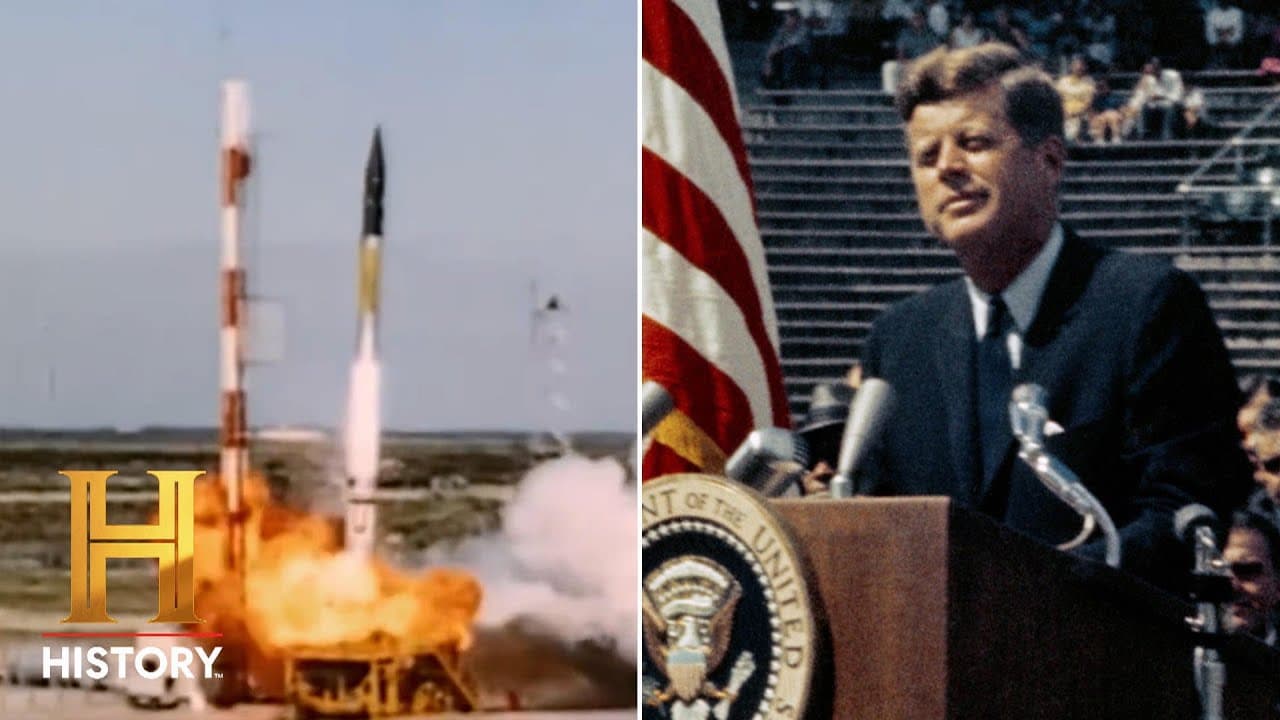
JFK aimed to prove US leadership by committing to a moon landing before the decade’s end. The president framed space as a test of ingenuity and national resolve, while opponents questioned the cost. The Rice University speech crystallized the pledge to lead in space and beyond. This set the stage for future milestones.
Transcript
[music playing] YOHURU WILLIAMS: In 1961, John F. Kennedy really is a breath of fresh air on the American landscape. He's 42-years-old, he's a war hero, he has a beautiful young wife, and he represents the hopes for the future of the United States. Now the trumpet summons us again. BILL BARRY: Early 1960s when President Kennedy comes into office, i... Read More
Key Insights
- JFK inherits a tense international landscape during the early 1960s marked by Cold War rivalries.
- The space race creates urgency as the Soviets achieve significant milestones ahead of the United States.
- Kennedy publicly commits to landing a man on the moon and returning him safely by the end of the decade.
- The cost and scale of the moon mission are contentious, challenging traditional budget priorities.
- Kennedy uses rhetoric to frame space exploration as an opportunity to demonstrate American ingenuity and leadership.
- The Rice University speech crystallizes the moon objective into a bold national mission.
- Kennedy’s vision connects space achievement to broader national goals such as equality and innovation.
- Kennedy is assassinated before the moon landing but the mission’s trajectory outlives his presidency.
- More videos from this channel:
- More from this channel: HISTORY
Install to Summarize YouTube Videos and Get Transcripts
Explore YouTube Video Summarizer or Get YouTube Transcript Extractor
Questions & Answers
Q: What goal did Kennedy set for the United States in the 1960s regarding space?
Kennedy set the goal of landing a man on the moon and returning him safely to the Earth before the end of the decade. The aim was to show American technological leadership in the space race, inspire national effort, and demonstrate that the United States could achieve ambitious projects despite Cold War tensions. This commitment influenced funding and policy decisions in the 1960s.
Q: Why did Kennedy feel pressure to act in space during the early 1960s?
Kennedy faced international tension in a competitive Cold War era, with the Soviet Union leading in space milestones like the first satellite and the first person in space. This created a public relations challenge for the United States, pushing Kennedy to propose a bold, costly, and inspirational space program to restore American prestige and demonstrate capability.
Q: What was the significance of the Rice University speech?
The Rice University speech articulated a clear national mission to lead in space, declaring that the generation would not founder in the space age. It framed space exploration as a test of American ingenuity and resolve, linking the space program to broader ideals of freedom, progress, and technological leadership.
Q: What did supporters believe space exploration could symbolize for the country?
Supporters argued space exploration could symbolize American ingenuity, technological prowess, and the ability to address other social challenges. By framing the moon mission as a beacon of progress, leaders believed it could elevate national morale, justify public funding, and demonstrate that the United States could tackle formidable, ambitious projects.
Q: Which events intensified the need for a strong space program?
Events such as the Soviet push in space, including early satellite launches and human spaceflight, heightened concerns about American comparative disadvantage. These milestones underscored the urgency of a bold American response to maintain leadership in science, technology, and national security on the global stage.
Q: What happened to Kennedy’s moon goal following his assassination?
Kennedy was assassinated before the moon landing occurred, so he did not witness the culmination of his vision. Nevertheless, his administration’s policy and rhetoric set a trajectory for future space exploration, influencing funding decisions, organizational priorities, and public expectations for a manned lunar mission that would be pursued by his successors.
Q: How did the public perceive the space program during Kennedy’s presidency?
The public perceived the space program as a symbol of national ambition and a tool to unify and motivate the country during a tense period. Public rhetoric and televised events helped rally support for high-cost, high-stakes initiatives, while debates continued about budget priorities and the best use of scientific resources.
Q: What role did Kennedy’s space vision play in broader national aims?
Kennedy’s vision linked space achievement to broader aims of American leadership, innovation, and the ability to address inequality and economic disparities. By presenting space as a frontier to be conquered, the administration framed science and engineering as central to national greatness and progress, guiding policy beyond pure exploration toward societal impact.
Summary & Key Takeaways
-
JFK faces a tense Cold War environment and a space race where the Soviet Union leads in orbiting the first satellite and sending the first person to space, creating pressure for a strong American response. Kennedy’s challenge is shaping a national mission that can unify the country and justify spending.
-
The Rice University speech marks a turning point, linking space exploration to American values of freedom and progress. It frames the moon goal as a measure of national ingenuity and resolve, inspiring public support and guiding subsequent policy and funding decisions.
-
Kennedy’s assassination leaves the moon goal unfinished in his lifetime, but the vision endures in American scientific ambition and political rhetoric. The program becomes a symbol of perseverance and national capability that influences decades of space exploration and innovation.
Read in Other Languages (beta)
Share This Summary 📚
Summarize YouTube Videos and Get Video Transcripts with 1-Click
Try YouTube Summary with ChatGPT & Claude or YouTube Transcript Generator
Explore More Summaries from HISTORY 📚





Summarize YouTube Videos and Get Video Transcripts with 1-Click
Try YouTube Summary with ChatGPT & Claude or YouTube Transcript Generator